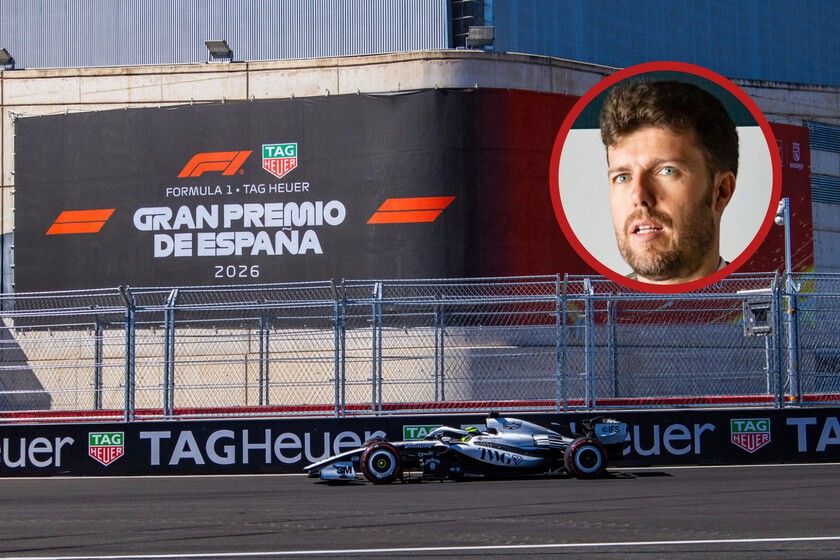
The first Formula 1 race on Madrid’s new street circuit continues to spark controversy. It is as indisputable that the Spanish Grand Prix was a success in terms of the event as it was a sporting failure. The race was too dull, with hardly any overtaking opportunities, and the blame seems to lie with a circuit that offered few options.
In recent days, organizers have indicated that there will be changes to the track ahead of 2027. However, the Madring designer, Jarno Zaffelli, is not entirely convinced. The Italian explains the drawbacks encountered when designing the circuit, the same ones that will hinder making changes now.
According to Zaffelli, the regulations leave little room for changes
After the criticisms following the first edition of the Madrid Grand Prix, the circuit’s top official, Luis García Abad, promised changes. However, it won’t be so simple. According to Jarno Zaffelli, the Madring designer, there are some drawbacks that complicated his original design, and they will also complicate the subsequent adjustments.
Asked about the protests after the first edition, Zaffelli clarifies that “the design faced very strict restrictions in many places, as the new exhibition halls had already been designed and approved just like the road network”. And that will be an impediment also to carry out the promised changes.
In fact, Zaffelli considers that “it’s possible that there will be some changes, but they will be minimal”, although he adds that “some of the options that have been considered seem closer to the intentions that were already present in our original project, which included an overtaking opportunity in Turn 5”.

Zaffelli and his studio, the firm Dromo Circuit Design, have weighed in on other circuits on the current Formula 1 calendar, such as Zandvoort, Silverstone, Spa-Francorchamps, or Singapore, and in all of them with praised results. However, Madring’s lack of overtaking has marked a first blemish on their record.
Zaffelli states about Turn 5 that “it was supposed to be narrower and with less corner passage, and inside Turn 6 there wasn’t an asphalt run-off area, but a gravel solution“, while about La Monumental he says that “the logic of the sequence did not aim to gain time through banking, but to create two trajectories with opposing advantages.”
With the looming threat of a possible preseason also around the corner, Madring has to roll up its sleeves and start changing its circuit right away.
Images | Madring