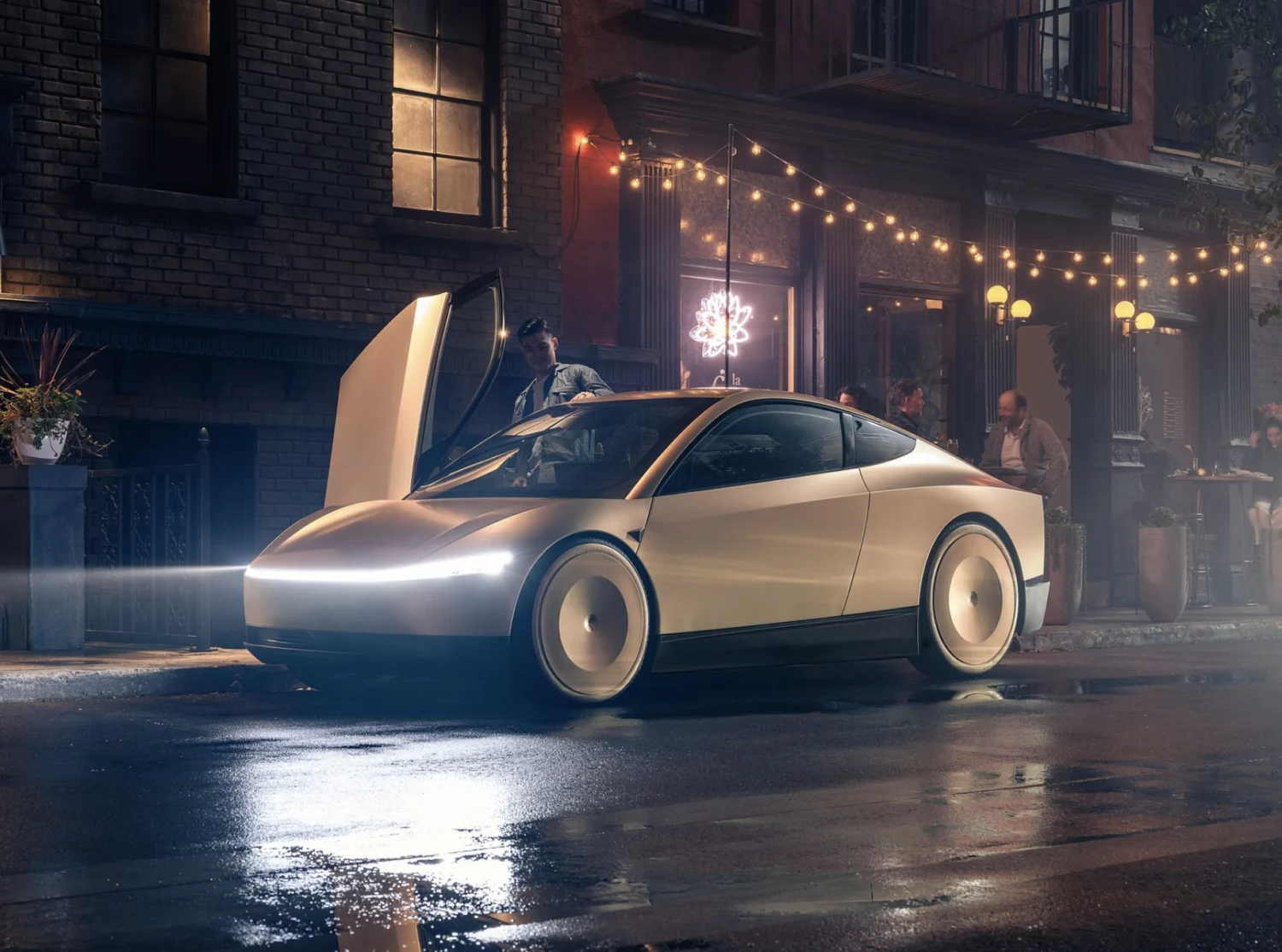
The launch of the Tesla Cybercab is now drawing the attention of U.S. authorities. After the start of its limited commercial operation in Austin, the NHTSA is seeking to understand how Tesla managed to certify a robotaxi that lacks a steering wheel, pedals, and traditional mirrors. The manufacturer must now provide sworn explanations, with civil penalties potentially approaching $139 million.
NHTSA weighs in on Tesla Cybercab certification
Tesla staged the Cybercab rollout in Austin on September 3, 2026. From the very next day, a paid service for riders began in certain parts of the city.
But bringing a robotaxi with a highly unconventional design to public streets raises a number of regulatory questions. The NHTSA, the U.S. agency charged with road safety, issued a special order asking Tesla to detail how the Cybercab was certified. Specifically with regard to federal motor vehicle safety standards.
The issue is especially sensitive because the vehicle omits controls typically found in a car. It notably does not feature a conventional steering wheel or pedals.
In the United States, automakers can certify for themselves that their vehicles comply with the Federal Motor Vehicle Safety Standards, or FMVSS. The NHTSA then intervenes to verify this compliance, including through investigations or audits.
Is the Tesla robotaxi in the crosshairs?
Tesla has precisely chosen this route for its Cybercab. The company has not announced that it sought a temporary exemption from the standards in question.
The agency thus wants to know on what grounds Tesla based its determination that the robotaxi is compliant. The requested responses must be verified under oath.
Federal law also prohibits signing a certification when the signer has reason to believe the information provided is false or significantly misleading. If authorities were to conclude that the Cybercab’s certification violates this rule, civil penalties could reach about $139 million.
False or incomplete answers could also raise other legal questions related to false statements or perjury. The consequences for Tesla would then depend on the measures ultimately taken by the authorities. The investigation is ongoing and Tesla will have to provide answers.
The brake pedal absence at the center of the questions
One of the main points under review concerns FMVSS No. 135. As currently written, it requires service brakes to be commanded by a pedal.
Yet, the Tesla Cybercab does not actually have a traditional pedal assembly. The manufacturer must explain why it nonetheless regards its vehicle as compliant with this requirement.
The NHTSA has already worked on regulatory evolutions tailored to automated vehicles. These would allow an autonomous system to command service braking via an actuator or a comparable device… Without driver intervention on a pedal.
However, these changes are still under study. The regulations currently in force therefore retain the requirement for a foot pedal as written.
Authorities are also examining certain temporary equipment. Tesla’s emergency response guide notably mentions removable steering wheels for some vehicles.
The Zoox case helps illustrate the uniqueness of Tesla’s approach. The Amazon-backed robotaxi company had initially argued that its vehicle designed specifically for autonomous driving could meet existing rules. It ultimately obtained a limited exemption covering certain standards, bound by precise operating conditions.
For the Cybercab, no comparable exemption has been made public. Tesla relies on its self-certification and must now convince the NHTSA that its interpretation of the federal rules is compatible with current regulations.