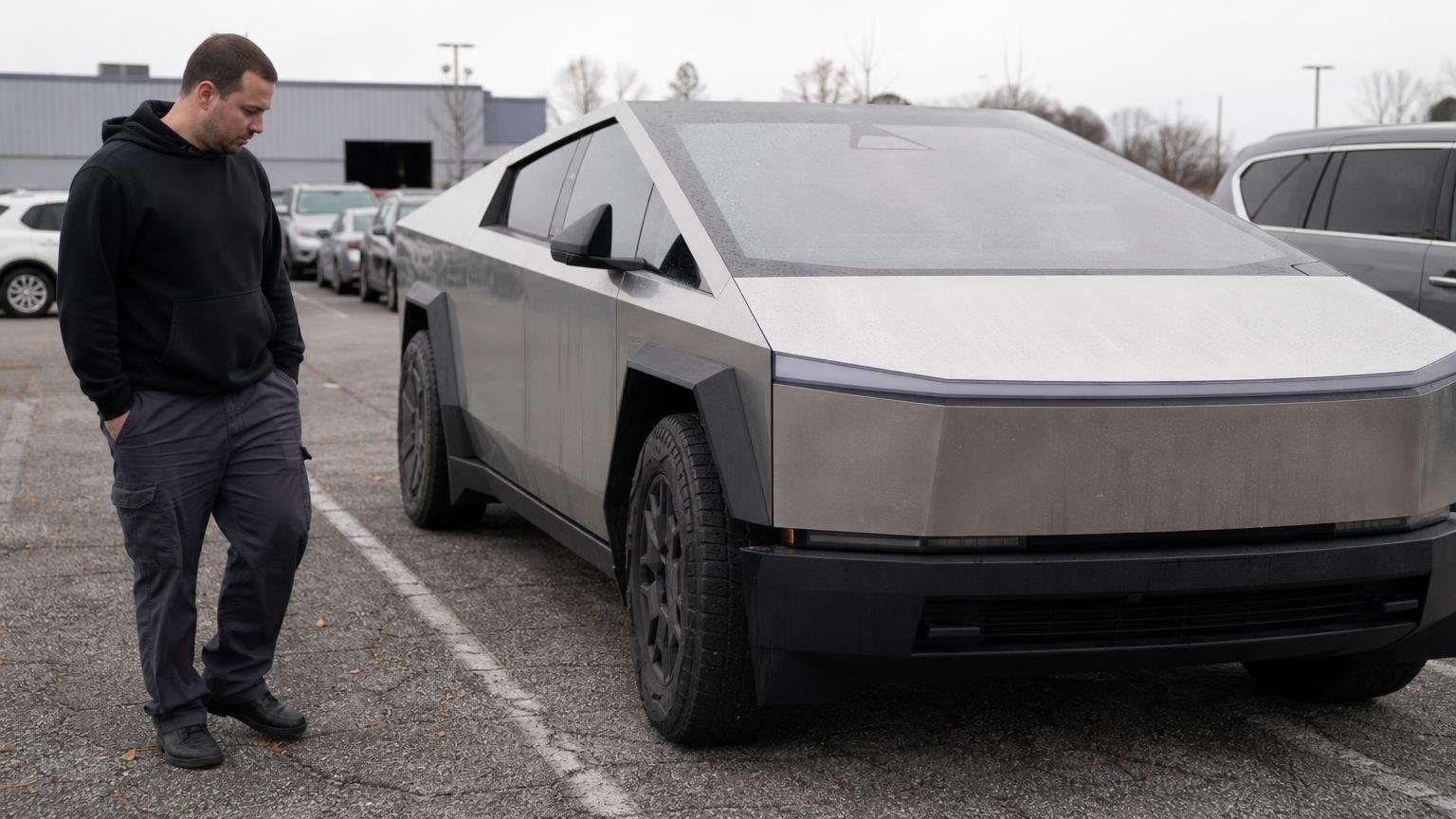
He thought a brand-new electric pickup would be a long-term keeper, a rolling statement of tech bravado and stainless-steel swagger. Eighteen months later, he was staring at an offer sheet that felt like a gut punch.
The buyer — let’s call him Mark — had dropped roughly $102,000 out the door for a well-optioned truck, and he babied it with the devotion of a first-time owner. “I figured even if prices slid, the demand would float it,” he said, sounding both tired and wiser.
Sticker shock, in reverse
When he went to trade it in after 18 months, the number on the dealer’s paperwork was lower than he’d ever imagined. The offer sheet came in just north of the low-sixties — a figure that made his voice hitch. “Seeing that first digit was like cold water on stone,” he said. “It just kept sinking as I read the next zeros.”
What stung wasn’t only the math, but the feeling that a halo product could hemorrhage value this fast. The truck still turned heads, still launched with a hush that made V8s sound antique, and still over-the-air’d new tricks like a gadget in a living room.
Why the fall was so steep
Some of the drop is macro, some is model-specific, and some is simple timing:
- Supply finally met early hype, while interest rates cooled buyer urgency and widened monthly payment gaps.
- Tax credits and price cuts on adjacent EVs reset shopper anchors, pulling used values down.
- Early-run build quirks and headline scrutiny made second owners a little more cautious.
- Tech moves fast; last year’s wow becomes this year’s baseline, especially when software adds features to newer builds more seamlessly.
- Mileage, cosmetic wear, and market-local demand stacked small penalties into a big hit.
“People forget that a lot of the value is in the sizzle, and sizzle has a short shelf-life,” said one used-car manager who has watched EV prices swing like a backyard gate.
The emotional math
Mark admits he didn’t buy with a flipper’s brain, but he did assume some floor of protection. “I thought worst case, I’d lose twenty, maybe thirty,” he said. “Sixty-ish felt like paying for the same thrill twice.”
Depreciation is always a story, and stories need a villain. Sometimes it’s interest rates; sometimes it’s supply; sometimes it’s our own expectations. The sting grows when the product still feels special, when your daily walk-up still sparks a tiny grin.
Yet on the dealer lot, sentiment has no line-item. It’s wholesale books, auction comps, and a risk-adjusted bet on how quickly the next buyer will sign.
What it says about EV resale
This isn’t just about one stainless statement piece; it’s about how we price a young technology competing in a market still finding its equilibrium. Unlike legacy trucks, where towing, trim, and brand loyalty calcify values, EVs face hyper-fast iteration. A range bump here, a charging network deal there, and yesterday’s premium becomes today’s middle-child.
New-car incentives often distort used-car math, because the federal and state sweeteners rarely pass to second owners. When the new-car buyer gets thousands off at the front, the used-car buyer expects a discount at the back, and the trade-in becomes the bridge that collapses.
How to blunt the pain next time
If this story sounds familiar, a few behaviors can help. Consider buying lightly used and letting someone else eat the early drop. Stretch the ownership horizon if you buy new, especially in segments where tech is sprinting. If you crave the latest gadgetry, a lease can box your risk and price the unknowns. Skip first-year builds when possible, because shakedowns are more expensive in markets that still oscillate. And document everything — service, software, accessories — to reassure the next owner that your ride was loved, not simply launched.
Mark wishes he’d thought more like a librarian than a lighthouse keeper. “I wanted to be early, to be part of the wave,” he said. “I forgot waves break, and then the beach takes its cut.”
The last number is the only number
In the end, resale value feels brutally binary: the offer is either a yes or a no. For Mark, it was a reluctant yes, a trade-in that freed him from a payment and tethered him to a tough lesson. The truck will thrill someone else, probably at a price that makes them grin and makes him wince — the market’s uneasy handshake.
He doesn’t regret the experience, just the timing. “The drive was pure magic,” he said. “It’s the page where the spell breaks that stung.” And somewhere on a glossy desk, that offer sheet sits as thin as a menu and just as decisive.