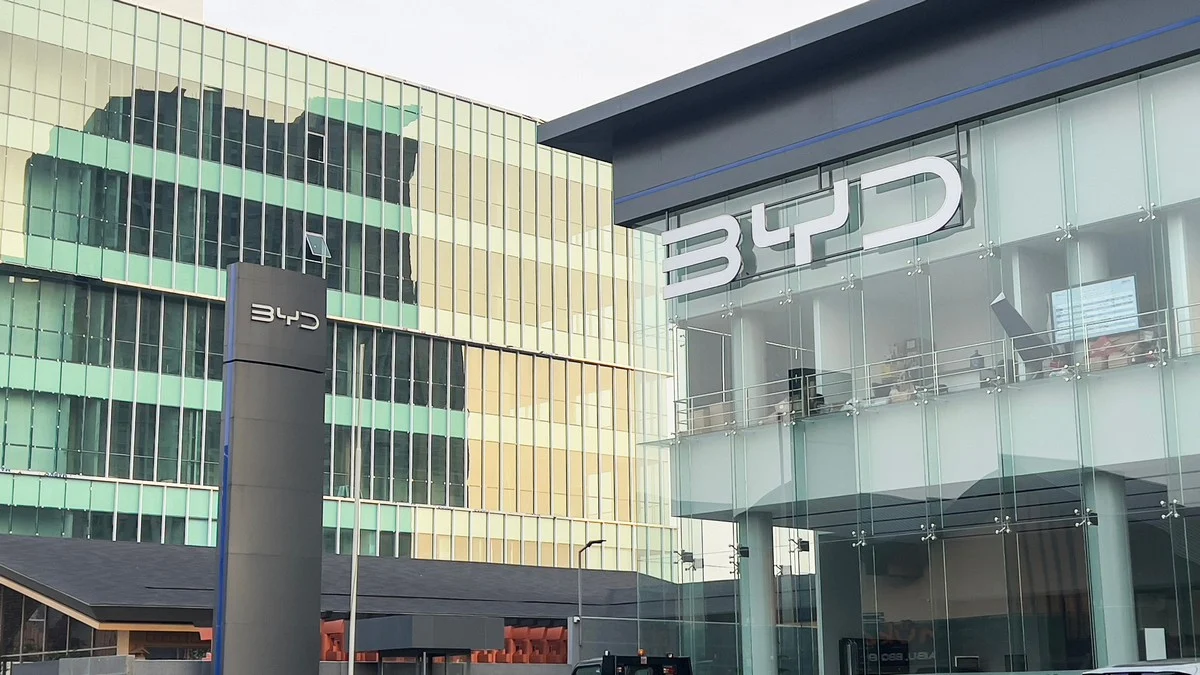
At the start of September, the Chinese automaker BYD announced the eligibility of its electric lineup for the CEE subsidy thanks to a partnership with EDF. A development that resonates far beyond the automotive field because policymakers quickly took note.
An alliance for a CEE subsidy that ruffles feathers
The CEE subsidy rests on energy savings certificates, which obligate energy suppliers (electricity, gas, and fuels) to fund measures that reduce the consumption of fossil fuels. A portion of every energy bill funds greener choices with rebates that can be awarded for purchasing an electric car, for home energy retrofitting, or for installing a heat pump.
That French companies team up with foreign automakers happens regularly. Engie participates in financing the CEE rebates for electric Nissan or Kia vehicles, Spilec (E.Leclerc) for Toyota, Lexus, or Ford, while EDF has a partnership with the Volkswagen group. But when the actor in question is a Chinese carmaker, highly aggressive on the European market, the idea of EDF partnering with BYD becomes much more significant and goes beyond just the automotive industry.
The political world seizes on the matter
In an article for Les Échos, the French Industry Minister, Sébastien Martin, would have asked EDF to end its partnership with BYD, arguing that “the public money of Europeans must first support our industrial base and our jobs.”
Following that, a wave of reactions from several lawmakers. Sacha Houlié, a deputy from Place publique, wrote on X: “At what moment does a company 100% owned by the French state favor a foreign industrialist (and not just any foreign one) over its own manufacturers! What are ministers for?! What a scandal!” The LR senator Marie-Claire Carrère-Gée labeled the partnership as “scandalous and irresponsible.”
Even with a modest subsidy of €365 for private electric vehicles and €555 for businesses, the BYD-EDF pairing remains controversial. Yet it does not seem to raise alarms when it concerns brands within the Volkswagen Group. Likely because it isn’t seen as public money flowing to China, but rather to European regional players anchored in the continent.
These sharp reactions reveal the fear surrounding BYD’s arrival. The Chinese brand brings affordable, well-equipped products that could pose a stiff challenge to European automakers, potentially eating into their market share. Politicians aiming to protect jobs in France and across Europe don’t view subsidies for cars made in China—especially when the money comes from a company 100% owned by the French state—favorably.
BYD might have to seek another partner for the CEE subsidy in 2027, as well as for
the boost that should be granted to BYD cars produced at its new Hungarian plant, such as the Dolphin Surf and the Atto 2.