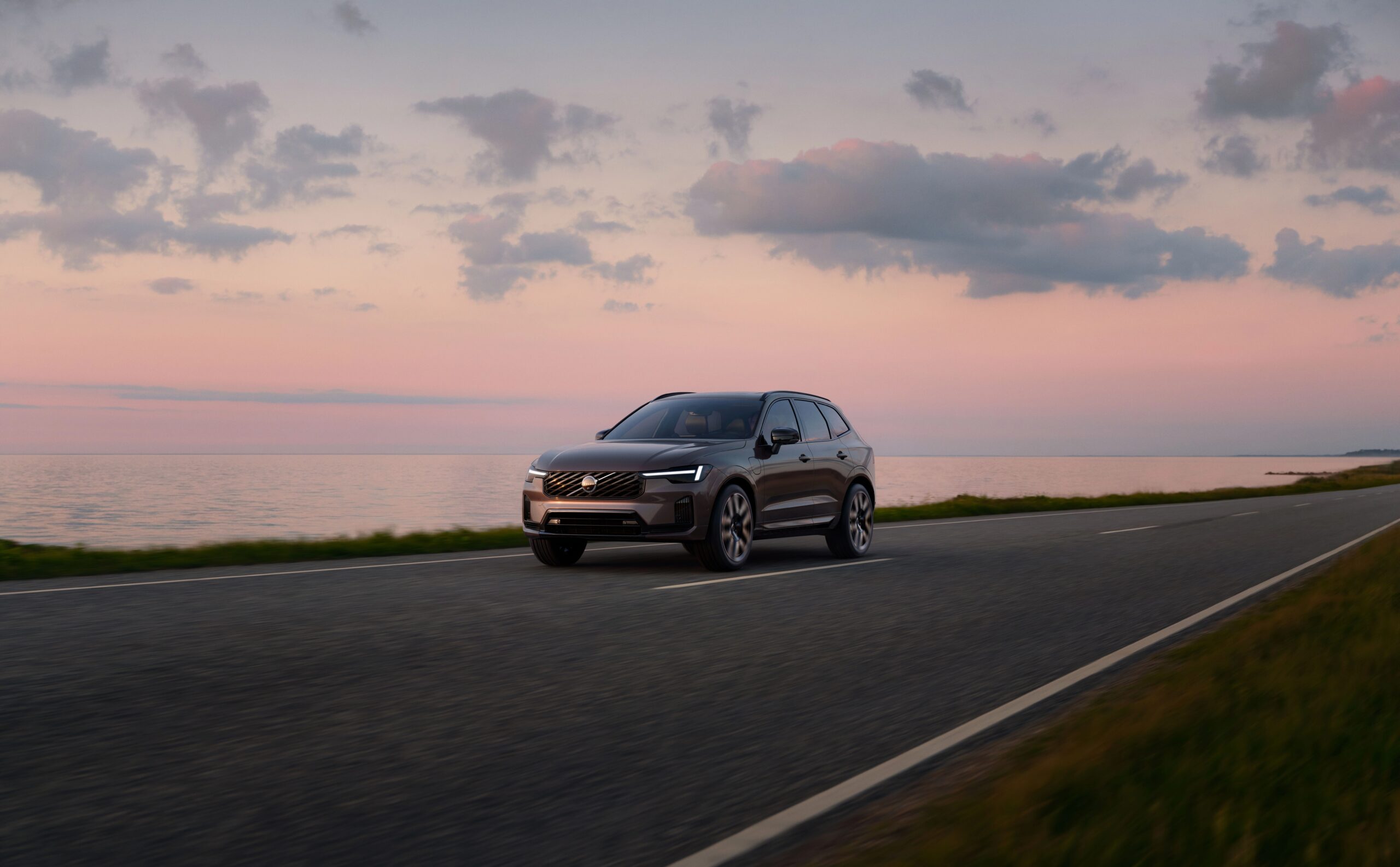
While its replacement by the electric EX60 seemed all but inevitable, the Volvo XC60 clearly shows no intention of retiring. The Swedish SUV is benefiting from a third facelift and, more importantly, from a substantial evolution of its plug-in hybrid versions. With a massive 37.9 kWh battery, the XC60 Long Range now delivers up to 200 km of electric range. A record figure in its class.
A third facelift for the Volvo XC60
Nearly a decade after its launch, the XC60 continues its run. Volvo has chosen to keep its gasoline-powered SUV in the lineup alongside its electric models and, for this update, it’s getting a fresh dose of rejuvenation.
The styling changes mainly affect the front end. The XC60 adopts a new hood, a refined grille, and redesigned headlights and lighting signature that echo the latest XC40 facelift. At the rear, shapes are simplified while the lighting signature now extends farther toward the license plate. Its overall dimensions stay the same, at 4.70 m in length.
Inside, Volvo also makes small touches. New materials dress the door uppers and the dashboard, with fabric and wood in particular. A perforated Nappa leather upholstery appears and the vents have been redesigned.
The Gemini assistant also joins the onboard system, helping to plan routes or dictate messages. The rear space remains generous and the cargo area holds a capacity of 478 liters.
Up to 200 km of electric range
The real revolution, however, lies beneath the floor. The plug-in hybrid XC60 battery capacity leaps from 14.7 kWh to 37.9 kWh of net energy.
Direct consequence: the electric range jumps from about 50 miles to around 124 miles. A figure that puts this XC60 well ahead of the other PHEVs on the market. A Mercedes GLC, a segment benchmark, lists roughly 78 miles (125 km) of range.
Installing this sizeable battery required a modification to the SPA platform. Volvo moved the exhaust line and raised the rear seat by two millimeters to free up more space.
On the other hand, charging does not fully match the battery’s capacity. AC charging power increases from 6.4 kW to 11 kW. But there is no DC fast charging offered. On a home outlet, it would take about 21 hours to recharge the battery.
The XC60 T6 and T8 also gain power
Volvo takes advantage of this significant upgrade to beef up the electric motors. In the XC60 T6 Long Range, electric power now reaches 177 horsepower, while the T8 Long Range delivers 248 horsepower.
Combined with the gasoline engine, both variants claim 357 and 461 horsepower respectively. The XC90 also benefits from the platform changes and sees its maximum electric range reach 160 km (about 99 miles).
Safety also progresses with the arrival of new sensors. Five additional radars and cameras are intended to help the various driver-assistance systems operate more effectively.
Such a technical evolution logically affects pricing. The entry price rises by €5,800 to €76,000. In France, there is also a weight-based penalty starting at €10,190.
The XC60 thus becomes more expensive than several of its direct rivals, despite its spectacular advantage in electric range.
At almost ten years old, the Swedish SUV manages to present a particularly solid argument to extend its career. With up to 125 miles of range on electric power alone, this new plug-in XC60 narrows the gap between PHEVs and fully electric cars. The question remains whether this record range will be enough to offset its age and a price tag that has grown quite steep.