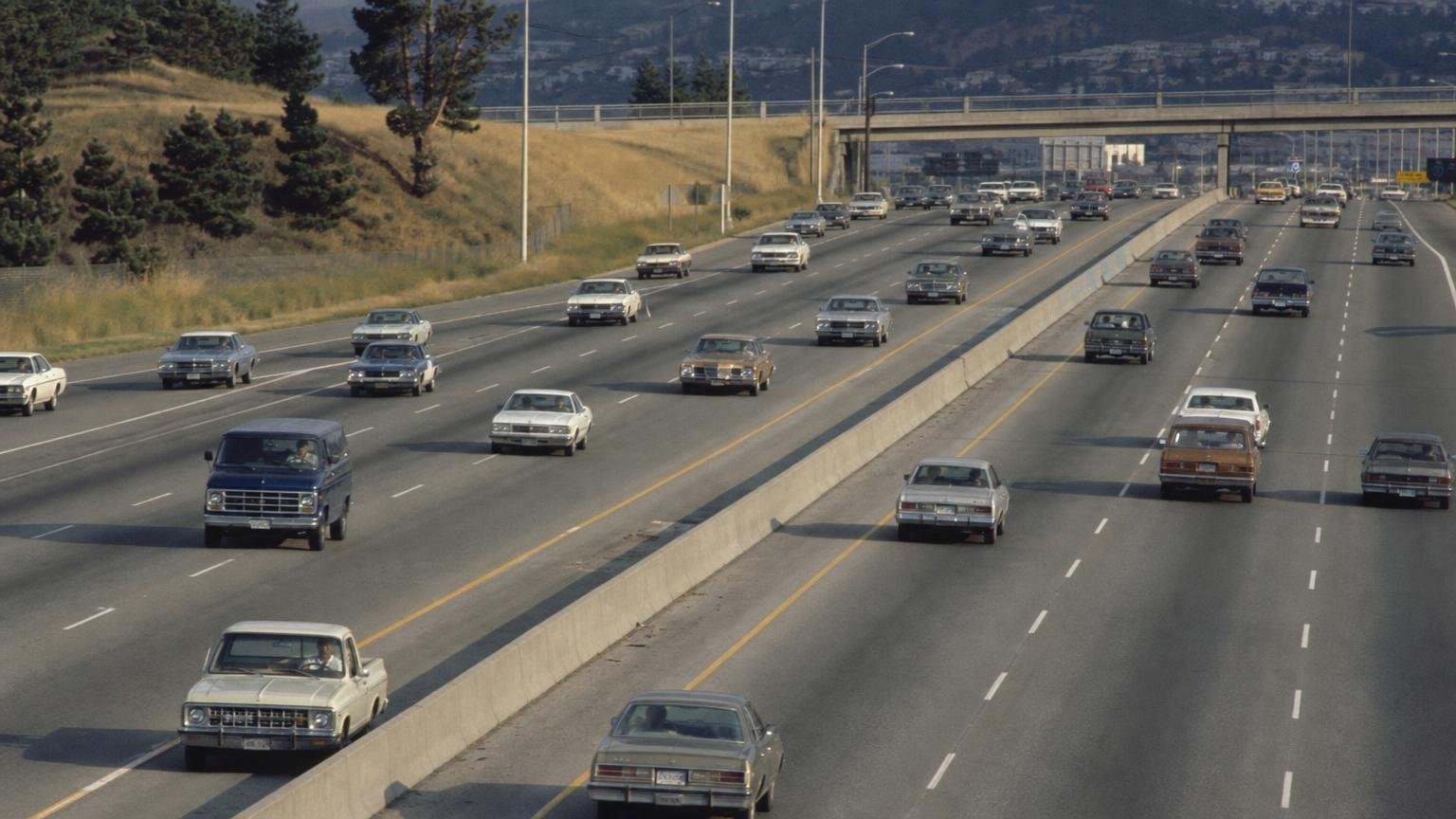
America once asked its drivers to slow down for the nation. For more than two decades, a uniform 55 mph cap stretched from Maine to Hawaii, born in a sudden energy panic and sustained by federal muscle. People groused, tickets soared, and a cultural shorthand emerged: the “double nickel.” It was a grand experiment in how fast a modern country should move.
The rule felt at once simple and sweeping. It crossed state lines, redrew travel habits, and turned cruising into a statement. “Drive 55,” the signs said, but many Americans read them as “Not today.”
Oil shock, fast rule
The policy came out of the 1973 oil embargo, when prices spiked and queues snaked from gas stations. In early 1974, Washington set a single limit on the Interstates and other major roads. The goal was frugal and clear: burn less fuel by burning less speed.
Federal estimates suggested modest savings, on the order of a few percent of highway fuel use. In a world of rationing and odd–even plates, even a little help felt worth the intrusion. “Every gallon counts,” officials urged, “and every mile per hour adds up.”
How Washington made it stick
Speed had long been a state affair. The federal government changed that with a simple lever: money. States that refused the new cap risked losing precious highway funds. Nearly all fell in line, some eagerly, many with a grimace.
Enforcement varied by zip code. Some places got serious, with aircraft patrols, new radar, and high-visibility traps. Others posted the signs and enforced with a wink. “We’re compliant,” one state official joked, “but not zealous.”
Safety dividend or mirage?
The first year brought a sharp drop in road deaths. Fatalities fell by thousands, a change safety advocates hailed as proof that lower speeds save lives. The physics is unforgiving: less velocity, less energy to dissipate in a crash.
But the data told a messier story. The economy slowed, people drove less, and cars soon got more belts and better crumple zones. Analysts split on the cause of the decline, and on how much the 55 cap deserved the credit. “Correlation isn’t causation,” critics reminded, “even when the numbers look kind.”
By the late 1980s, Congress carved a hole in the wall, allowing 65 mph on rural Interstates. Fatality rates didn’t explode, but risk ticked up where speeds rose. To many, the trade-off felt intuitive: a little more time, a little more danger.
The culture war on wheels
As the emergency faded, resentment grew. The cap turned daily drives into a running argument between convenience and compliance. Truckers hated the drag on schedules; families loathed the longer hauls. A subculture of workarounds bloomed: CB radios, radar detectors, and the coded “Smokey’s ahead.”
“Why am I crawling on an empty plain?” one motorist asked. “Why is Washington in my speedometer?” The question wasn’t just about velocity. It was about who sets the rules when a national crisis meets local roads.
Reasons the mandate rankled most:
- It felt paternalistic, punishing safe drivers with blanket limits while missing the worst behavior
The long unwind and what came after
By the mid-1990s, Congress handed speed authority back to the states. Governors and legislatures quickly raised limits, especially on wide-open rural mileage. Some states nudged to 70, others to 75 or 80, anchoring policy to local terrain and public tolerance.
What changed? Travel got faster, tickets shifted, and debates migrated from Washington to capitols. Cars kept getting safer; phones made them more distracting. Fatality rates fell for years, then plateaued and spiked again with new risks. Speed remained a stubborn factor, neither sole villain nor innocent bystander.
The lesson in the rearview
The 55 experiment shows how policy can steer everyday life, quickly and at scale. It also shows the limits of a one-size-fits-all ceiling in a continental country. Energy goals, safety targets, and personal freedom don’t line up on the same straightaway.
“Slower is safer” is true in the aggregate. “Faster is freedom” is true in the individual mind. Good governance lives in the tension: where data meets design, where roads fit context, and where the posted number matches human behavior. The double nickel was a blunt tool for a complex problem. Its legacy is a reminder that the speed of a nation is never just about the speed of its cars.