In Brief
A driver lost control of his vehicle on a severely worn and poorly signposted speed bump, at night and in the rain, at the Mahón port in Menorca. The Spanish judiciary recognized shared responsibility between the public agency that manages the road and the driver, granting him compensation of a little over €3,000. The judges pointed to the lack of adequate signaling and the worn condition of the speed bump as major factors in the accident. This case underscores the importance of maintaining road infrastructure and exercising caution behind the wheel, especially under unfavorable conditions. It also highlights the regulation and accountability in cases involving poorly maintained devices, including in France.
A crack in a faded speed bump, almost invisible under the rain, can it implicate the entity that runs the road? In Spain, a motorist has just proven as much after losing control while crossing a speed bump in very poor condition, at night, at the Mahón port on Menorca. Several years after the events, the court granted him more than €3,000 in compensation, pointing to maintenance and signaling deficiencies of the device.
The facts date back to January 2017. The man was driving at night, in the rain, along the Levante quay at the Mahón port on the island of Menorca, in the Balearic Islands. Exiting a curve, he crossed a speed bump installed on the roadway, lost control of his car and struck a metal structure used to support garbage containers. The damage to the vehicle was assessed at €6,107.70. Referred to years later, the Balearic Higher Court of Justice found that some responsibility rested with the public body that manages the site, but also with the driver, before awarding an indemnization for a poorly signaled speed bump of €3,053.85.
A Degraded and Nearly Invisible Speed Bump at the Heart of the Accident
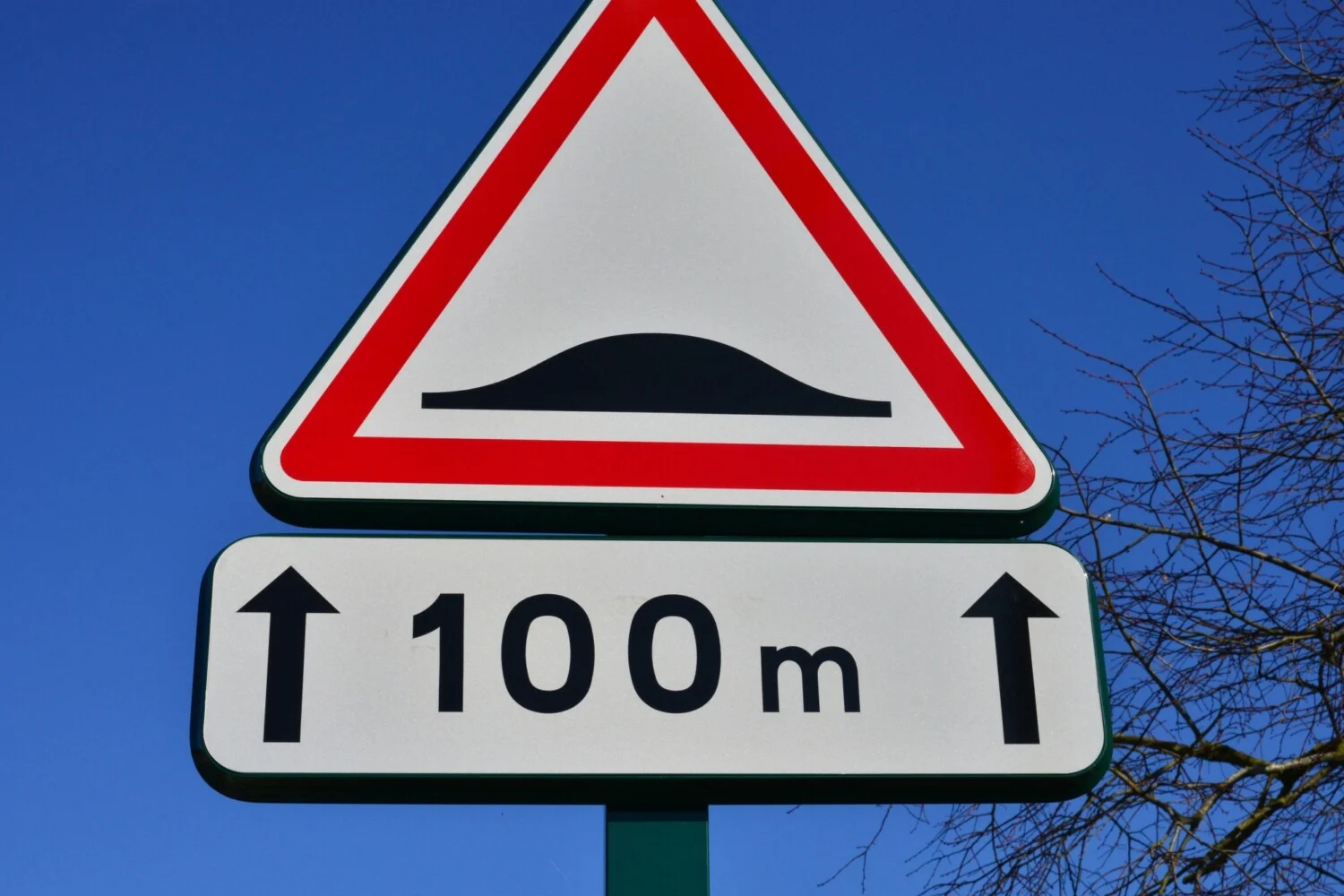
At the center of the case, the judges focused on the state of the ramp. The Balearic High Court found that this speed bump had no vertical signage and that its horizontal markings were insufficient: the anti-skid yellow stripes were heavily degraded, almost worn away. For the magistrates, these defects had a decisive impact on the occurrence of the accident, according to the Spanish media Noticias Trabajo. Proper signage would have allowed the driver to anticipate the device, all the more so given that the road was wet and it was nighttime.
The judges also noted that the worn anti-skid strips had reduced traction on the roadway. According to them, if the speed bump had been properly maintained, the vehicle could have gripped the road better at the moment of impact, which might have prevented the loss of control, or at least mitigated the consequences. The court also took into account that the speed bump, as well as the metal structure struck, had been replaced after the accident, even though the public entity Ports de Balears claimed that the modification to the container supports served only aesthetic purposes.
Shared Compensation: More Than €3,000 for the Driver, and What Rules in France?
Nevertheless, Ports de Balears was not found solely responsible for the incident. The port authority argued that the driver was traveling too fast, and did not sufficiently adjust his speed to the rain and darkness, even though the area was limited to 40 km/h. The judges partially accepted this argument. In their decision, they stated that “a more attentive driving, and probably at a slower speed, would have limited the extent of the damage.” Specifically, the court held a 50/50 liability split: of the €6,107.70 in damages, Ports de Balears must pay €3,053.85, plus legal interest. The decision is not final and may still be subject to cassation.
This Balearic case illustrates how the judiciary can assess both road conditions and driver behavior. In France, the installation of speed bumps is tightly regulated. They cannot be installed on a road handling more than 3,000 vehicles per day, nor within 200 meters of the end of a built-up area. They are also prohibited in certain curves or on steep grades, and their height is regulated. Some associations argue that thousands of speed bumps in France do not comply with these rules. This serves as a reminder that when a vehicle is damaged by a poorly maintained or poorly signed speed bump, the question of compensation often hinges on the balance of responsibility between the road manager and the driver’s vigilance, just as in Spain.
Comparative Table
| Item | Value |
|---|---|
| Vehicle Damage | €6,107.70 |
| Indemnification Granted | €3,053.85 |
| Liability Split | 50% driver / 50% agency |
| Speed Limit in Zone | 40 km/h (about 25 mph) |
Key Takeaways
- A motorist lost control of his car on a degraded and poorly signposted speed bump in Minorca.
- The Spanish court recognized shared liability between the road manager and the driver (50/50).
- The total vehicle damage was €6,107.70, and compensation of €3,053.85 was awarded to the driver.
- The absence of proper signage and the wear on the speed bump’s yellow strips were deemed decisive factors in the crash.
- The speed bump and the struck metal structure were replaced after the incident.
- In France, the installation of speed bumps is strictly regulated to prevent such incidents.
FAQ
Why did the driver receive compensation?
Because the condition of the speed bump and the lack of signaling contributed to the accident, according to Spanish authorities.
What was the amount of damage to the vehicle?
The damage to the vehicle was assessed at €6,107.70.
What amount of compensation was awarded to the driver?
The driver received €3,053.85 in compensation.
Who was deemed responsible for the accident?
The court deemed both the road manager and the driver responsible, at 50% each.
Are there rules for installing speed bumps in France?
Yes, the installation of speed bumps is strictly regulated, particularly regarding traffic, placement, and height.