Dacia has just unveiled the second generation of the Spring. This compact electric runs on the same platform as its French cousin, the Twingo, to deliver better range, more power, likely improved handling, and eligibility for France’s ecological bonus. It’s a car full of promise, especially since it’s once again the cheapest electric vehicle in the lineup — but what does the entry version actually offer? Here is the Dacia Spring, the cheapest in the catalog.
A price that defies all competition
The Renault Twingo was already competing for the title of the cheapest electric car in France, but Dacia settles the matter with the new Spring. This Spring 2 uses the Twingo’s technical platform, yet pushes further on savings to offer an entry price of 17,900 euros. By comparison, the Renault Twingo starts at 19,490 euros. The price gap isn’t enormous, but it’s close to 10% cheaper for the Spring than for the Twingo.
But the real good news for the Spring is its return to Europe. Production is no longer in China but in Slovenia, at the Novo Mesto plant, just like the Twingo. This allows the Romanian-made compact electric to achieve an eco-score in France and benefit from the ecological bonus. As a result, a €3,620 purchase incentive is offered to all private buyers, bringing the Spring’s price to €14,280. And by taking advantage of the best ecological bonus, awarded to the most modest buyers, namely €6,180 for the Spring, the price drops to below €12,000, to €11,720 precisely. It even ranks among the cheapest cars on the market, across all powertrains.
But what does it offer for that price?
Another piece of good news is that Dacia isn’t following Citroën with the ë-C3, which trimmed cost by skimping on the battery. The Spring gets the 27.5 kWh battery from the Twingo and its 82-horsepower motor, which makes it sufficiently versatile for urban and suburban use and even capable of handling highway speeds. An official range of 250 km may curb long-distance ambitions, but that’s not the Spring’s mission.
At the entry level, however, the Dacia Spring does not include a DC charger. It only has an onboard 6.6 kW AC charger. To get the 50 kW charger, you must move up to the Journey trim, which offers it as an option. A shame…
When it comes to onboard equipment, you’ll find the essentials that still matter. Manual air conditioning, electric adjustment for the mirrors, rear parking sensors, and a fold-down rear bench. Fortunately, front power windows are included in the price, but the rear windows are only vent windows. The instrument cluster is presented on a 7-inch display, but there’s no central touchscreen for navigation or media. You’ll need to rely on the driver’s smartphone via an NFC connection to use steering-wheel controls, just like the entry-level Citroën ë-C3. Finally, the obligatory driver-assistance features required by the GSR 2 standard are, of course, included.
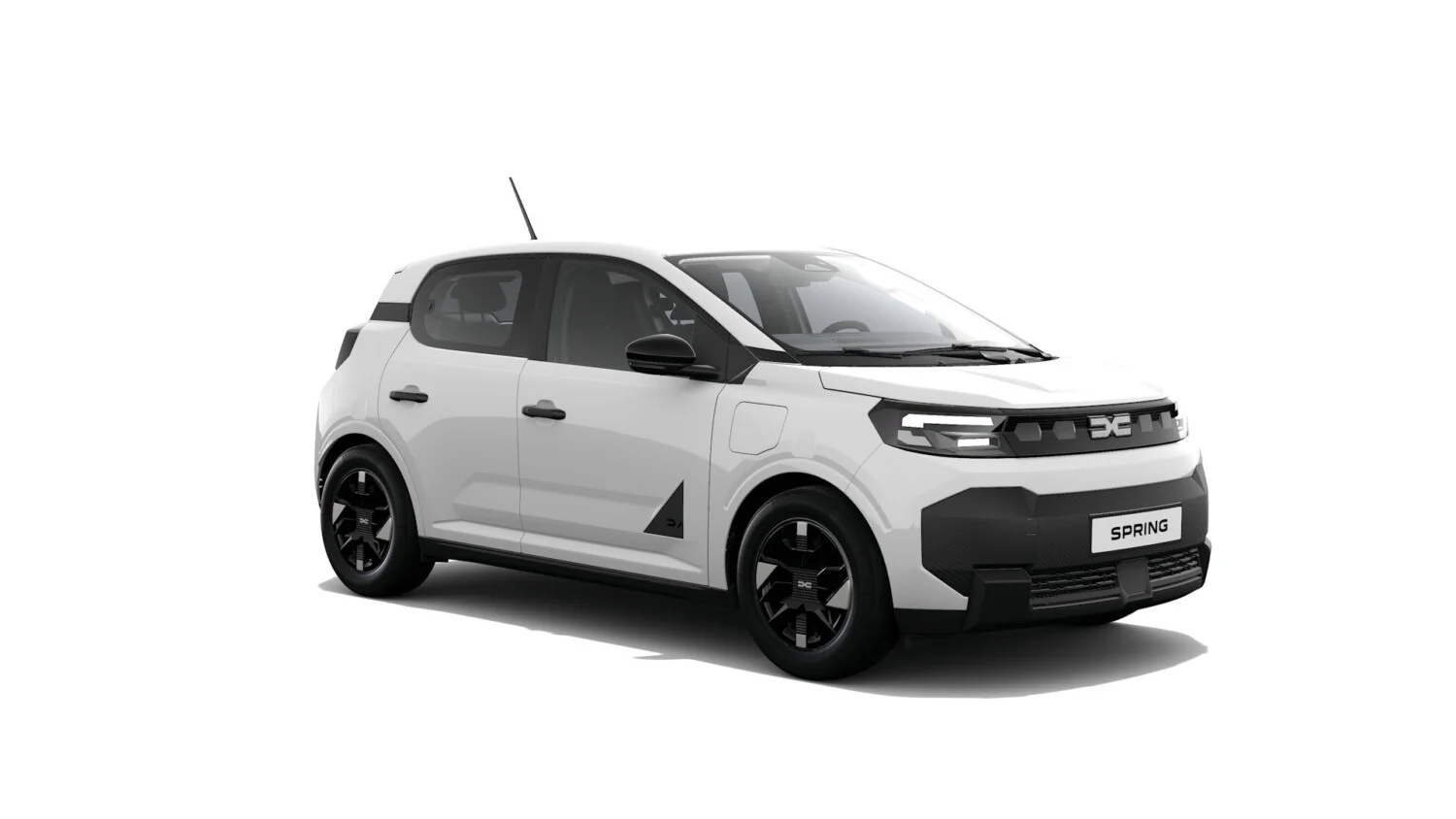
As for style, it’s clearly less flashy than the Journey trims shown in advertising. At the base price of 17,900 euros, you get 16-inch wheels with hubcaps, a plain white color, and black mirrors and door handles. That’s the reality for a portion of Dacia buyers who want a vehicle that’s primarily affordable. This Expression version leans into the basics to meet that demand.