In Brief
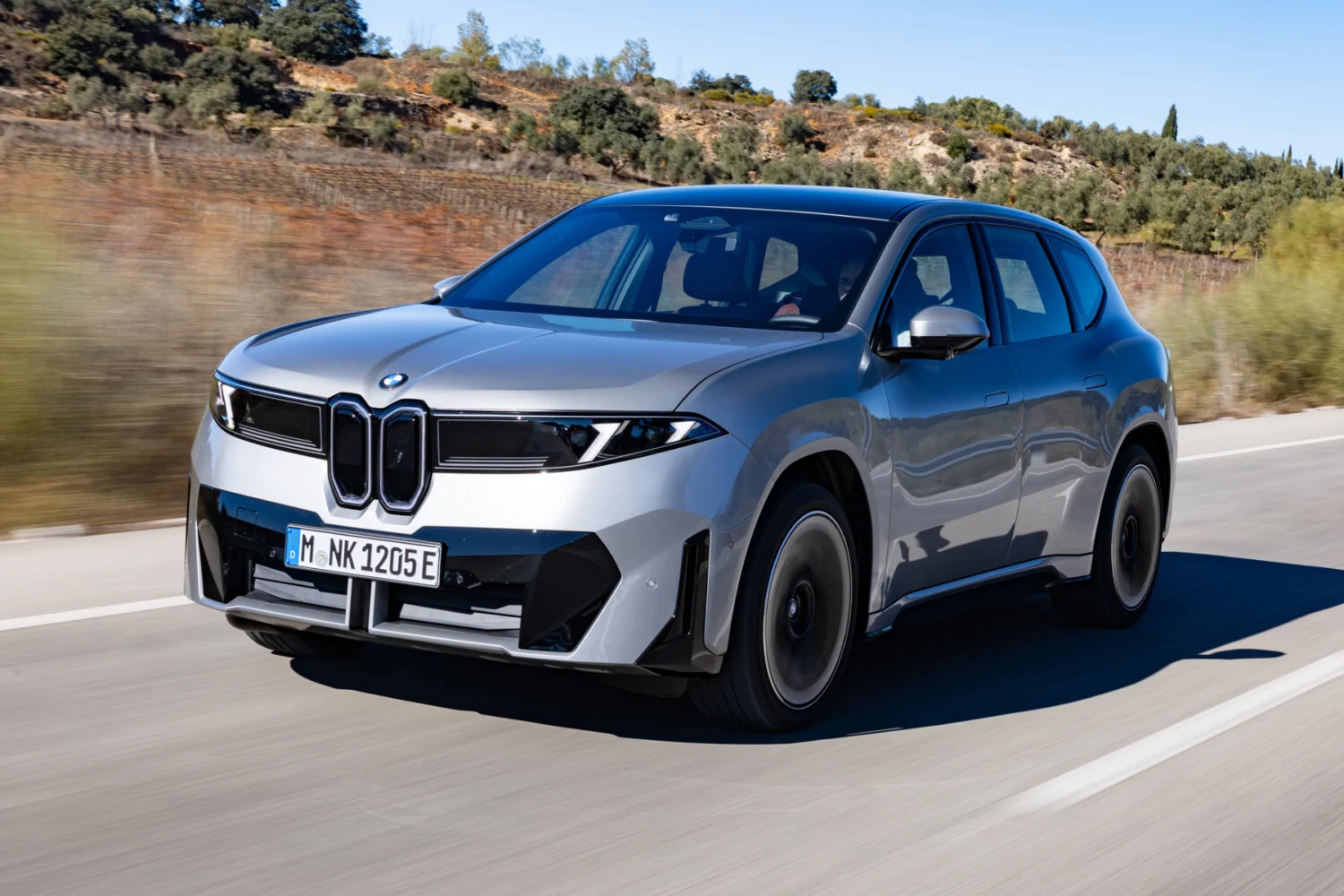
The comparison between the Audi Q6 e-Tron Quattro, the BMW iX3, and the Mercedes GLC highlights the advances in electrification and technology within the German luxury segment. The BMW iX3 stands out as the best all-rounder thanks to its long range, efficiency, and thoughtfully planned interior space, all while maintaining a controlled price. The Mercedes GLC captivates with its comfort and the richness of its equipment, whereas the Audi Q6 proves less convincing, particularly regarding efficiency and sound insulation. When it comes to choosing, priorities around technologies and everyday use steer the decision toward the BMW iX3.
In a market upended by the arrival of new brands and the implosion of certain segments, staging a “back to the old days” showdown among Audi, BMW, and Mercedes has a nostalgic vibe. There’s nothing retro, however, about the three SUVs we pit against each other, all in four-wheel-drive, dual-motor configurations. The Q6 e-tron has just celebrated its second birthday, while the BMW iX3 and the Mercedes GLC have not even marked their first year on sale. What unites them is a flood of technology, kilowatt-hours, and kilowatts; they differentiate themselves far more than the era of diesel luxury that once defined German premium automaking. This is a highly instructive comparison that offers a clear sense of the state of the art in electric propulsion.
Audi Q6 e-Tron Quattro 428 hp/100 kWh S Line vs BMW iX3 50 xDrive 469 hp/113.4 kWh M Sport vs Mercedes GLC 400 4Matic 489 hp/100 kWh AMG Line: on the road?
We keep hearing about the supposed technological dominance of Chinese manufacturers. Yet there are some refreshing remnants of German manufacturing still in play. That’s the impression you get after sampling the GLC 400. You’ll either love or dislike the massive screen that serves as the cockpit, but you have to admit all this tech feels polished, especially the driver aids. On the highway, the lane-keeping assists are handled with composure and fluidity by the adaptive cruise control, while the voice control system interprets requests with aplomb. A technology that genuinely makes life easier rather than complicating it, which remains true in most other offerings as well.
The driver can focus on piloting a SUV that prioritizes comfort, particularly in our test car equipped with optional air suspension. Its suppleness, even in Dynamic mode, contrasts with the aggressiveness of the acceleration. Sub-five seconds to 100 km/h is serious business, to the point where you might hesitate to hand the GLC over to inexperienced drivers. Not that it’s hard to drive. The option of rear-wheel steering adds stability and surprising agility for a vehicle of its heft. Add a remarkably quiet operation and an excellent balance between wind and road noise, and you have a car that behaves very well. Compared to the Mercedes, the BMW seems to play a more measured, restrained score.
There’s no gigantic screen, nor air suspension or rear-wheel steering as standard, but that does not prevent it from showing solid efficiency despite its weight. It feels less comfortable, with body motion more noticeable on rough surfaces. In return, the iX3 demonstrates noticeably sharper behavior. It’s tied to its performance—less showy than the Mercedes, but more than adequate for a family SUV. On the driving aids, the adaptive cruise control holds its own against the Mercedes. Conversely, the BMW is slightly less well-insulated from road and wind noise, and its seating position offers less latitude: to prevent the steering wheel from obscuring the panoramic strip, BMW limited seat height adjustment. Against these two newer rivals, the Audi already appears a touch behind. One particularly noticeable shortcoming is its sound insulation, which is not as refined as in the others, especially with our 21-inch wheel setup. It’s a pity because its suspension tuning, when paired with adaptive air springs, is well judged: more comfortable than the iX3, a touch more dynamic than the GLC, and without rear-wheel steering. This is its paradox, given that its performance is clearly lower (about 1.6 seconds slower to 100 km/h than the Mercedes). The difference is perceptible behind the wheel, yet we’d argue these “reasonable” figures align better with its role as a family SUV.
Audi Q6 e-Tron Quattro 428 hp/100 kWh S Line vs BMW iX3 50 xDrive 469 hp/113.4 kWh M Sport vs Mercedes GLC 400 4Matic 489 hp/100 kWh AMG Line: cabin life?
The Mercedes is arguably the one that “stuns” most, offering a cockpit dominated by a cinema-like screen and a continuously glowing display. At least the ergonomics are well thought out, and the driver can easily locate the desired features. Yet in terms of materials, the GLC falls short of the premium plastics that Mercedes used in the past. It seems aesthetics have become a top priority in today’s market. Thanks to its size, the GLC delivers comfortable interior space across all seats, and its boot is more than ample. There’s even a generous 120 liters of storage under the front hood, and our example with air suspension included a handy button to lower the loading lip.
Inside the BMW, material quality is noticeably higher. The presentation is premium, but some will find the screens less all-encompassing. The dazzling digital strip at the top of the dash is impressive and actually quite restrained once configured. Some will appreciate being able to disable the overspeed assistant with a single press. The technology seems more accessible, albeit not without a few irritants: the steering wheel is highly exposed to glare, the motorized air vents are unnecessary, and the wheel buttons are not the easiest to operate.
The iX3 stands out most for its rear-seat space. Not only is it about 1 cm longer than the Mercedes, but the overall sense of space feels greater thanks to better lighting and a well-designed bench. In the Audi, the “wow” effect is a touch more muted. Yes, there’s a superb curved display, but the interior finish does not surpass that of its rivals. The plastics, especially the piano-black center console, do not convey a premium feel, and the multimedia system is less ergonomic. It is also the model in which the driver-assistance aids are the least easy to deactivate. Finally, the Q6 e-tron is the least accommodating at the rear. As for the load space, it too features the same button to lower the lip if equipped with air suspension.
Audi Q6 e-Tron Quattro 428 hp/100 kWh S Line vs BMW iX3 50 xDrive 469 hp/113.4 kWh M Sport vs Mercedes GLC 400 4Matic 489 hp/100 kWh AMG Line: budget?
BMW has placed great emphasis on its new “Neue Klasse” electric generation, of which the iX3 is the first to represent the era. The fact is, it offers the largest battery capacity, but it also shows a significantly lower consumption than its rivals, particularly the Q6 which requires on average 3.7 kWh more per 100 km. And with 530 km of highway range, it begins to resemble a thermal’s practical radius, even as it offers the fastest charging among the trio, enabling quick recharges comparable to its rivals despite the extra kilowatt-hours. It’s hard for the Mercedes and Audi to stand up to that, especially since BMW does not charge more for its greater capacity. That said, our GLC’s consumption was likely inflated by its very generous equipment list, which makes it the heaviest model in this comparison. If the match had been fought with two-wheel drive, the Q6 would have been able to highlight its Eco-score—a tax-friendly argument for corporate buyers—but the Quattro version does not offer it.
In terms of equipment, the GLC pushes up the consumption: while it includes a panoramic sunroof as standard, you must opt for the Premium package at 7,600 euros to enjoy hands-free entry, which is standard on some Dacia models. Bigger equipment packages are not necessarily a liability, but this example is a reminder that luxury carries a price. The BMW has rationalized its catalog to a minimum, and it also wisely offers the same tire setup across all four corners, a practical economy in daily use. The Audi, meanwhile, can point to its 9 CV fiscal power rating (calculated before the reform), which costs the GLC dearly in terms of tax horsepower, given its 24 CV rating is tied to its engine’s power.
Audi Q6 e-Tron Quattro 428 hp/100 kWh S Line: its pros
- Efficient air suspension
- Preserved comfort
- Strong standard equipment
Audi Q6 e-Tron Quattro 428 hp/100 kWh S Line: its cons
- Higher consumption
- Road noise
- Price
BMW iX3 50 xDrive 469 hp/113.4 kWh M Sport: its pros
- Range
- Charging capability
- Interior space
BMW iX3 50 xDrive 469 hp/113.4 kWh M Sport: its cons
- Stiffer suspension
- Ergonomic glitches
- Some fleeting options
Mercedes GLC 400 4Matic 489 hp/100 kWh AMG Line: its pros
- Comfort
- Silence
- Performance
Mercedes GLC 400 4Matic 489 hp/100 kWh AMG Line: its cons
- Elitist options
- Still-limited highway range
- All-digital cockpit
Audi Q6 e-Tron Quattro 428 hp/100 kWh S Line vs BMW iX3 50 xDrive 469 hp/113.4 kWh M Sport vs Mercedes GLC 400 4Matic 489 hp/100 kWh AMG Line: verdicts?
On the road
- 1st: Mercedes GLC
- 2nd ex-aequo: BMW iX3 and Audi Q6 e-Tron
In-cabin life
- 1st: BMW iX3
- 2nd: Mercedes GLC
- 3rd: Audi Q6 e-Tron
Budget
- 1st: BMW iX3
- 2nd: Mercedes GLC
- 3rd: Audi Q6 e-Tron
The Auto-Journal’s Pick: BMW iX3
The state of electric propulsion has advanced to a point where range and charging speed remain essential criteria. In this arena, the iX3 dominates the debate so decisively that it rightfully earns the victory, even though the GLC can boast comfort and refined equipment. The Q6 already sits clearly behind: progress is racing ahead in this category.
Read our comparison test between the Audi Q6 e-Tron Quattro 428 hp/100 kWh S Line, the BMW iX3 50 xDrive 469 hp/113.4 kWh M Sport, and the Mercedes GLC 400 4Matic 489 hp/100 kWh AMG Line in Auto-Journal issue no. 1215, dated 20/08/2027.
Comparative Table
| Model | Power (hp) | Battery (kWh) | 0-100 km/h (s) | Highway range (km) | Consumption (kWh/100km) | Tax horsepower (CV) |
|---|---|---|---|---|---|---|
| Audi Q6 e-Tron Quattro S Line | 428 | 100 | ~6.6 | – | 3.7 more than BMW | 9 |
| BMW iX3 50 xDrive M Sport | 469 | 113.4 | – | 530 | Reference | – |
| Mercedes GLC 400 4Matic AMG Line | 489 | 100 | <5 | – | – | 24 |
Key Takeaways
- The BMW iX3 stands out as the most capable in terms of range and total cost of ownership.
- The Mercedes GLC captivates with its comfort and onboard technologies.
- The Audi Q6 e-Tron shows some shortcomings in sound insulation and consumption.
- All three offer a high level of equipment but with different philosophies on ergonomics and finish.
- According to Auto-Journal, the BMW iX3 wins this comparison thanks to its technological lead and value for money.
FAQ
Which SUV offers the best range?
The BMW iX3 50 xDrive has the longest range, at 530 km on the highway.
Which model is the most comfortable?
The Mercedes GLC stands out for comfort, notably thanks to the optional air suspension and its remarkable silence.
Which SUV is the most economical to run?
The BMW iX3 delivers the lowest consumption and a streamlined catalog, making it cheaper over time.
What are the strong points of the Audi Q6 e-Tron?
The Audi Q6 e-Tron stands out for its effective air suspension, solid comfort, and a well-rounded standard equipment list.
Which SUV has the best driver-assistance system?
The Mercedes GLC offers driver-assistance systems that are highly developed and intuitive, easing the driver’s life.