In Brief
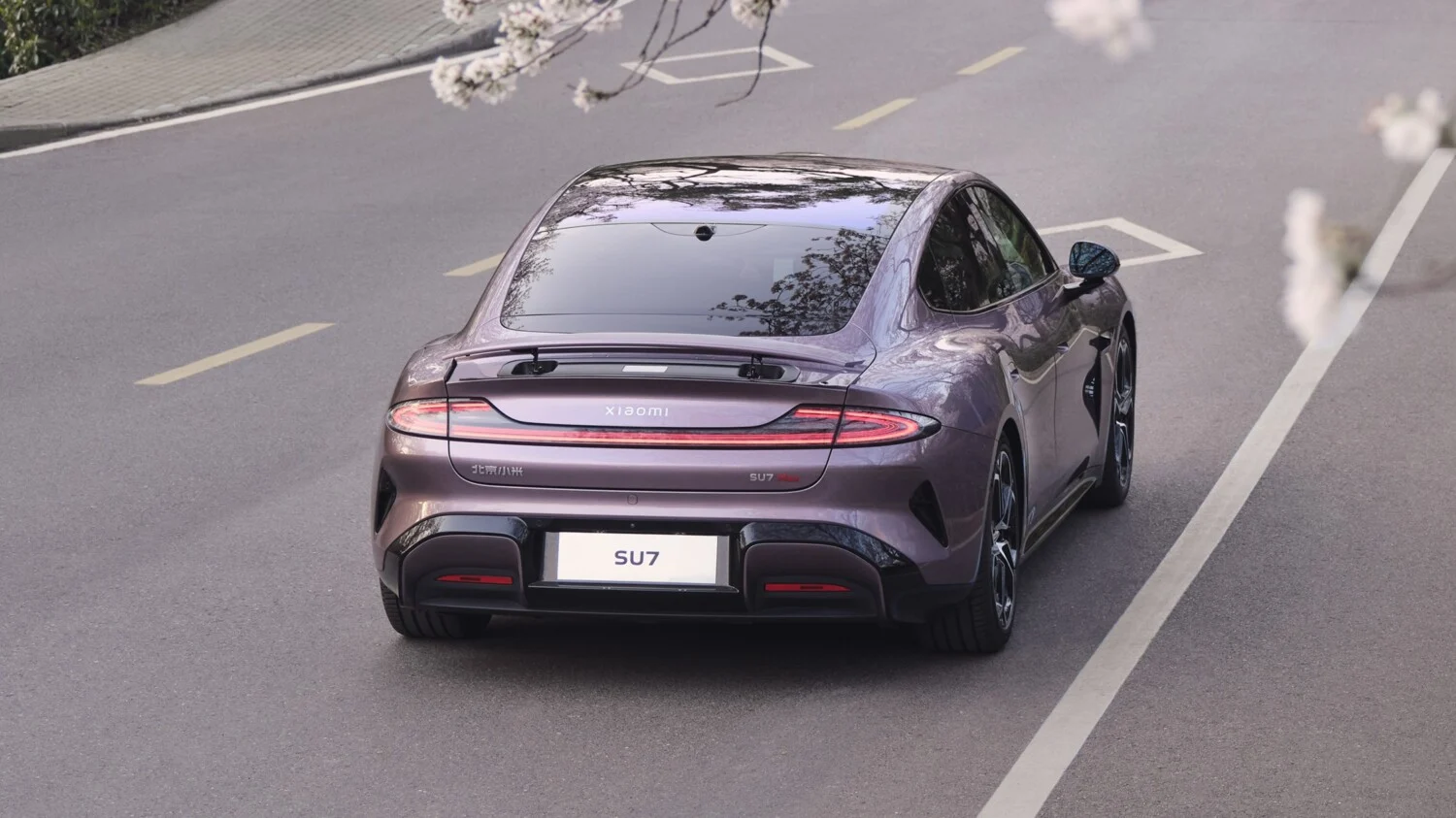
Xiaomi is actively road-testing its electric sedan SU7 on French roads well before its official European launch. These test vehicles, equipped with sophisticated sensors and bespoke gear, enable the maker to tailor its technologies to local conditions and regulatory requirements. The trials, spotted across various regions of France, illustrate Xiaomi’s commitment to delivering a successful entry into Europe. The first models are slated for sale in 2027, underscoring the brand’s strategy to establish itself across the continent. France, while not explicitly labeled a priority market, appears undeniably involved in this push.
Xiaomi, this up-and-coming Chinese automaker known for its tech roots, is gearing up to make a big splash in the European automobile market.
Several Xiaomi SU7 roam the roads of France
Already in Germany, since it is in Munich that Xiaomi has established its new European research and development hub, where teams are currently working to tailor the company’s technologies to the specifics of the European market. As for the brand’s arrival in France, clues have been multiplying on our roads in recent months. After an initial sighting of the 100% electric SU7 sedan in February in Moselle (57), another unit rolled through Montpellier (34). And today, another camouflaged model, carefully camouflaged, was spotted by a reader of our colleagues at Automobile Propre in Haut-Rhin (68). The vehicle in question was quietly charging on a fast charger in Saint-Louis, near Mulhouse, just steps away from the German and Swiss borders. Bright pink in color and absolutely packed with sensors, it betrays the large-scale test campaign Xiaomi is rolling out across the Old Continent. The car hosted a bespoke setup featuring a 360° rotating LiDAR, two forward-facing wide-angle cameras mounted at the front, or a high-precision GPS antenna, among other sensors.
A mandatory step for non-European automakers
Such testing is crucial for Chinese manufacturers, whose driver-assistance systems, designed initially for their domestic market, can prove miscalibrated when transplanted onto European roads, with their own signage codes and traffic configurations. The goal here is to fine-tune sign recognition, the detection of other road users, and the overall adaptation of the vehicle to its future operating environment. Xiaomi recently confirmed its plan to bring its models to Europe starting in 2027. The company also presented the SU7 at the IFA in Berlin in early September and announced that it is seeking partners to build its future distribution network on the continent. While France isn’t officially listed as a primary market yet, the intensified testing on French soil suggests it won’t be left out for long. All in all, Xiaomi’s European push is very much underway!
The Essentials to Remember
- Xiaomi is prepping the arrival of its electric SU7 in Europe with intensive testing in France.
- Test vehicles carry advanced sensors such as a 360° LiDAR, front-mounted cameras, and a high-precision GPS antenna.
- The tests aim to adapt the driver-assistance and related technologies to the European road environment.
- The first launches are planned for 2027 across the continent.
- France isn’t officially named a priority market, but the surge in testing indicates it won’t be overlooked.
- Xiaomi’s footprint in the European automotive scene is growing through concrete actions.
FAQ
Where is Xiaomi testing its cars in France?
Sightings of the Xiaomi SU7 tests have been reported in Moselle, Montpellier, and Haut-Rhin, notably near Mulhouse.
What equipment is used on the testing Xiaomi SU7 prototypes?
The prototypes carry a 360° rotating LiDAR, two forward wide-angle cameras at the front, and a high-precision GPS antenna, among other sensors.
Why is Xiaomi conducting these tests in Europe?
These trials are meant to adapt the driving-assistance systems designed for China to the specifics of European roads and regulations.
When does Xiaomi plan to market its cars in Europe?
European sales are slated to begin in 2027.
Will France be among Xiaomi’s first markets?
France isn’t listed as a priority market, but the growing testing activity suggests it won’t be ignored for long.