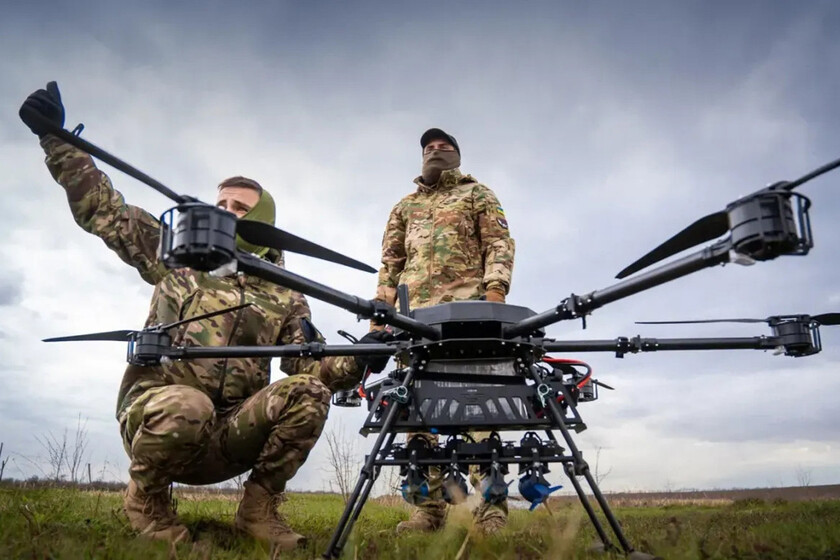
Following the Russian invasion, Ukraine estimates that defense consumes about a third of its annual economic capacity. For 2026, it projected a budget of 120 billion dollars, even if the war were to end. Since the conflict began, Ukraine’s defense industry has grown accordingly, especially in the area of drones.
Cheap and effective unmanned vehicles are one of its cornerstones, as they have troubled the powerful and expensive Russian tanks. Now, from the Ukrainian Parliament, a law is being processed that could translate into an unexpected funding source for military drones: legalizing pornography.
From Porn to War: 21 Million to Fund Drones
In Ukraine, the production, distribution, or possession of pornography is illegal: it carries penalties of up to seven years in prison. This regulation is, curiously, a Soviet legacy. And, paradoxically, it could become a weapon against Russia, albeit indirectly.
Everything starts with a bill that has already received the Parliament’s initial approval with the near-unanimous vote of the chamber: it is a regulation aimed at decriminalizing pornography. Its sponsor is Yaroslav Zhelezniak, head of the Parliament’s finance committee. One of his arguments is that normalizing this activity could generate millions of euros in tax revenues.
Zhelezniak puts a figure on it: 25 million dollars per year (about 21.5 million euros at current exchange rates). He also specifies its destination: he suggests it would be enough to finance the production of 30,000 military drones. It is not an exaggerated figure. In fact, it would be only a fraction: Ukraine currently produces 10 million drones annually.
An Essential and Highly Profitable War Industry
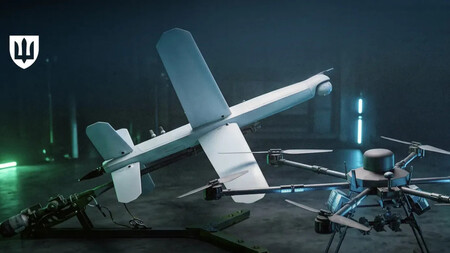
Just in the first half of 2026, Ukraine carried out more than a million verified drone strikes against Russian targets. And its investment in these unmanned aircraft, both aerial and ground, is growing: in the first six months of the year it has signed contracts worth 6.5 billion euros at the current rate.

Pivot clave de sus Fuerzas Armadas, Ucrania es el país que ha adoptado los drones en combate a la mayor velocidad. Esto se debe a que han demostrado ser tremendamente eficaces en el frente sin exponer a sus soldados. Los drones FPV teledirigidos han evidenciado las deficiencias de los tanques rusos que carecen de sistemas anti-drones, lo que ha llevado a Rusia a buscar blindajes rudimentarios para protegerse de sus ataques “suicidas”. Además, se señala que estas aeronaves tienen costos mucho más bajos que los misiles guiados o los tanques.
También producen miles de unidades de drones terrestres, o vehículos no tripulados (UGV por sus siglas en inglés). Estos pequeños vehículos, igualmente económicos, atacan posiciones rusas o cumplen funciones tácticas, transporte de municiones y suministros. Asimismo, se utilizan para evacuar a los heridos. Entre enero y marzo de este año, Ucrania utilizó drones terrestres en más de 22.000 misiones.
Precisamente por culpa de los impuestos, la producción de drones terrestres sufrió un importante revés en 2026. Siendo una industria incipiente, no contaban con su propio epígrafe fiscal, por lo que se les clasificó como coches eléctricos. El motivo: los vehículos de cero emisiones estaban exentos de IVA, lo que permitía ahorrar costes a las decenas de empresas que empezaron a producirlos. Pero el 1 de enero esa exención terminó y pasaron al 20 % de IVA. El Gobierno ucraniano tramitó una ley exprés para solucionarlo, dejando libres de impuestos a los drones de defensa, pues se había paralizado su producción.
Pornography as a State Business
Volviendo a la nueva normativa, no solo sería una buena fuente de ingresos para la industria de los drones militares: regularizar la pornografía supondría acabar con la corrupción derivada de esta prolífica industria sumergida. Y es que es tremendamente lucrativa y, además, según se señala, operan con la protección de policías corruptos: hago la vista gorda si me pagas.
Moreover, Zhelezniak argues that creators on platforms like OnlyFans are recently being pursued for tax evasion tied to this activity. Yet, declaring their income would land them in prison since it remains illegal. According to The Wall Street Journal, 7,900 Ukrainians earned more than $131 million from OnlyFans content in 2023. A figure that, if regulated, would yield millions in state revenue, contends the parliamentarian.
This Bill No. 15294, championed by Zhelezniak, was presented in July to the Verkhovna Rada and advanced in its first reading with 231 votes in favor, eight against, and three abstentions. It combines two changes: on one hand, it decriminalizes certain activities of adult pornography, removing prison penalties for creating the content, as well as its sale or distribution; on the other, it tightens penalties related to child pornography.
Currently, after the period of amendments, the embryonic regulation is preparing for its second reading. If it gains fresh approval in Parliament, it would move to final approval and entry into force. There was an attempt to expedite its passage, but it did not receive enough support, so it will have to follow the usual parliamentary process.
Images | Ministry of Defence of Ukraine