In Brief
Tesla’s Cybercab is about to be unveiled in Austin as a two-seat robotaxi, entirely autonomous, with no steering wheel or pedals. Tesla has announced that production is already underway and has pledged high range, but regulatory and road-safety concerns pose a significant hurdle to deployment. The company has not yet received official clearance to operate this driverless vehicle under normal commercial conditions. While the technology appears ready, the Cybercab’s near-term future will hinge on the approvals announced at launch regarding the permits needed to operate it.
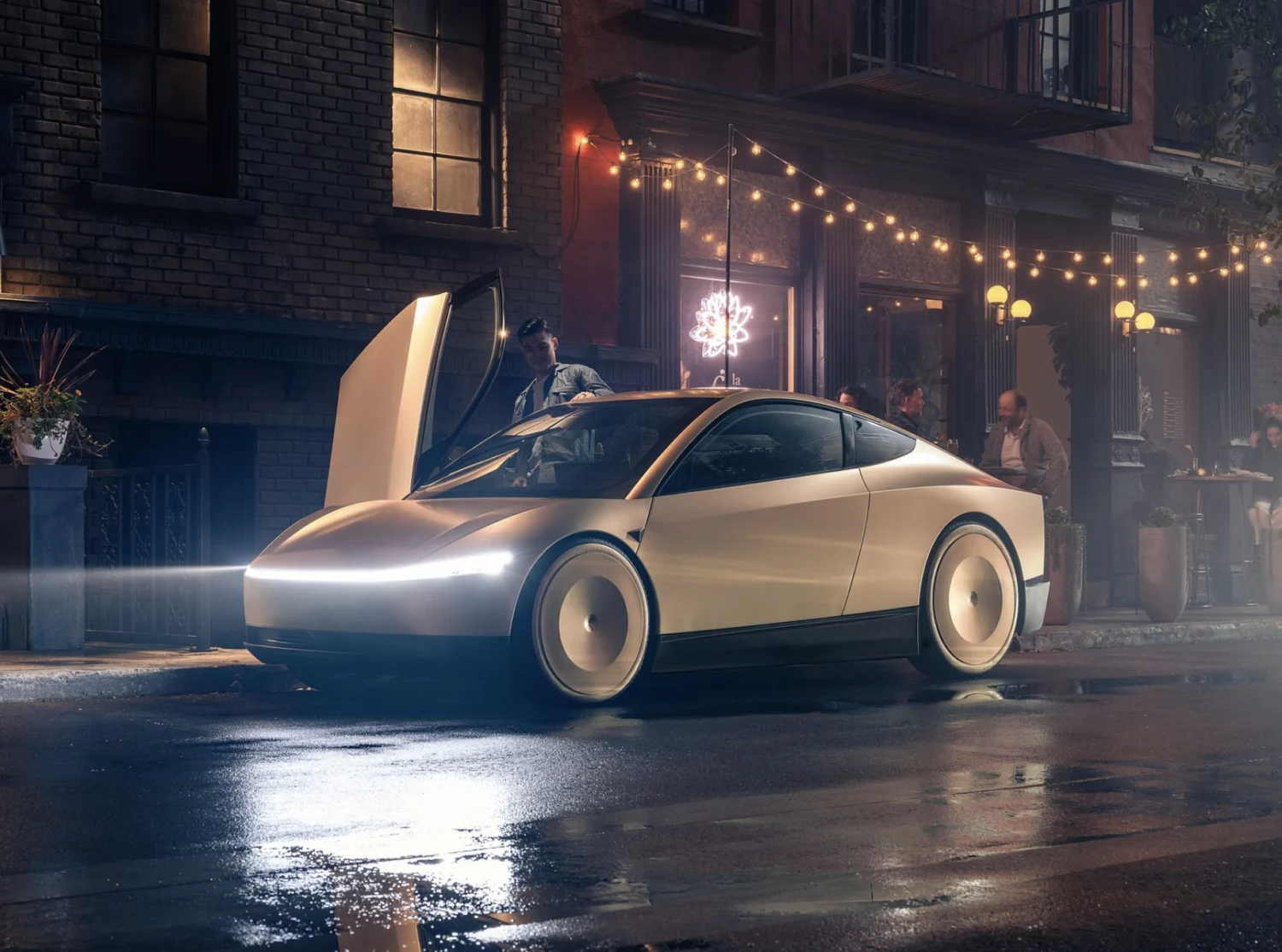
A steering-wheel-free taxi with butterfly doors that comes to fetch you on its own. This isn’t a sci‑fi sketch anymore, but Tesla’s next flagship product. The automaker is gearing up for a major event on Thursday, September 3, 2026, in Austin, dedicated to its new robotaxi. It is the Tesla Cybercab, a two-seat model with no pedals or steering wheel, designed exclusively for autonomous driving. On paper, everything appears ready to launch a new chapter in Tesla’s robotaxi services. Yet one key point remains unclear as the first Cybercabs hit the streets.
Unveiled about two years ago at Warner Bros. studios, the Cybercab has already been circulating widely online. It’s billed as the brand’s first model designed solely for autonomy. Elon Musk even promised a price around $30,000, roughly €27,500. To prep for the rollout, Tesla is already running a robotaxi service based on the Model Y. Users of that service have received invitations for a “Cybercab Launch Event”. In practical terms, the company is promising a simple launch event for the Cybercab reserved for a handful of customers. On social media, Tesla also highlights an “Exclusive Access: Cybercab”, intended to give exclusive access to the Cybercab. For now, no official time or video livestream is confirmed, keeping the Cybercab’s unveiling shrouded in suspense.
Tesla Cybercab: A Robotaxi Already Produced and Ready to Roll
Behind the splashy announcements, the Cybercab exists in real life already. Tesla began producing a few units in April at its Texas factory. These early Cybercabs are already driving on public roads, albeit in a highly restricted environment. The technical sheet favors simplicity, with about 219 hp and a small 48 kWh battery. The official range is about 418 miles, just over 670 km on the US EPA cycle. In real-world use, estimates point to a driving radius of around 293 miles, roughly 470 km. The interior seats only two people, with butterfly doors and, above all, no visible manual controls. Some prototypes seen in the United States still sport a steering wheel, but the production version is designed for no human driver. The Cybercab runs on a non-supervised version of the Full Self-Driving (FSD) software, equivalent to SAE Level 4.
To support these early tests, Tesla sized its Texas production for more than 125,000 Cybercabs per year. The model has already earned the EPA’s energy-efficiency certification. Its commercial rollout was scheduled for late May 2026. On the ground, Tesla plans to offer Cybercab trips first to its own employees on open roads. A few days later, these vehicles were to join the already active robotaxi service in the Austin area. Today, that service operates with modified Model Y vehicles, in clearly defined zones, under human supervision. In other cities, like Las Vegas, authorities have granted only a handful of permits. The company secured permission for just ten robotaxis there, far short of the 5,000 requested. This contrast shows that, even as production scales up, real-world deployment remains gradual and tightly controlled.
Regulation and Safety: The Big Question Mark for the Cybercab
Building an electric vehicle and getting it certified is one thing; launching a driverless robotaxi service is another. To operate the Cybercab at scale, Tesla must demonstrate that its model meets American federal safety standards. Yet the company has not indicated at this stage whether it has obtained a formal agreement or formally verified this compliance. The situation is further complicated by the Cybercab’s lack of a steering wheel or pedals, a configuration not clearly anticipated by existing law. Other players in autonomous mobility, like Zoox, have chosen to seek a formal waiver from the FMVSS standards. This process allows them to run a limited number of vehicles without a wheel or pedals under strict conditions. Tesla, however, has not pursued such an exemption for the Cybercab, even though its interior still lacks traditional controls. Meanwhile, the federal NHTSA and other agencies are working to define standards for automated driving systems. That process is expected to take several more years, leaving a regulatory gap around truly driverless vehicles.
At the heart of this debate is the Full Self-Driving software, the brain behind all of Tesla’s robotaxi projects. In its current form, this system requires constant driver vigilance. It sits at the center of multiple federal investigations and lawsuits following collisions and traffic violations. Tesla, for its part, contends that this software is already up to ten times safer than a human driver, according to global figures. The Cybercab, however, is supposed to run a non-supervised version of this FSD, i.e., without anyone ready to grab the wheel. Tesla has not specified whether this fully autonomous configuration has already received special validation from road-safety authorities. On paper, everything suggests the vehicle is ready, in production, and EPA-certified. In reality, the absence of a clear green light on safety and regulation creates the risk of a driverless robotaxi without passengers. This is precisely the point the Austin event must clarify if Tesla truly wants to move from prototype to everyday service.
Comparison Table
| Criterion | Tesla Cybercab |
|---|---|
| Number of seats | 2 |
| Battery | 48 kWh |
| Power | 219 hp |
| Official range (US EPA) | 418 miles / + 670 km |
| Estimated real-world range | 293 miles / ~470 km |
| Announced price | $30,000 (~€27,500) |
| Annual production capacity | 125,000 units |
| FMVSS waivers | Not requested |
| EPA certification | Yes |
Key Takeaways
- The Tesla Cybercab is a two-seat robotaxi, fully autonomous, with no steering wheel or pedals.
- Production has begun, with an official launch planned in Austin and an annual capacity of 125,000 units.
- Ith official range is 418 miles (670 km), but real-world range is likely around 293 miles (470 km).
- The announced price is $30,000, about €27,500.
- Commercialization still hinges on regulatory and safety approvals not yet obtained.
- The Cybercab will use a non-supervised version of Full Self-Driving, SAE Level 4.
- Regulatory uncertainty could slow or limit its immediate rollout.
FAQ
What is the Tesla Cybercab?
The Tesla Cybercab is a two-seat robotaxi, fully autonomous, with no steering wheel or pedals, meant to usher in a new era for the brand.
What is the announced range of the Cybercab?
Official range is 418 miles (about 670 km) on the US cycle, with around 293 miles (470 km) estimated in real-world conditions.
What price is the Cybercab announced at?
Elon Musk has announced a price of around $30,000, roughly €27,500.
Is the Cybercab certified to run without human supervision?
At this stage, Tesla has not confirmed any official agreement or regulatory validation specifically for driverless operation.
What are the uncertainties around the Cybercab launch?
Uncertainties mainly revolve around compliance with safety standards and the lack of clear approval from authorities for driverless trips.