In the wake of the upheaval sparked yesterday by a supposed leak of the Volkswagen Group’s plans—firing alarms about SEAT’s future even as the brand remained calm—we now have all the official information laid out on the table.
The Supervisory Board has approved the “Future Plan 2030” which foresees the departure of around 50,000 employees, while the future of the German plants at Emden, Zwickau, Hannover and Neckarsulm is not guaranteed. SEAT does not appear in this plan.
An ‘Essential’ Plan to Regain Competitiveness
Neither SEAT nor Martorell appear in the plan. One of the concerns about SEAT’s continuity has been dispelled, at least for the moment. The Volkswagen Group’s Supervisory Board has not included the brand in its plan, and in fact when it talks about the uncertain future of the four German plants, it does not mention Martorell. In this sense, “alternative uses” for Emden, Zwickau, Hannover and Neckarsulm will be evaluated between 2031 and 2034.
However, one of the key points is that the Group has more production capacity than demand, with an excess of more than 500,000 vehicles, which is why it needs to close or reorganize its production capacity to stop losing money. But it could put pressure on plants such as Martorell.
Global job cuts. The most contentious aspect is the restructuring of the workforce: initially talk was of about 100,000 departures, but the plan specifies that “a workforce adjustment across the Group will be necessary affecting approximately 50,000 positions, including managerial posts.” In this sense, union representatives say they support the plan, but that the burden should not fall solely on employees.

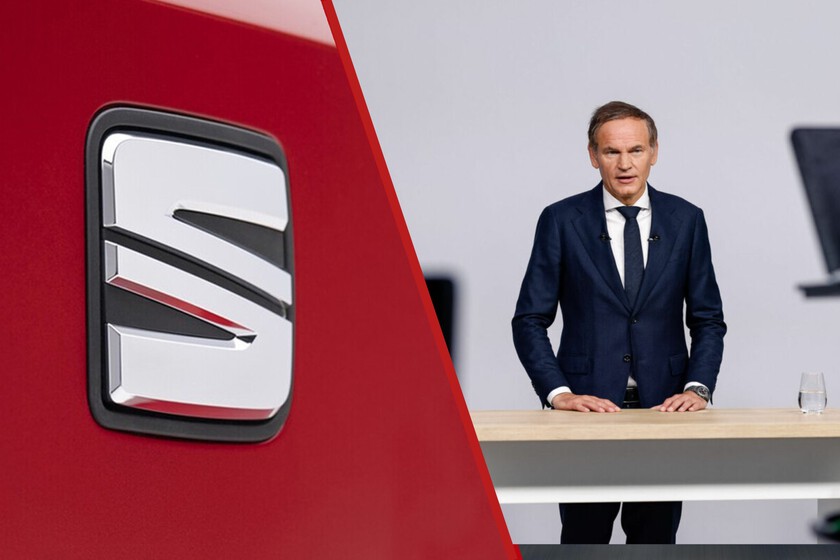
The CEO of the Volkswagen Group, Oliver Blume.
Range simplification and fewer models The group intends to cut its model lineup by 50% and reduce its complexity by 75% by 2035, focusing on a smaller number of high-volume models and thus achieving greater economies of scale. It will adapt platforms, electronics and driver-assistance systems to the needs of the Western and Eastern hemispheres.
Here SEAT’s future could be at risk: it has an outdated range and models that are much less profitable for the group compared with CUPRA. “In the coming years, we will invest billions to make our flagship brands even more attractive, strong and competitive,” said the group’s chief executive, Oliver Blume.
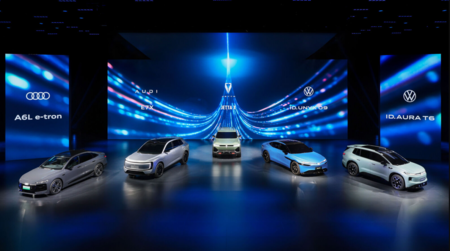
The consortium’s objective is ambitious: to sell 9 million vehicles a year and to reach an operating margin of 9% by 2030, compared with 3.8% in the first half of 2026.