
In Brief
Software Defined Vehicles (SDVs) introduce a centralized electronic architecture in which software plays a major role in the vehicle’s functions. This concept, underpinned by recent technologies and the hardware-software separation, enables over-the-air updates, enhanced cybersecurity, and personalization. Yet, automakers are struggling to win over customers with subscriptions to activate features that are already physically present, raising questions about the real value for drivers. Early feedback points to technical benefits, but the promise of a genuinely new driving experience has yet to be realized.
The acronym “SDV” for Software Defined Vehicle, literally “vehicle defined by software”, is increasingly used by manufacturers to label the next generation of cars. What does this engineering term mean and what are the advantages of this technology for motorists?
A Strained Electronic Architecture Reaching Its Limits
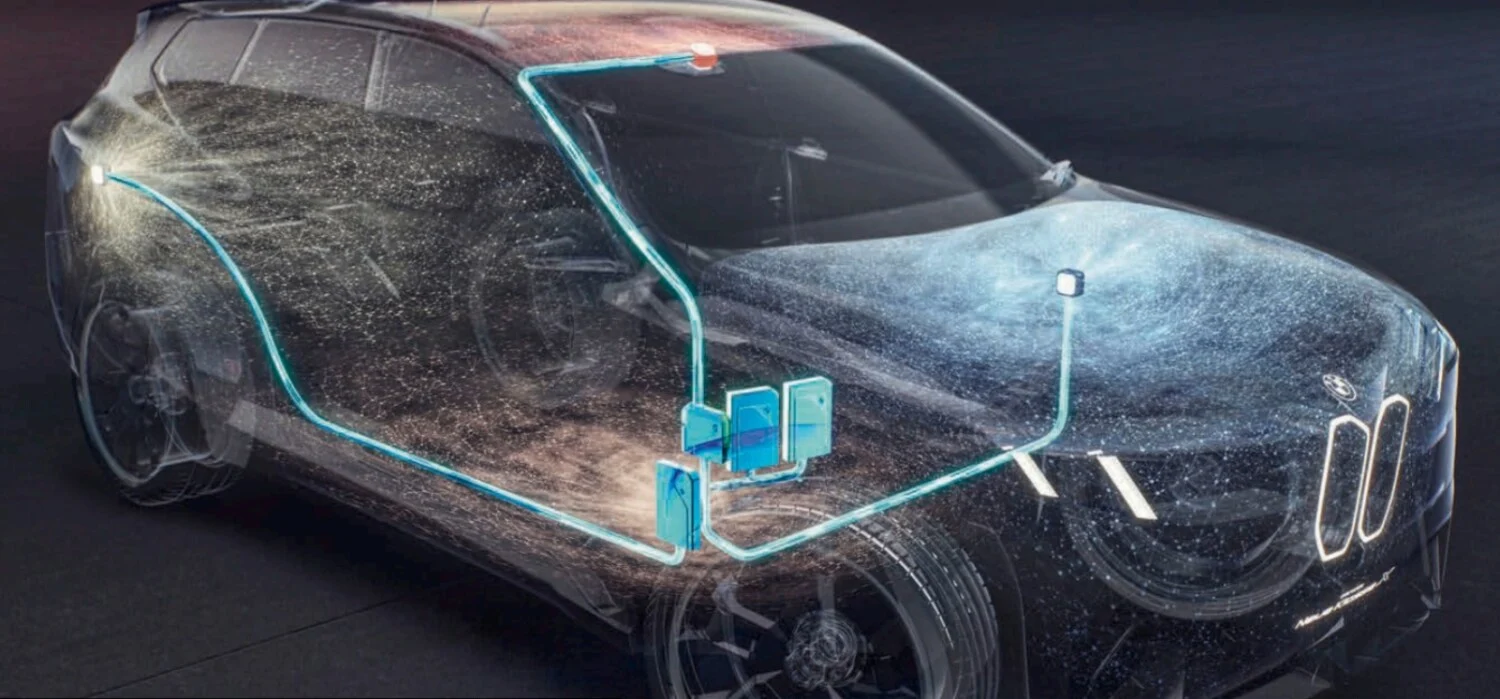
SDV is first and foremost about the physical architecture of the vehicle’s electronic systems. Today, every mechanical subsystem—from the engine to braking and steering—has its own electronic control unit with its own control software. This organization, built up as equipment was added over time, is decentralized by nature.
The rising number of systems controlled electronically has made the architecture more complex and requires constant information flow between the different ECUs that interact. Moreover, the proliferation of electronics means a new car in 2026 can harbor around 200 million lines of code in its embedded software, i.e., 30 times more than in a recent-generation aircraft like the Boeing 787.
Software defects or errors in development increasingly lead to incidents on vehicles. Furthermore, many ECUs host software components performing the same functions—access authorization, cybersecurity, and over-the-air updates. Why not consolidate some of these functions and make them accessible to all onboard software?
Separating Physical Electronics and Software
Automakers, with the help of major equipment suppliers such as Bosch, Valeo, ZF, or AImovio—the electronic-parts and chipmakers like Qualcomm and Nvidia, and software-centric specialists such as Sonatus—have endorsed the idea of rethinking the electronic architecture by decoupling physical components from the software. “Yes, everyone agrees on the diagnosis and on parts of the solutions, but not for the same reasons,” notes one expert.
Indeed, for manufacturers, the goal is to simplify the architecture to reduce the number of connectors and cut down potential failure points. Tier-one suppliers see increased value delivered to automakers and a tougher technological barrier for new competitors.
This optimism among traditional suppliers has been somewhat tempered by the rising role of semiconductor manufacturers. They are poised to capture a significant share of the vehicle’s value located in the central compute units. The cost of these central compute units could reach up to €3,000 in high-end vehicles.
Today, automakers estimate that such centralized electronics architectures—whether centralized into one unit or distributed across four or five ECUs in a mid-range setup—could raise production costs by about €500 to €800.
Clear Technical Benefits
Do these new architectures translate into notable advantages or new capabilities for drivers? Yes, say automakers and suppliers, including Christophe Périllat, chief executive of Valeo: “The car as we know it today remains the same throughout its life. A vehicle with a SDV-style electronic architecture evolves from the start to the end of its life. It can be regularly updated, improved, and personalized.” It’s true that the technical benefits of SDV are clear. The primary benefit is the ability to send software patches remotely to fix malfunctions. Popularized by Tesla, this allows quickly deploying software so vehicles with imperfect software can be corrected. These updates occur faster and more frequently than before because automakers can access incidents on a vehicle within hours.
Second, it enables enhancements to existing features as long as the vehicle’s electronics permit upgrades over time: synchronization with future generations of smartphones, updates to infotainment systems, evolution of driver-assistance features, and access to preventive maintenance functionalities. Finally, the third benefit is the centralization of cybersecurity and the strengthening of its performance, also through updates.
What Improvements for Drivers in Practice?
How do these technical possibilities translate into real-world benefits? For more than two decades, automakers have dreamed—accurately, in this case—of a mobile-phone-style business model. After the sale or delivery of the vehicle, the goal is to derive ongoing revenue from its usage.
Following the principle of decoupling electronics from their software, automakers have imagined a similar approach: cars come equipped with physical systems—heated seats, high-performance LED lighting, navigation, ADAS sensors—but functions are not accessible and must be unlocked through an additional subscription.
This model has already been tested for several years by Audi, BMW, and Mercedes with mixed results. The limited pool of compatible cars in France does not provide statistically robust feedback. In the United States, BMW offered heated seats via a $18-per-month subscription.
That plan was rejected by potential customers who perceived paying twice for a single service. In France, Volkswagen is attempting to steer customers toward a subscription-based approach across about a dozen features—navigation (€16.5 per month), voice assistant, adaptive headlights, heated seats.
It’s still early to judge, as these subscriptions tend to apply only to the latest models, such as the ID.7 and the T-Roc. Of course, a subscription model is even less attractive when other automakers continue to offer the equipment as standard. As SDV architectures are being implemented and developed, automakers are realizing that extracting revenue from this approach will be more challenging than originally anticipated and that the system is more expensive than expected.
The First Real-World Deployments Are on the Road
“The fact that almost all European automakers struggle to monetize SDV features effectively is very telling,” notes Alexandre Marian, Partner & Managing Director at AlixPartners. “Today, customers expect to receive new remote features when buying a vehicle between $50,000 and $100,000. Yet they often only get patches, which is not enough.” Beyond Tesla, which pioneered a centralized SDV from the ground up, and the Chinese manufacturers that followed, the first European vehicles are entering the market. These include BMW’s newer-generation electric models, the iX3 and i3.
These rely on an intermediate architecture with four ECUs distributed throughout the car. This reduces wiring length by about 600 meters and lowers wiring weight by roughly 30%. In Renault’s lineup, the first SDV-equipped vehicle will be the new Trafic E-Tech commercial van. The dozen ECUs in a current van will be replaced by a single central unit. Such electronic architectures also open the door for third-party developers to contribute software modules with the aim of delivering useful features to the user.
Michelin, for example, offers a digital twin of the vehicle’s embedded tire. This software uses real-time data (pressure, driving conditions, vehicle load, wear, grip) to provide recommendations to the driver and to interact with the vehicle.
It helps improve safety through predicting maximum grip, preventing aquaplaning, enhancing the performance of stability-control systems, monitoring tire pressure, and detecting overload conditions. Michelin notes that its digital twin can precisely track tire wear and only warns when a tire needs replacement, avoiding the cost of premature changes.
On paper, SDV’s appealing capabilities seem better suited to young, tech-savvy digital natives than to older buyers in European and French markets. In 2024, analysts projected a software and data market tied to SDV exceeding €1 trillion by 2030. For now, that trajectory has not yet materialized.
L’avis de L’Auto-Journal
Where does the value lie for the motorist? Beyond the technical feats, here is the question that demands a clear answer. For now, the value is only partial: remote software patches to fix design flaws, infotainment app updates, and preventive maintenance. Yes, some features can be appealing, but the challenge remains to “invent the life that goes with it” so that the SDV becomes more than a “gadget for engineers.”
Find our deep-dive on Automotive Technology (SDV) in l’Auto-Journal issue no. 1214, dated 07/23/2026.
Comparison Table
| Element | Figure | Context |
|---|---|---|
| Embedded lines of code (2026) | 200 million | New vehicle |
| Aerospace benchmark | 30 times more | Than a Boeing 787 |
| Cost of central compute units | Up to €3,000 | High-end vehicles |
| Overhead of centralized architecture | €500–€800 | Current estimate |
| Reduction in wiring length (BMW) | 600 m | Intermediate architecture |
| Reduction in wiring weight (BMW) | 30% | Intermediate architecture |
| HEATED SEATS subscription adoption (BMW USA) | 0.8% | $18/month offer |
| Software & data SDV market (2030 forecast) | €1 trillion+ | Analysts, 2024 |
| Navigation subscription price (VW France) | €16.5/month | ID.7 and T‑Roc |
Key Takeaways
- SDV represents a new approach in which software dominates the vehicle’s embedded electronics.
- A centralized architecture enables over-the-air updates, stronger cybersecurity, and remote maintenance.
- Automakers are experimenting with subscriptions to unlock certain features, but consumer interest remains limited.
- SDV-equipped vehicles currently incur a production overhead estimated at €500–€800.
- Concrete examples exist (BMW iX3/i3, Renault Trafic E-Tech), but real-world usefulness remains to be proven at scale.
- Automotive-subscriber feedback is mixed, often viewed as double-charging for the same feature.
FAQ
What is an SDV?
An SDV (Software Defined Vehicle) is a vehicle whose functions are primarily controlled and evolved through onboard software and a centralized electronic architecture.
What are the technical advantages of the SDV for drivers?
SDVs offer remote updates, improvements to functions, enhanced cybersecurity, and the ability to customize certain options over time.
Why do feature-activation subscriptions see limited success?
Customers feel they are paying twice, and most prefer to have these features provided as standard, which limits interest in subscription models.
Do SDVs bring immediate benefits for all drivers?
For now, benefits are mainly technical (updates, maintenance), but high-value new functions are slow to convince a majority of users.
What is the added cost of a centralized electronic architecture?
Current estimates place the incremental cost at €500–€800 for vehicles equipped with this technology.