
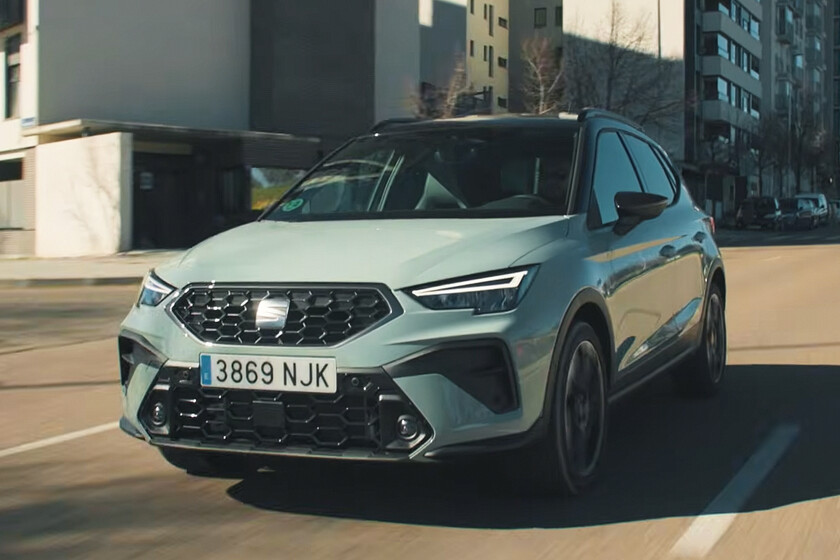
When SEAT first launched the Arona in 2017, its aim was nothing more than to replicate the Ibiza’s success in the SUV arena. It achieved it. The SEAT Arona has already become one of Spain’s best-selling cars, but after almost a decade on the market, it still resists a total overhaul; instead it bets on a second restyling. Is it still worth it in 2026?
SEAT Arona, in video
Outside and inside there are barely any changes. Essentially we are looking at the Arona we already knew, but with a sharpened front end thanks to the new headlight and bumper design. In the interior you’ll find darker decorative details for the dashboard and… not much more.
The engine lineup is composed exclusively of gasoline options with no electrification, from a 1.0 TSI of 95 HP with manual transmission to a 1.5 TSI of 150 HP with a seven-speed automatic DSG. We tested the 1.0 TSI of 115 HP with the DSG transmission.

This setup represents one of its major strengths and, at the same time, one of its major weaknesses. In its segment, it is one of the most balanced engines between performance and fuel economy, but since it lacks any electrification, the Arona cannot obtain the Eco badge. Being a city SUV, it’s an important point to consider. It will be until next year, in 2027, when SEAT finally adds to the range a mild-hybrid option.
In the video review we’ve posted on YouTube, we go into detail about the reasons why the SEAT Arona is still worth it and what it still leaves us wanting when we compare it with rivals that also hover around €23,150 for the unit we tested.