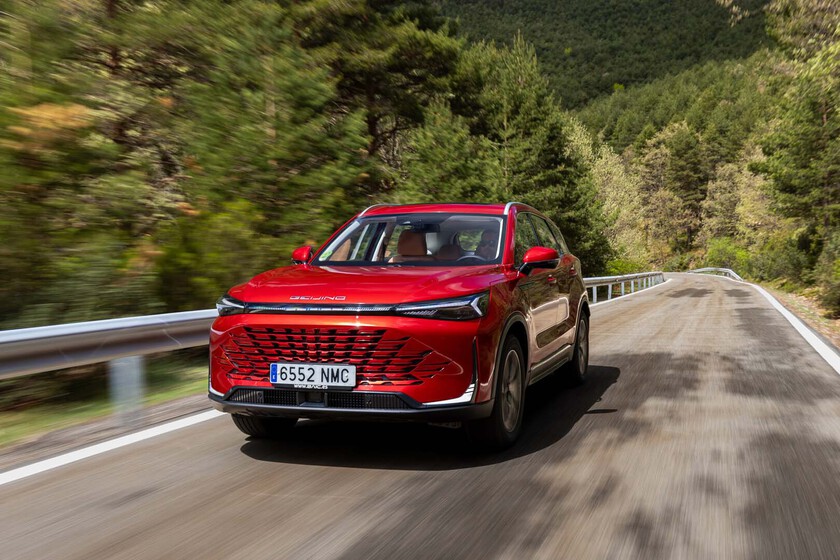
BAIC expands its range in Spain with a D-segment SUV: the BAIC X75. It is a 4.75-meter-long SUV that comes packed with features.
For now, it is available only with a 1.5-liter turbocharged four-cylinder gasoline engine producing 177 PS, always paired with an automatic transmission and front-wheel drive.
Not Electric, Not Hybrid: Pure Gasoline
When we began discussing the invasion of Chinese cars in Europe, we did not expect what is happening. Over the last six years, so many Chinese brands have arrived in our market that, honestly, it’s hard to keep track and remember them all.
Initially, these brands landed here to challenge traditional manufacturers and steal a bigger slice of the pie (the bigger, the better for them). They are succeeding, but there are so many Chinese brands that have arrived that we can also talk about a war among them.

For the customer, this should be positive because it should push them to act, yet there is a growing impression that most Chinese cars arriving in Spain are alike.
Of course, most of them are SUVs, almost always electrified with electric motors, plug-in hybrids or similar hybrids (or even the same as those), they share interior designs that are nearly identical as they rely on the same design solutions and almost identical multimedia systems, and there are even several brands that share platforms, making differentiation difficult. It even feels like you are selling the same car with different logos (and to some extent, that is the case).
Meanwhile, there is a type of customer that all these brands do not seem to remember: someone looking for a practical car, easy to understand and, as the saying goes, “no fuss,” that is, without any kind of electrification: a traditional, straightforward car.
It’s something that Dacia has mastered and it’s working for them. Note, I’m not talking about low-cost cars; just look at the Dacia Bigster, but rather cars without complications and, ideally, honest—not necessarily cheap.
The BAIC brand seems to have realized that this niche exists and has set out to exploit it, not only to go after Dacia but to differentiate itself from other Chinese brands.
BAIC isn’t new in Spain. It arrived with the BAIC X55, a compact SUV we tested a few months ago, and now it has decided to expand its range with a larger SUV, the big brother of the X55: the BAIC X75.
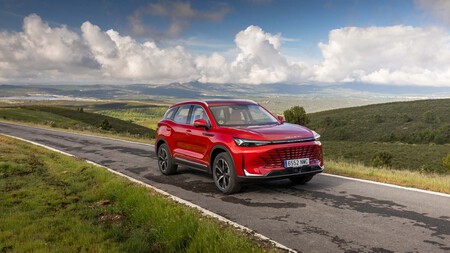
The formula is similar to the X55, but in a larger package because it measures 4.75 meters in length (the X55 is 4.62 meters). The X75, therefore, is a D-segment SUV, like the Ebro S800, the Skoda Kodiaq, or the Volkswagen Tayron, but unlike those models, it is not electrified in any way: it is only available with a turbo gasoline engine, though this will change later as the hybrid version is planned to launch in a few months. Another factor that differentiates it from those rivals is that it cannot have seven seats: only five.
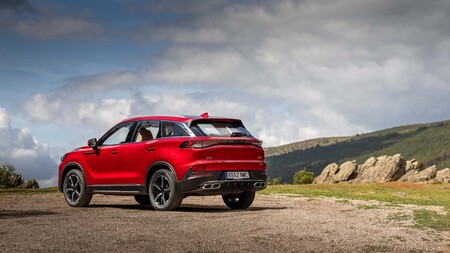
Beyond its size, it shares a design with the X55, featuring some sporty touches that catch the eye quickly. Design is, of course, highly subjective and depends on each viewer, but it is undeniably attention-grabbing in appearance.
It includes fashionable details such as front lights connected by a LED strip, a high and strongly defined beltline, two-tone 19-inch alloy wheels, and trim pieces that imitate exhaust outlets.
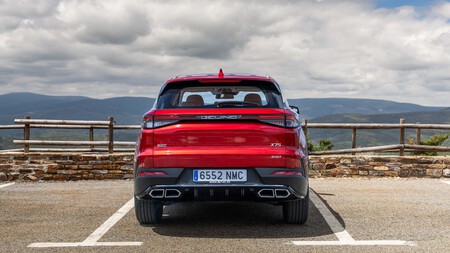
Interestingly, the unit I tested during the initial contact and the one in the photos does not carry the BAIC logo, but the Beijing badge, which is a BAIC model line. However, the brand’s officials in Spain assure that this is only the case for the first units that have arrived and that subsequent ones will bear the BAIC logo.
Inside, it is also striking because it presents a very modern and minimalist look, with three screens and few buttons, although the lack of physical controls is offset by one of those screens.
TBoth the digital instrument cluster and the central display are 12.3 inches, and the third screen, 7 inches and also touch-enabled, sits lower on the center console and serves to manage the climate control and other functions, such as drive modes.
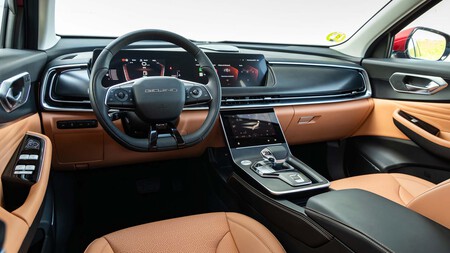
It’s a solution similar to what Audi has used in some of its cars, such as the A6 and Q7. Thanks to this screen, climate control is easy to manage, although it is still not as quick and intuitive as physical buttons, but it is a more interesting solution than having to operate everything through the central screen.
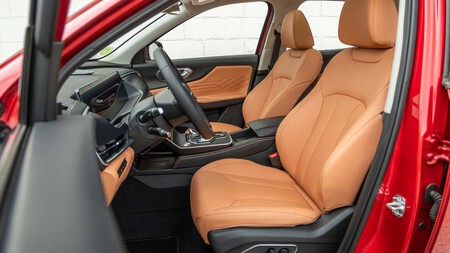
Being so well equipped as standard also contributes to its upscale feel. Among other things, it features power-adjustable and massaging front seats, a very large and usable sunroof, a wide range of driver assistance systems, front and rear parking sensors, a rear-view camera, LED headlights, automatic high beams, intelligent cruise control, hill descent control, wireless smartphone charging, heated and ventilated front seats, 19-inch wheels, a power tailgate, or what BAIC calls “eco-leather,” which is simply upholstery that mimics leather but is not real leather.
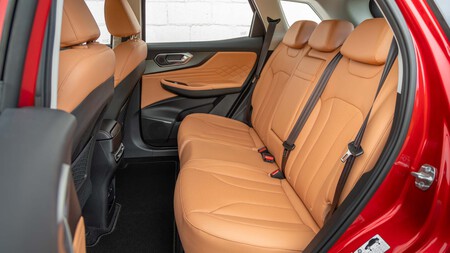
But that is not its only selling point: it is very spacious. The rear seats are particularly roomy, a direct result of Chinese car culture. In China, there is great emphasis on rear-seat space; in fact, many models are sold there with an extended wheelbase version that offers more legroom, while the trunk does not matter as much and space behind is prioritized for passengers.
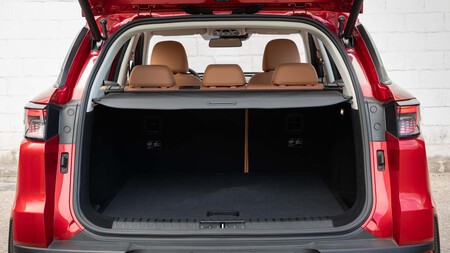
And that is exactly what happens with this SUV, as it offers ample rear passenger space, but the boot is small for its 4.75-meter length, being only 410 liters, plus many storage nooks distributed throughout the interior.
To give you an idea, the SEAT Arona boots are 400 liters, and it measures 4.16 meters in length (in Europe we tend to prioritize a balance between interior space and boot). That said, although not large, BAIC’s trunk is usable thanks to its clean, regular design. It’s also handy to have a spare wheel, the traditional kind, under the boot floor; it’s increasingly rare to find this in new cars.
Regarding build quality, it’s solid. Overall it’s well made and the fit and finish are robust, but some plastics are a bit firmer than one would expect for this segment. It gives more of a visual impression than a tactile one, though it isn’t poorly off in this department and there’s room for improvement.
The BAIC X75: On the Road
And in motion? The truth is that it’s very pleasant to drive, comfortable, and moves along adequately. It is helped by the engine, a 1.5-liter four-cylinder turbo that develops 177 PS and a maximum torque of 305 Nm from just 1,500 rpm, always aided by a dual-clutch automatic transmission that sends all the power to the front wheels.
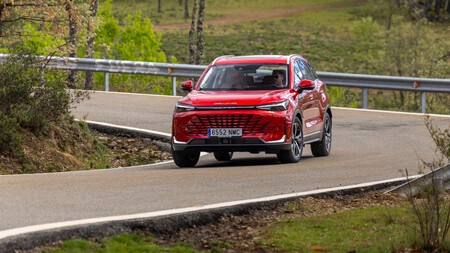
It is a traditional turbo engine: it is not loud, does not vibrate, has a good feel and pulls well, partly thanks to the good work of the gearbox, though you must not forget that the 177 HP of this unit have to move the 1,650 kg that the car weighs, so performance is not earth-shattering, though it reliably does the job and you won’t miss more power as long as you drive within legal limits and in step with traffic.
0 to 100 km/h in 9.8 seconds and a top speed of 200 km/h: to be honest, it shouldn’t be expected to be anything faster, nor does it pretend to be sporty.
In fact, it invites relaxed driving because the setup is very comfort-oriented, with soft suspension, a highly assisted and somewhat disconnected steering feel that, in return, is very comfortable (another sign of its Chinese DNA) and good interior sound insulation. It’s the kind of car that makes you want to rack up kilometers without hurry.
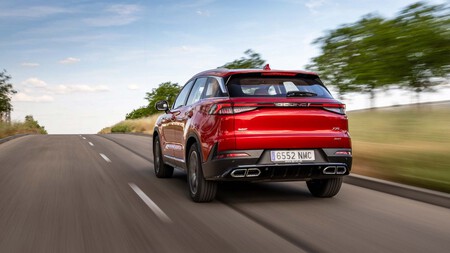
The downside is fuel consumption. On the initial test, the average was 8.5 l/100 km (certified at 8.3 l/100 in WLTP combined). Is that high for a large, gasoline-only SUV? Not really, but we’re used to lower numbers, partly due to diesel engines that historically dominated this segment and also because of the current hybrids and plug-in hybrids in this category.
In any case, it’s not an absurd figure, and it has a 60-liter gasoline tank, so range isn’t a problem (it can do more than 700 km on a full tank).
What some will see as a positive is that there is no trace of electrification. It is something that still makes many drivers wary, and it is increasingly difficult to find models that are not electrified in some form, especially in this segment.
In a matter of months, BAIC will also offer a hybrid option, so the X75’s audience will expand considerably. For now, it debuts in Spain with a price of 29,995 euros, including the brand’s discounts and promotions. This is another of its selling points because rivals, both Chinese and non-Chinese, are more expensive or do not offer as attractive a equipment-to-price ratio.
Images | BAIC