In Brief
In spring, the Saône-et-Loire gendarmerie warns of an increased risk of collisions with drunken deer, often dazed after consuming fermented buds and fruits. This phenomenon causes roughly 40,000 accidents per year in France, sometimes fatal. Drivers are particularly exposed in wooded areas, especially at dawn and at dusk. The guidance is to slow down, stay alert, and respond properly in the event of a collision to minimize risk. These animal behaviors remain a recurring danger during the spring season.
No, this isn’t a hoax or a social media joke: in springtime, in certain parts of France, police forces now warn motorists that drunk deer on the road can cut across their path. The scene can provoke a smile behind a screen, but it’s far less funny when a wobbly cervid appears in front of a car traveling at 55, 60, or 90 kilometers per hour.
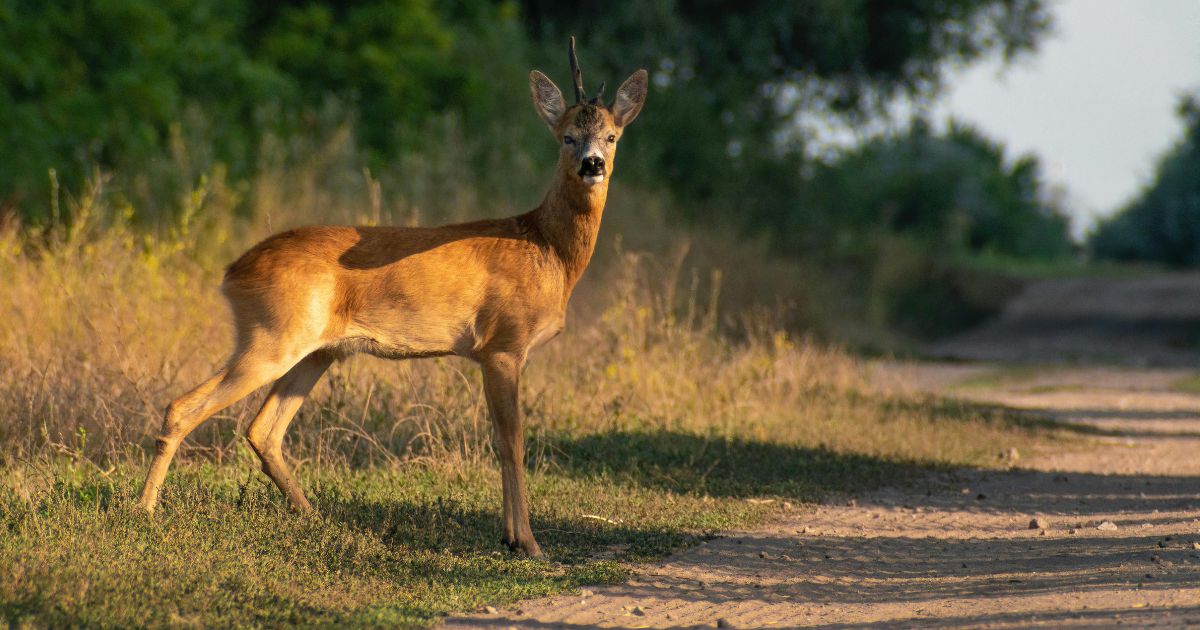
It all started with a video posted on Facebook, filmed in Burgundy, showing a deer completely disoriented, zigzagging across a field before collapsing. This playful “Bambi” had, in fact, overindulged in fermented buds and fruits, to the point of becoming dangerous to traffic. And that’s precisely what Gendarmerie de Saône-et-Loire reminds us: in spring, deer aren’t always sober, but they still cross roads as if nothing were amiss, which changes everything for drivers.
Deer Drunk on the Road: the Gendarmerie’s Very Serious Alert
In the video shared by the gendarmerie, the animal first hops about aimlessly, then starts walking in circles before collapsing. It lies on the ground for a few seconds, then rises unsteadily, each step looking hesitant. Its head tracks the spinning landscape as if it has lost all reference points. By posting these images, the authorities weren’t chasing clicks, but illustrating a clear message: “Sudden crossing, erratic trajectory, immobilization on the roadway, disordered fleeing,” explains the Saône-et-Loire gendarmerie, cited by Jalopnik.
Because, after all, even when deer are sober, they remain unpredictable for motorists who drive at night through wooded areas. But here there’s an added layer of risk: a staggering animal may freeze in the middle of the road, flee in any direction, or bolt from the shoulder without any obvious pattern. The scene filmed near Charnay-lès-Mâcon, in the heart of wine country, is therefore not unusual according to local authorities, who describe this springtime phenomenon as fairly routine in this region.
Spring, Fermented Buds, and Real Risks for Motorists
How does a deer end up in this state without having touched a bottle of wine? In spring, its diet changes: new shoots, highly sugary buds, fruits left on the ground, or decaying vegetation. These plants can ferment, produce alcohol, and then continue to ferment in the animal’s stomach. This phenomenon, sometimes referred to as the “auto-brewery syndrome,” has been explored in scientific circles. A 2020 study, cited by The New York Times, showed that many mammals lack an enzyme capable of metabolizing ethanol quickly. If the body cannot eliminate the alcohol, tolerance becomes virtually nonexistent, and a small amount can render a deer seriously drunk.
On the road, this natural context translates into a concrete risk. In France, collisions with wild animals account for tens of thousands of accidents each year—around 40,000—with seven deaths recorded in 2024, a figure that gives pause. Most of the time, drivers walk away physically unharmed, but the damage to vehicles can be substantial, especially when faced with a large animal. The recommendation remains straightforward: ease off the accelerator near forest edges, particularly at dawn and dusk, stay alert to the shoulders, and be ready to brake smoothly rather than making a sharp steering move. In the event of a collision, pull over safely, turn on hazard lights, avoid approaching the injured animal, contact the gendarmerie, and report the accident to your insurer within days, because these “drunk deer on the road” sadly aren’t going away any time soon.
Comparison Table
| Type of Incident | Annual Count (France) | Mortality 2024 |
|---|---|---|
| Accidents involving wildlife | 40,000 | 7 deaths |
Key Takeaways
- Deer can become drunk in spring after ingesting fermented vegetation.
- This behavior triggers unpredictable reactions on roadways.
- Each year, roughly 40,000 collisions with wildlife are recorded in France.
- Caution is advised, especially at dawn and at dusk.
- In the event of a collision, secure the scene, alert the gendarmerie, and inform your insurer.
FAQ
Why do deer become drunk in spring?
In spring, deer consume fermented buds and fruits, producing alcohol that disorients them and alters their behavior.
What risks does this pose for motorists?
Drunk deer can cross suddenly, freeze, or flee unpredictably, increasing the risk of collisions, especially at night and along forest edges.
How many accidents involving wildlife occur each year?
Approximately 40,000 wildlife-related accidents occur annually in France.
What should you do after a collision with a deer?
Park safely, warn others, contact the gendarmerie, and report the accident to your insurer.
Why does the gendarmerie specifically warn in spring?
The phenomenon is more frequent in spring because the season’s diet promotes intoxication in deer and heightens road risks.