
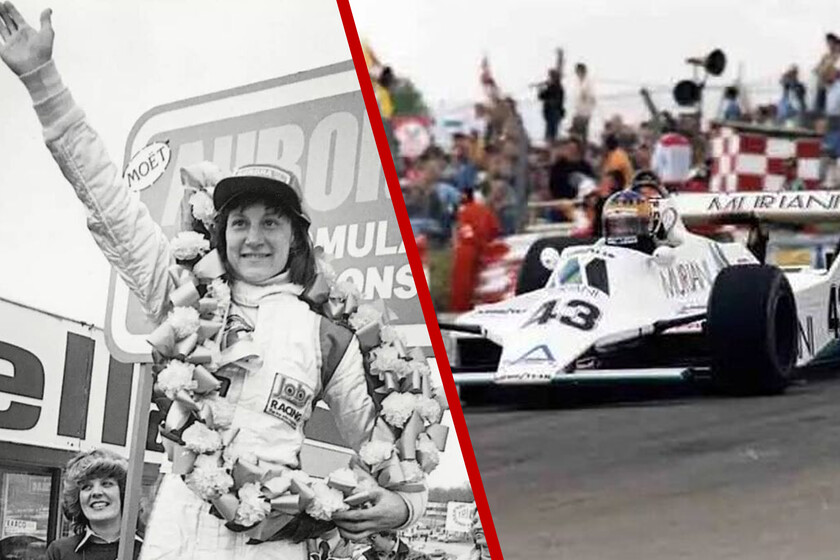
From the stands of the historic British track Brands Hatch, the terraces honor the names and feats of great drivers, such as Jack Brabham, Bruce McLaren, or Desiré Wilson: one of the few women to carve out a place in the history of motorsport and, to date, the only woman to win a Formula One race in the British Championship of 1980.
In addition to that milestone, the South African driver can count several victories in different championships and endurance races, such as the 1,000 km of Monza or the 6 Hours of Silverstone. All of this happened despite the many hurdles she faced in the form of lack of funding or sponsors and the occasional boycott.
An innate talent, but little funding

Desiré Wilson was born on November 26, 1953, in Brakpan, South Africa, into a modest family. Her father, Charlie Randall, was a motorcycle racer who spent hours working on his bikes in the garage under his daughter’s watchful eye, a girl who inherited his passion for engines. She was barely five when she climbed into her first midget.
Wilson competed on dirt tracks against boys much older than her and, at twelve, finished second in the South African Championship by a slim margin. Lacking resources, she left competition and focused on athletics, until, at eighteen, she returned to racing with a father-built Formula Vee at the Kyalami circuit.
Not only did she finish fourth in her first and second seasons, but in the third she finished second. She soon drew attention, and after moving to Formula Ford, she won the championships of 1975 and 1976 and earned the 1976 Driver to Europe grant. It was said of her that she raced “like a lion.”
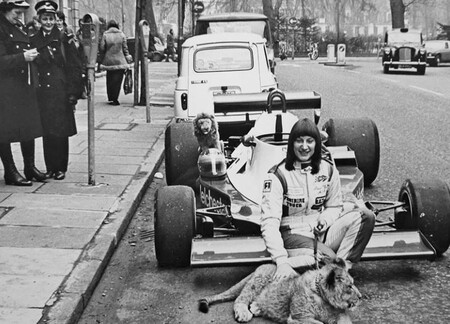
Source: Jonathan Ranger
She also earned several victories in the European F2000 championships, until the budget ran out again. By 1978 she was able to race in the British F1 Championship driving an N175-Ford, and, once again proving her skills, she finished third at Thruxton.
This National Championship (also known as the Aurora Championship, named after the insurance company that sponsored it) was closely tied to the Formula 1 World Championship. Races were contested with older F1 single-seaters (generally up to three years old) and, at times, Formula 2 cars were used to fill the grids.
In addition to this, Desiré Wilson competed in Sports 2000 races, but on occasions these clashed with the British F1 Championship on the same day. “I once decided to do three fast laps in the 2000 to clock a good time, then parked up to concentrate on F1,” she recounts in her biography. “But I clipped a wheel in Westfield and had an accident.”
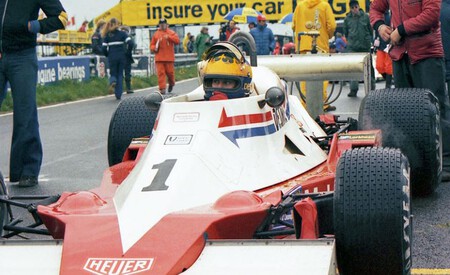
1979 Source: Frederick Roll
Back then, medical facilities were fairly basic. “The Red Cross looked at me and asked how I was. I told them I was fine and left. I actually had a cerebral concussion and a broken foot, but I didn’t want anyone to know.” Nevertheless, Wilson managed a third place in F1 and a fourth in Sports 2000. In fact, in 1979, with Melchester Racing, she drove the Tyrrell 008-Ford and finished on the podium in the first three rounds.
The car of Emilio de Villota and the boycott that kept Desiré from winning
In 1980, at the age of 26 and backed by real estate magnate Teddy Yip, Desiré was able to compete at Brands Hatch (Kent, England) with a Wolf WR4 that was three years old.
In the qualifying session, Desiré posted the second-best time, earning a front-row start for the race, just behind a Williams FW07. On race day, Desiré knew how crucial it was to get ahead of the Williams and, after the race was restarted twice due to several crashes, Desiré crossed the finish line more than 15 seconds clear of the field.
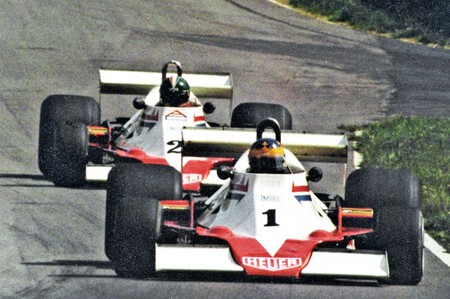
1979 Source: Steve Jones
However, after her milestone, Desiré failed to qualify for her grand prix debut in Britain driving the RAM Racing Williams FW07-Ford, due to a very dirty move by the team owner, John McDonald. Despite her outstanding pace in the tire tests with the same chassis that Emilio de Villota had qualified with two months earlier at the Spanish Grand Prix, before the race they swapped her car for that of her teammate, Rupert Keegan.
Because Keegan had secured a sponsor that covered the car rental for five more Grands Prix, he ended up taking the car in pristine condition, while Desiré had to race with a different FW07 that had been damaged in Monza two weeks prior. The car wasn’t quite right, and it proved a nightmare for Desiré, who struggled with the aggressive setup changes.
Two years later, she competed in the 1981 South African Grand Prix with Tyrrell, but had to retire. Undeterred by the setbacks, Wilson kept aiming to break more records and, before leaving competition in the late 1980s, became the first woman to test a Williams Grand Prix Engineering Formula One car.
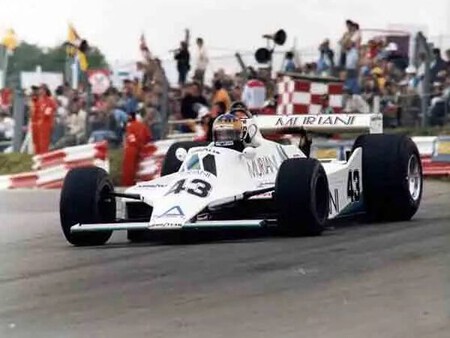
Desiré has continued her path in the motorsport industry as a driver coach and motorsport commentator, remaining a prominent and inspiring figure. She confronted extreme challenges to reach the place where women deserve to be: competing in the sport’s highest categories.
Her ongoing support for the W Series and the tribune bearing her name at Brands Hatch stand as enduring reminders that women deserve to compete and work on equal terms with men. Her remarkable success in times of scarce resources and barriers to race participation serves as an inspiring testament to the determination of a woman who will continue to be a role model for many generations.