In Brief
The CEO of Mercedes, Ola Källenius, publicly acknowledges that the all-tactile strategy, pushed hard by the German brand, has sometimes hindered driver comfort. Mercedes now plans to bring back some physical buttons in its future models, without shrinking the size of its screens. This marks a major shift in the automaker’s ergonomic approach, which seeks to rebalance technological innovation with practical usability for drivers and passengers.
It is rare for a leader of this stature to make such an admission. In an interview with our colleagues at Autocar, Ola Källenius, Mercedes’ CEO, concedes that the automotive industry has been wrong to largely eliminate physical controls from car interiors.
“We’ve somewhat neglected the customer,” the Mercedes boss frankly acknowledges.
The Swedish executive concedes that “the industry as a whole may have gone a little too far” in digitization, even though his brand remains among the most ardent advocates of large touchscreen displays. In response to this realization, Mercedes plans to reintroduce buttons in its upcoming vehicles.
It’s a significant shift for a manufacturer that has made giant screens one of its primary selling points since the start of the last decade, without abandoning this feature that has become emblematic of its image.
Källenius doesn’t beat around the bush. “Sometimes we move a little too fast and we build technology for the sake of technology, forgetting a bit about the customer. So, from now on, you’ll see us reintroduce the most sensible buttons,” he explains to our British colleagues.
The Mercedes boss believes the industry has not reached a peak in terms of screens, but rather a minimum when it comes to physical controls. This observation reflects the current mindset among automakers.
Adjustments have already been made, with the return of physical buttons on the steering wheels of Mercedes models. However, don’t misread the scale of this announcement. Mercedes does not plan to shrink the size of its screens, which its head considers perfectly aligned with customer expectations.
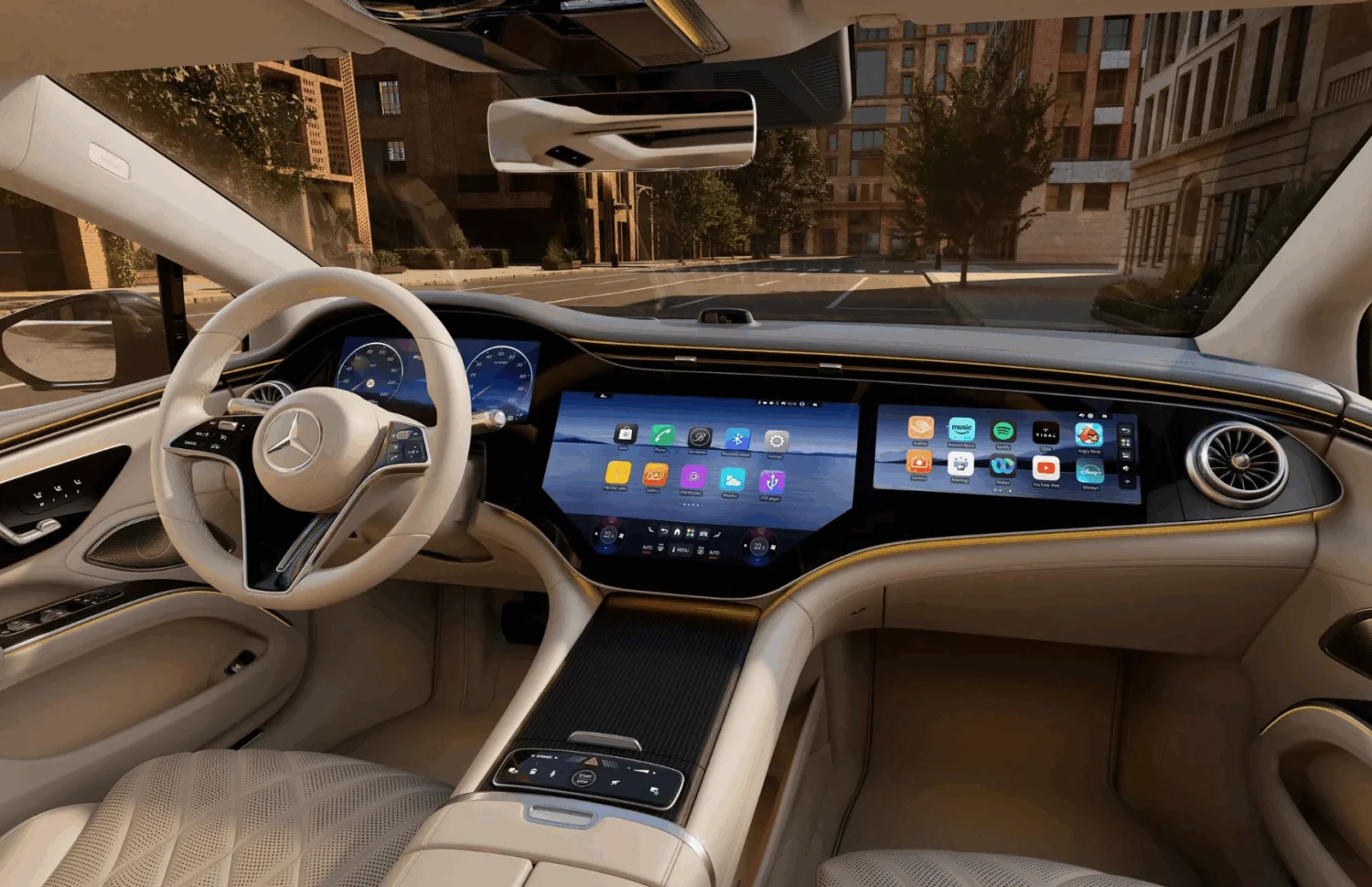
The Hyperscreen, a case of overreach
The Stuttgart marque has pushed innovation very far with the MBUX Hyperscreen, a three-screen system installed in Mercedes’ luxury models, stretching over more than 1.4 meters across the dashboard from one end to the other.
This quest for ever-larger screens has eventually turned against the manufacturers. Today, infotainment has become the primary source of dissatisfaction among new-car owners, a reversal for a technology once regarded as a major selling point.
Studies have also highlighted the distraction caused by using a screen while driving, at a time when a century of automotive ergonomics had established common standards for all vehicles, regardless of brand or model.
Voice control was supposed to be the solution. Mercedes adopted this technology very early, but it remains imperfect in the automotive context. Källenius emphasizes the enormous effort put into the interfaces.
“We devote countless hours to the user interface. I spend hours each year discussing it with our engineers, and we joke that it has to be simple enough for a five-year-old or a Mercedes board member to operate,” he explains.
Nevertheless, this logic collides with a simple reality: a car carries several people. Passengers do not always know the required voice commands, and it is sometimes necessary to interrupt a conversation to adjust the climate control by a few degrees.
It remains to be seen which commands will be reintroduced in Mercedes cars. Temperature management and HVAC adjustments, as well as a volume knob, seem like obvious choices. The bare minimum, in short. How long before the rest of the industry follows suit?
Key Takeaways
- The Mercedes chief acknowledges an excess in removing physical buttons in favor of all-tactile interfaces.
- The brand plans to reintroduce certain traditional buttons in future models.
- Touchscreens, especially giants like the Hyperscreen, will remain a flagship element at Mercedes.
- User complaints and studies point to ergonomic drawbacks and distraction from aggressive digitization.
- Voice control, while developed, is not sufficiently effective to fully replace physical controls.
- The first buttons to return are related to climate control and volume adjustment.
FAQ
Why does Mercedes want to reintroduce physical buttons?
Mercedes acknowledges that eliminating physical controls may have degraded the user experience and wants to add practicality for its customers.
Will touchscreens disappear from Mercedes models?
No, Mercedes does not intend to abandon large screens, which remain a strong selling point for the brand.
What kinds of physical controls could come back?
Climate control management, HVAC adjustments, and a volume knob are cited as likely options.
What impact did the all-screen approach have on drivers?
Studies note that heavy screen use has led to distraction and complaints about the ergonomics of newer vehicles.
Is voice control a sufficient alternative?
No, although Mercedes was an early adopter of voice control, the technology remains imperfect in today’s automotive reality.