In brief
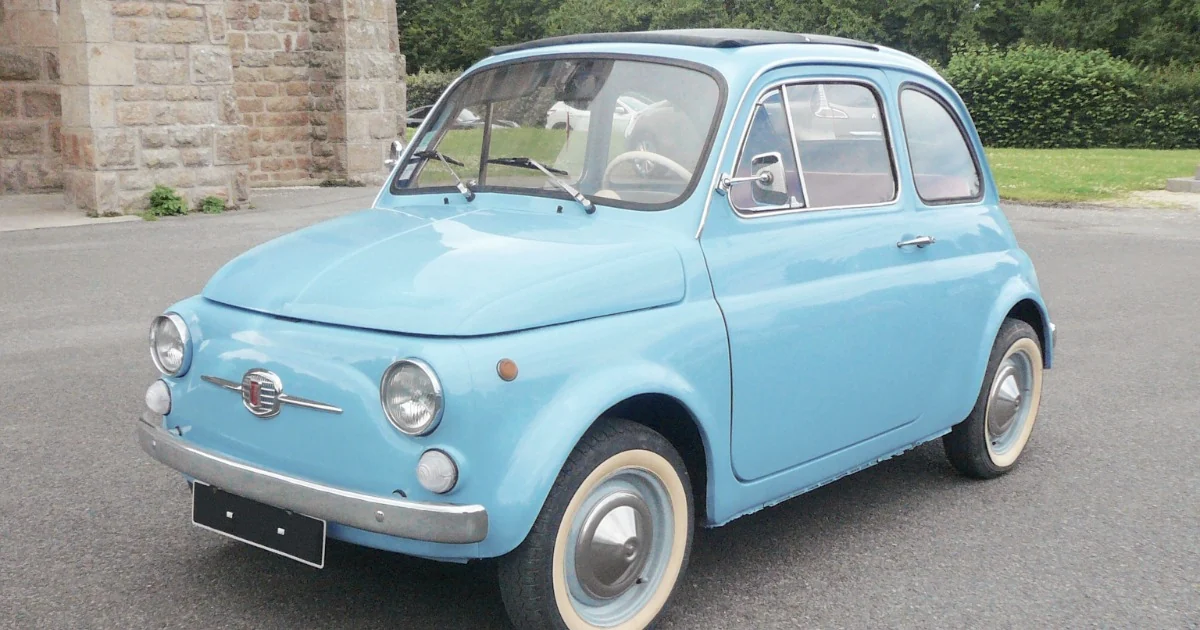
In Cologne, Edmund Labonté, 69, transformed his 1971 Fiat 500 into an electric car. Tailored for urban use with roughly 120 km of range and 16 kW of power, this retro-styled city car blends nostalgia with modern technology. Labonté installed the battery on the rear bench and complied with all the requirements set by Germany’s TÜV. The project, above all, is a passion that requires an investment close to €8,000–€10,000 for the car, plus another roughly equal amount for the electric conversion.
In Cologne, in the Nippes district, a small blue 1971 Fiat 500 has changed its life. It no longer rattles to the rhythm of a barky two-cylinder engine, but glides in silence thanks to an electric motor installed by its owner, the 69-year-old German publisher Edmund Labonté, who did it all himself in his workshop according to ksta.de.
A former director of the lit.Cologne literary festival, he now clears his mind by tinkering with old cars. For this Fiat 500 that’s been turned into a Fiat 500 electric, he cites 16 kW of power, around 120 kilometers of range, and a top speed close to 100 km/h. A detail that raises eyebrows among enthusiasts: the main battery sits on the rear bench, behind the two small front seats, in a car that has undergone all the requirements of the TÜV German safety body. And this Fiat 500 retrofit is, for him, only a stepping stone.
In Cologne, a 1971 Fiat 500 Reimagined as an Electric City Car
In his account, Edmund Labonté admits a real soft spot for this Italian mini. He loves its compact footprint, its rounded, curvy design, and the spirit of a time when the car’s purpose was to get you from A to B with minimal frills. “I simply find the idea of linking the beauty and nostalgia of an old car with modern technology original—how a vintage rattler can become a silent car that moves along wonderfully.” He says this to Kölner Stadt-Anzeiger. For him, that simple lineage makes it an ideal base for an electric transformation.
The trigger came from an article on electric conversions of old cars. Intrigued, he visited Lorey, a Offenbach-based company that specializes in electrifying classic Mercedes and Porsches. Seeing those models transformed left a lasting impression: it felt like a real revelation. He sums up his intent in one clear sentence: “I simply find the idea of marrying the beauty and nostalgia of an old car with modern technology original—how a vintage rattler could suddenly become a quiet vehicle that glides wonderfully.” The little 500 would become his rolling laboratory.
A DIY Fiat 500 Retrofit, Battery on the Rear Bench, and TÜV Green Light
Once the decision was made, Edmund Labonté ordered all the necessary parts from Heiko Fleck, a Pfarrkirchen-based tuner he describes as the “guru” of the electric scene. “In the beginning, I was a bit desperate because all the separate components were scattered around my workshop. But I want to know how the tech works and I therefore installed everything myself. I bought the parts from Heiko Fleck in Pfarrkirchen, he’s something of a guru in the field. He showed me every step of the process and I filmed them,” he recalls. He also leaned on numerous online videos to validate each move.
Technically, everything centers around the old rear-engine bay. In place of the internal combustion block sits the control unit, the controller, the electric motor, and the charger. The battery, meanwhile, is mounted on the rear bench, freeing up the small front trunk but taking away the rear seats. “At the back, where the old Fiat engine used to be, you now find the control unit, the controller, the electric motor, and the charger. I placed the battery on the rear seat,” he explains. He then wired everything according to the TÜV guidelines, which require all 48-volt cables to run in orange plastic conduits. Some parts were even custom-made, such as the motor mount, initially printed in 3D plastic, then manufactured in metal in China from the file. When it came time to assemble it all, he compiled a thick packet of documents, technical sheets, and schematics, essential for passing the homologation process.
Behind the wheel, Edmund Labonté underscores the distinctive character of his electrified Fiat. “What matters with these electric motors is that they deliver their maximum torque from the very first second. There’s no clutch on an electric car, which means at every red light you get a ferocious acceleration. Beyond that, the car is very quiet and slips into any parking spot. I truly love the Fiat 500; in a way it’s a sensuous car in its rounded shape.” The roughly 120-kilometer range makes it a city-ready hatch, perfect for urban and peri-urban trips, though not ideal for long hauls. He also acknowledges that charging takes several hours with a technology that isn’t cutting-edge these days.
Financially, Labonté speaks plainly. “With a maximum range of about 120 kilometers, this isn’t a vehicle for long trips; it’s best for short city jaunts. The charging tech isn’t state-of-the-art. It already takes a few hours. Even though you don’t have to fill up with pricey gasoline, this project isn’t exactly cheap. A decent Fiat 500 already costs around €8,000 to €10,000. I’d budget roughly the same for the electrical installation. And much more if you hire it done.” In France, the budgets cited for retrofitting a small city car hover around €10,000 to €12,000 for the electrical portion, reflecting the retrofit decree enacted on March 13, 2020. All of which underscores that this is a passion project, rather than a cost-effective transition solution.
There were plenty of headaches during the project. He recounts spending hours chasing a glitch where the wheels turned on the lift but the car wouldn’t “take gas.” The culprit was a simple connector pin out of place, interrupting the link; once repositioned, the car surged so hard he nearly crashed into a wall. This mix of sweat, doubt, and satisfaction fuels his attachment to the 500, a car into which he says he poured “so much brain, blood, sweat, tears, and emotion” and which he would like to keep. And as he enjoys his electrified little Italian on Cologne’s streets, a new challenge already awaits in the workshop: a Renault 4 from 1981, promised a second life under voltage as well.
Comparison Table
| Feature | Fiat 500 retrofit (Edmund Labonté) |
|---|---|
| Year | 1971 |
| Power | 16 kW |
| Range | About 120 km |
| Top speed | Close to 100 km/h |
| Used Fiat 500 price | €8,000 – €10,000 |
| Electrical installation cost | About €8,000 – €10,000 |
| Retrofit budget in France (electric part) | €10,000 – €12,000 |
| Charging time | Several hours |
Key Takeaways
- Edmund Labonté, 69, transformed his 1971 Fiat 500 into an electric car in Cologne.
- The DIY conversion shows 16 kW of power, a 120-km range, and a top speed near 100 km/h.
- The battery sits on the rear bench, rendering the back seats unusable.
- The project adhered to German TÜV standards and employed custom parts.
- The all-in budget runs about €16,000 to €20,000 for the car and the electric conversion.
- This retrofit is primarily a passion-led endeavor, suited to short urban trips.
FAQ
How did Edmund Labonté electrify his Fiat 500?
He ordered the parts from a specialist tuner and did the entire installation himself in his workshop.
Where is the battery located in this Fiat 500 retrofit?
The main battery is installed on the rear bench, which makes the rear seats unusable.
What range does Labonté’s Fiat 500 electric achieve?
The stated range is about 120 kilometers.
What is the estimated budget to transform a Fiat 500 into electric?
Around €8,000–€10,000 for the car, and roughly the same amount for the electrical installation.
Is the conversion suitable for long trips?
No, this car is primarily designed for urban or suburban travel due to its limited range.