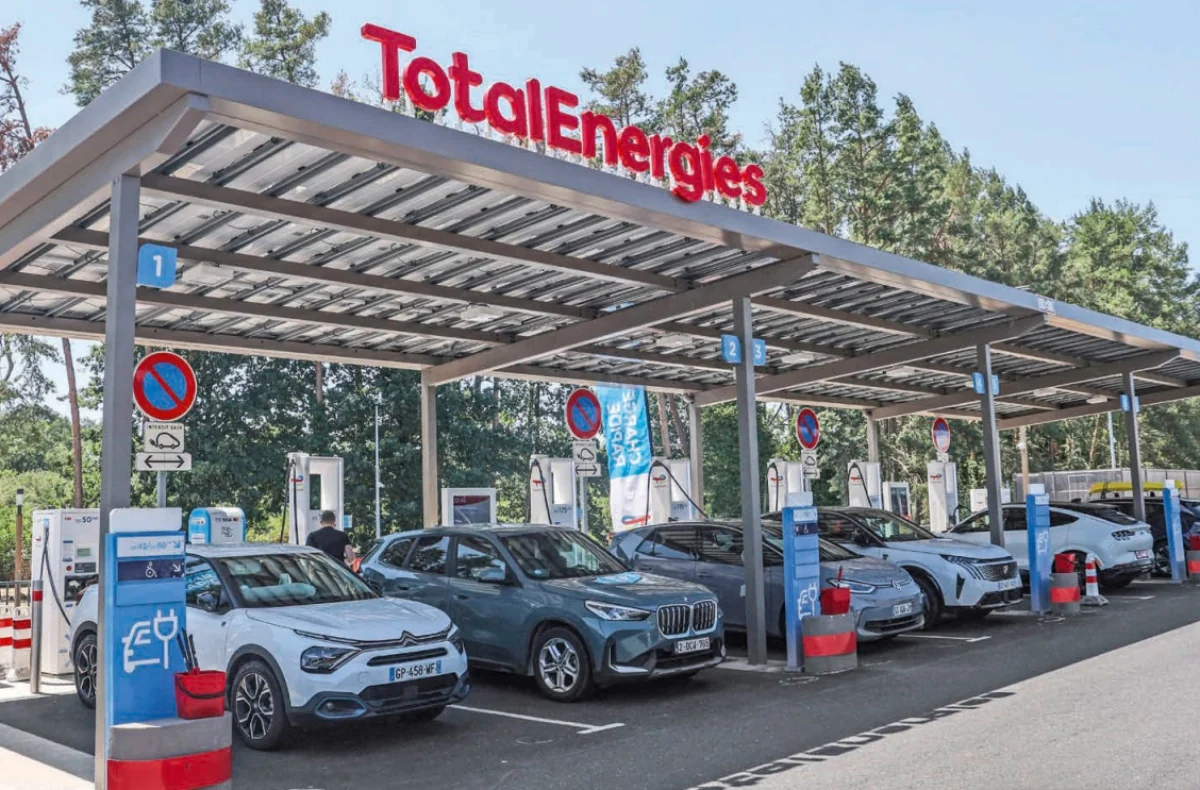
TotalEnergies earns millions of euros, but it also records losses from time to time. The Chief Executive Officer, Patrick Pouyanné, didn’t hide this on France Inter on September 5: “I’m investing in charging stations that are used only 20% of the time. They aren’t profitable because their utilization is too low,” the executive lamented. A statement that is largely borne out by the company’s annual accounts: TotalEnergies Charging Services, the subsidiary dedicated to charging stations, shows a net loss of €25.7 million in its 2025 accounts: “Operating profit is negative in 2025 at -€19,988,141, though an improvement versus 2024,” the report notes. Two years earlier, the operating loss had reached €32.8 million. This is not an unusual pattern. A multitude of operators, both public and private, install and operate charging stations across France. For instance, the Calvados Public Energy Service (SDEC Énergie) notes that “If the SDEC Énergie pursues its ambition for sustainable mobility, the service nonetheless remains unable to reach balance.” The 2025 report of the union underscores this.
In Caen’s surrounding area, €116,516 in deficits were generated by charging stations last year: “Without the balancing subsidy, the operating section shows a structural deficit due to the inability to generate a sufficient margin with the pricing of charging sessions,” the SDEC adds. A reality affecting all departments? Some fare better than others: “In 2025, we are nearly at break-even,” says the Charente Departmental Union of Electricity and Gas (SDEG 16). Before revealing its secret: “We manage to balance financially because we optimized many things. And most importantly, we hired an internal person for the maintenance of the charging stations.” Thus, public charging stations would not automatically be running at a deficit, provided the issue is examined with care. The TotalEnergies CEO Patrick Pouyanné notably did not spell out a major point at France Inter: Tevgo, another Total subsidiary that operates Paris’s Belib’ charging networks, is in the black! A profit of €248,347 was recorded last year thanks to the increasingly frequent recharges by Parisians.
Rising Charging Activity
One must say that, in the era of high oil prices, charging stations and electric vehicles enjoy a favorable moment. Their use is on the rise. Avere, the association promoting electric mobility in France, has recently shared statistics on public charging usage: as of July 2026, the average number of charging sessions per charging point rose 30.8% year over year, from 29.5 to 38.6 sessions. In other words, each station is now used more than once a day on average. Chargemap, a company that provides access solutions to charging stations, found that during the summer of last year, charging sessions with the dedicated pass rose 54.2%.
In the Charente department, the SDEG 16 reports a 14.4% rise in charging sessions in 2025, after a 10.8% increase between 2023 and 2024. The union also notes that fast chargers, installed more recently than slow chargers, seem to be more successful. Likewise, urban wall outlets are performing well: “Rural charging points see lower utilization, generally between 2 and 10 sessions per month,” adds the SDEG 16, before stressing that usage must still be weighed against their role in linking the territory.
“Putting Motorists’ Reassurance First, Day in and Day Out”
The famous concept of “territorial network”—is it still essential in a country now boasting 200,045 publicly accessible charging points as of the end of July 2026? “Undoubtedly some areas are already well-covered, but there are still gaps,” argues Sandrine Henry, the general delegate of Avem, an association that also promotes electric mobility. She explains real-life cases: people living in apartment buildings without parking, itinerant drivers, and others who cannot access a private charging point. According to Ms. Henry, continuing deployment of charging infrastructure, even in the face of deficits, remains crucial: “We must send positive signals to people to reassure them.”
That view is entirely shared by BMW France’s president, Vincent Salimon: “The real challenge is not only about crossing France; it’s about reassuring drivers on a daily basis. A dense territorial network of charging stations—within cities, shopping corridors, and living spaces—is essential to removing barriers to buying an electric vehicle,” says the executive who drives an electric car every day.
France’s government envisions 400,000 charging points across the country by 2030. But before reaching that target, a shift is expected to take effect on January 1, 2027: all fast charging stations of 50 kW and higher installed along a highway axis or parking area must permit payment by credit card, regardless of their year of commissioning.
Auto-Journal’s Perspective
L’Auto-Journal believes that the sustained rise and broad adoption of electric mobility obviously depend on a robust and dense charging network. Yet the sheer weight of investments—public and private—in a truly comprehensive charging network still struggles to turn a profit, due to a still relatively low usage frequency. These companies are likely among the few who welcome the surge in oil prices with a sense of relief.
Find our investigation into charging stations in France in l’Auto-Journal issue No. 1219, dated 15/10/2026.