In Brief
Polestar unveiled the Formula 2030 concept, an innovative electric sedan that sits halfway between a spacious station wagon and a sporty coupe, embodying the automaker’s vision for 2030. This vehicle stands out thanks to its radical design, low, elongated proportions, a focus on minimalism and performance, and the integration of sustainable elements. The interior offers a driver-centered cockpit, customizable controls, and a strong digital presence. This concept outlines the guiding principles for future Polestar 2 and Polestar 7 models, while aligning with a sustainable, premium approach.
And what if the electric sedan of 2030 shed the SUV codes to slip between a station wagon and a sporty coupe? That exactly is the practical idea Polestar is turning into reality with a new concept designed as an everyday car, yet carved like a racecar.
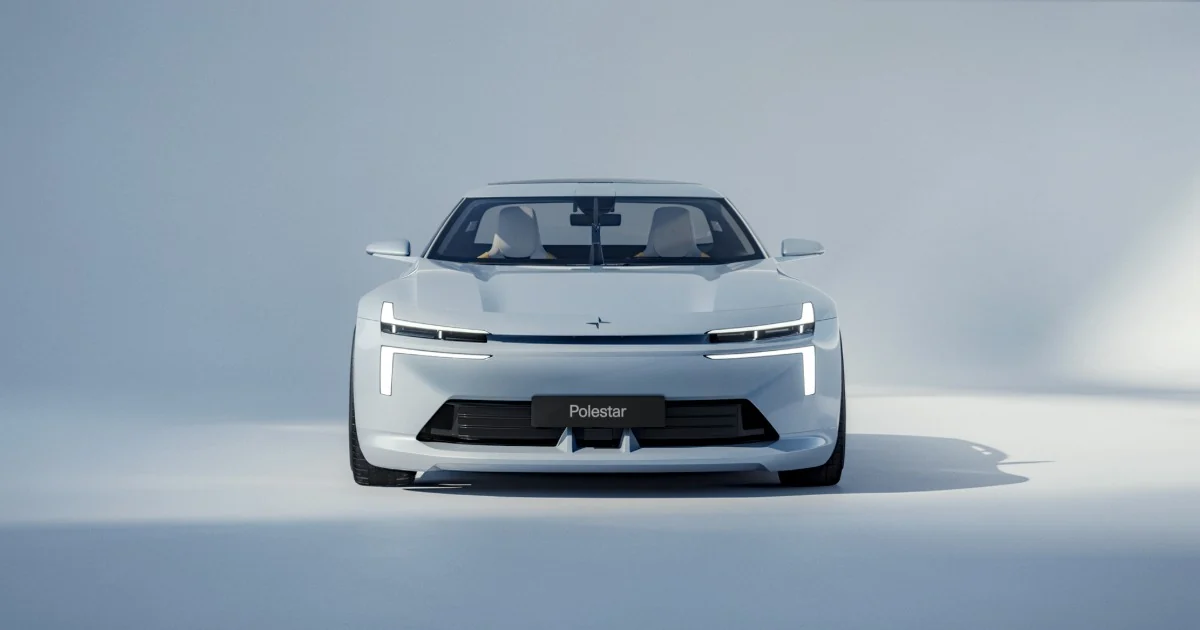
On November 10, 2026, in Gothenburg, the Swedish brand unveiled Polestar Formula 2030, a concept car that materializes its strategy of the same name: strip away the superfluous, perfect the essential, and refuse compromises. A four-door sedan, as long as a wagon yet lower than many coupes, Polestar sketches its vision of electrification for 2030 and already signals elements that will be carried over to the future Polestar 2 and Polestar 7, hinting at a silhouette that is not quite like any other.
Polestar Formula 2030: a low-slung sedan between wagon and coupe
The first show car designed under the leadership of Philipp Römers, Head of Design, Formula 2030 presents very distinctive proportions. It measures 4.68 m in length, 2.02 m in width, a wheelbase of 2.78 m, and a mere 1.35 m in height, placing it below the Polestar 5 Grand Tourer. This size places it between the upcoming Polestar 2 and the compact SUV Polestar 7, delivering the footprint of a wagon with the stance of a four-door coupe. Philipp Römers sums up the design challenge of this manifesto: “Design must always reflect a brand’s values and mission, and that’s exactly what we’ve done with the Polestar Formula 2030 concept. It embodies how we apply Polestar’s core principles—design, performance, and sustainability—to our upcoming production models. It also marks a bold evolution of our already-established design DNA to strengthen the brand’s positioning, while preserving performance.”, explains Philipp Römers, Polestar’s Head of Design, as quoted by Polestar.
From the side, the car adopts a classic stance of a long-lived interior laid out over broad hips, with a long hood and short overhangs. The 22-inch wheels emphasize its grounded vibe. From above, the silhouette resembles a “Coca-Cola bottle,” with visual power concentrated at the rear. At the front, the Dual Blade headlights, already emblematic of the brand, frame an integrated aerodynamic spoiler that also previews the face of the upcoming Polestar 2, expected in 2027. The “shark nose” and the broad splitter connected by a central pillar add real racing-car attitude. Nahum Escobedo, Head of Exterior Design, explains this evolution: “We wanted to evolve the core values of the design, which through our previous models makes Polestar instantly recognizable, while staying faithful to them. With the Formula 2030 concept car, thanks to clear Polestar design attributes like the Dual Blade headlights, the visor-like wraparound windshield, and the powerful fenders, we achieved exactly that. But we also challenged perceptions, preconceptions, and expectations with thoughtful choices in formal language, an amplified performance dimension, and new details like the Single Blade rear lights.”
Inside Polestar Formula 2030: a mechatronic cockpit and future materials
Inside, Formula 2030 continues this idea of a futuristic sports sedan, envisioned as a large four-seat “grand compact.” The cockpit is fully centered on the driver, with a 20-inch HyperDIM screen that is finely curved and mounted to the steering column, complemented by a 12.2-inch central screen set into a raised tunnel. Three drive modes are offered—Performance, Normal, and Autonomous—each physically altering the screen’s attitude, seat position, and steering wheel. A bank of eight customizable physical controls sits beneath the central screen to balance touch controls with tactile buttons. Juan Pablo Bernal, Head of Interior Design, summarizes the philosophy: “With the Formula 2030 concept, we strip away the superfluous, distill the experience to its essence, and reinforce the elements that truly matter, to set the tone and ambition for future Polestar interiors. As a performance brand, we refocus on the driver, rebalancing digital and physical interfaces. We reintroduce physical buttons and controls, and we believe we’ve achieved a tactile harmony worthy of our premium positioning.” The digital interface remains faithful to the brand’s minimalist approach, with clean information and the integration of Google Gemini with Google built in to offer onboard AI.
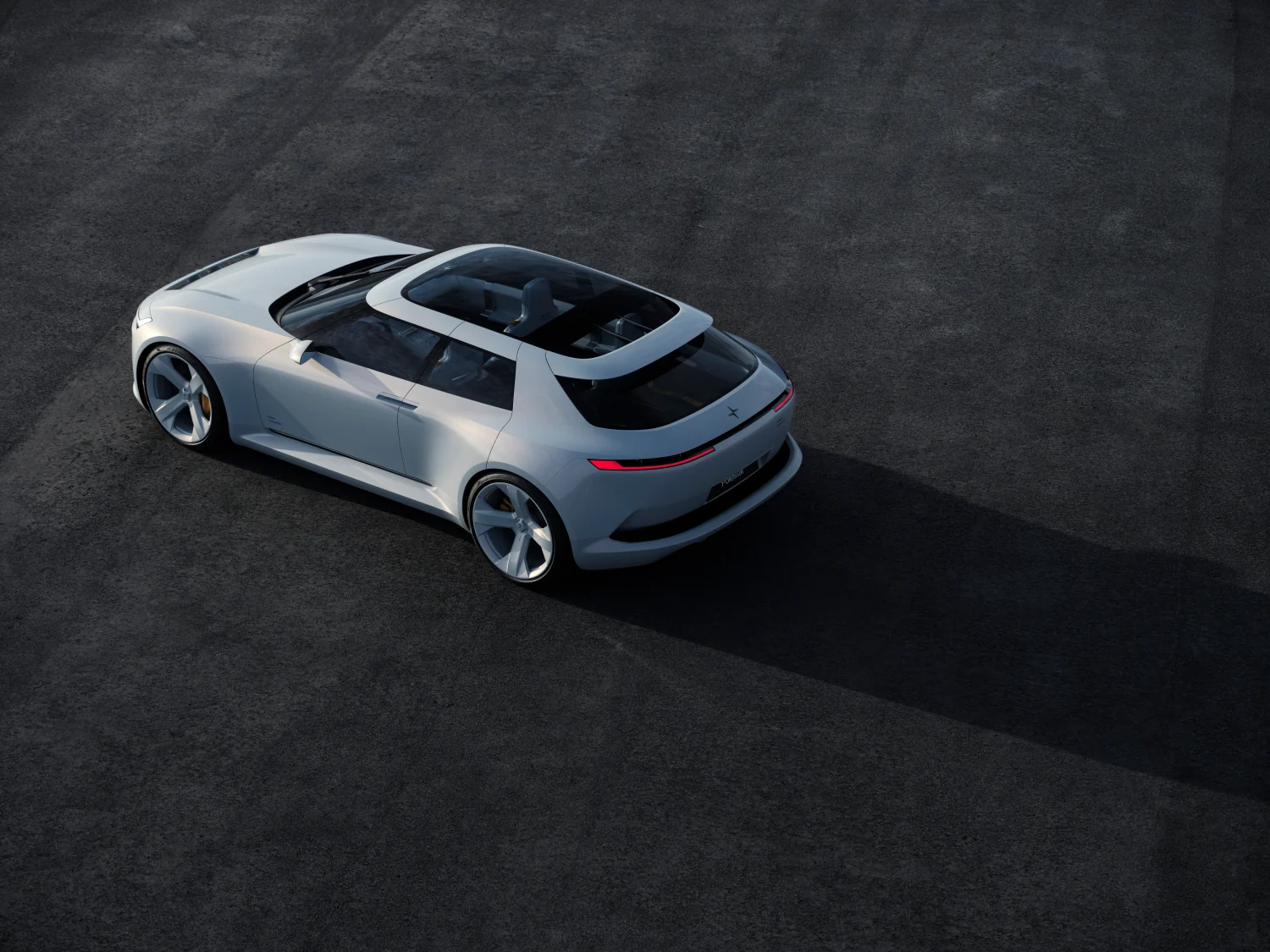
The materials section directly links to Polestar’s climate goals, aiming to cut per-vehicle greenhouse gas emissions in half by 2030 and achieve neutrality across its value chain by 2040. The exterior Nitrogen finish covers the entire body, including center-lock wheels and aerodynamic elements, in a tone-on-tone treatment with matte, satin, and glossy finishes, punctuated by Swedish Gold accents on Brembo brake calipers, seat belts, and certain structural parts. Antagonist-opening doors, recyclable mono-material door panels, visible low-emission galvanized steel, bio-based composites combining European flax and polypropylene, natural fibers Bcomp, exposed Öhlins dampers—all act as a living lab for circularity. Maria Uggla, Head of Colour Material and Finishes, explains: “With the Formula 2030 concept, we knew we had to stand out while staying true to the Polestar spirit. The tonal treatment that results naturally links both interior and exterior, deeply rooted in our minimalist Scandinavian aesthetic, in an unexpected and new way. Paired with our commitment to sustainable, highly designed, and desirable materials, Formula 2030 directly announces our future.” This gives a concrete preview of what the next Polestar 2 and Polestar 7 will look like, and offers a fairly realistic glimpse of the electric sedan Polestar envisions for 2030.
Comparative Table
| Model | Length | Width | Height | Wheelbase | Wheels |
|---|---|---|---|---|---|
| Polestar Formula 2030 | 4.68 m | 2.02 m | 1.35 m | 2.78 m | 22 inches |
Key Takeaways
- Polestar Formula 2030 is a low-slung electric sedan concept positioned between a wagon and a sporty coupe.
- Dimensions: 4.68 m long, 2.02 m wide, 1.35 m tall, with 22-inch wheels.
- The design blends Scandinavian minimalism, sporty details, and innovations in sustainable materials.
- The interior emphasizes the driver, with physical controls and advanced digital interfaces.
- The concept previews aesthetic and technological directions for future Polestar 2 and 7 models.
- Polestar targets significant emissions reductions and material circularity by 2030–2040.
FAQ
What are the dimensions of the Polestar Formula 2030?
It measures 4.68 meters in length, 2.02 meters in width, 1.35 meters in height, with a 2.78-meter wheelbase.
Where does Formula 2030 sit in Polestar’s lineup?
It sits between the upcoming Polestar 2 and the compact SUV Polestar 7, combining wagon-like footprint with a four-door coupe stance.
What design elements distinguish this concept car?
The Dual Blade headlights, visor-shaped windshield, strong fenders, and a Coca-Cola bottle silhouette give it a bold visual identity.
How is the Formula 2030 interior conceived?
The interior is driver-focused, with customizable physical controls, two digital displays, and a balance between minimalism and practicality.
What is Polestar’s sustainability approach for this concept?
Polestar aims to cut per-vehicle emissions by half by 2030 and achieve value-chain neutrality by 2040, using recycled and bio-based materials.