When a carmaker sends bailiffs to seize a rival’s computers, it signals that the fight goes far beyond marketing. This summer, bailiffs acting on behalf of Jaguar Land Rover raided two Dutch offices of the Chinese giant BYD, as part of accusations that BYD copied a SUV with a look that will be instantly familiar to any off‑road enthusiast: the Land Rover Defender.
At the center of the storm is the BYD Ti7, a large seven‑seat plug‑in hybrid SUV that has already been dubbed by some outlets as the “Chinese Defender clone” and is slated to arrive in the United Kingdom in January at a price well below the original. That prospect could seriously worry Land Rover, which has Defender as a cornerstone of its lineup. The question now is whether The Hague’s court will view this BYD Ti7 Defender as a mere source of inspiration… or as a copy that crosses the red line of intellectual property.
Raid in the Netherlands: Jaguar Land Rover Goes on the Offensive Against the BYD Ti7
The events date back to August. Bailiffs acting for Jaguar Land Rover conducted a raid at BYD’s offices in Schiedam and Hoofddorp, the Netherlands. According to UK press reports, they seized digital records and various documents, with JLR alleging that the Chinese automaker performed a complete teardown of a Defender to reverse‑engineer its technology for the Ti7. The stated aim: to grab these materials before they could be erased or destroyed. JLR and BYD have not commented on these “ongoing legal proceedings.”
This seizure sits within a precise framework of Dutch law, known as “bewijsbeslag,” which allows investigators to seal off potential evidence without notifying the other party in advance. The documents remain with a third‑party custodian, and a hearing at The Hague District Court, scheduled for this week, is to decide whether JLR’s lawyers will be allowed access to them and whether BYD has a case to defend on intellectual property. For the moment, no judge has ruled on the merits. In European law, dismantling a legally purchased product to understand its technology is generally permitted. The real question, therefore, centers on the Ti7’s appearance and whether there was illicit use of trade secrets, in a case that could, given BYD’s European headquarters in the Netherlands, touch all 27 European Union member states.
BYD Ti7, Defender Clone or Cheap Rival?
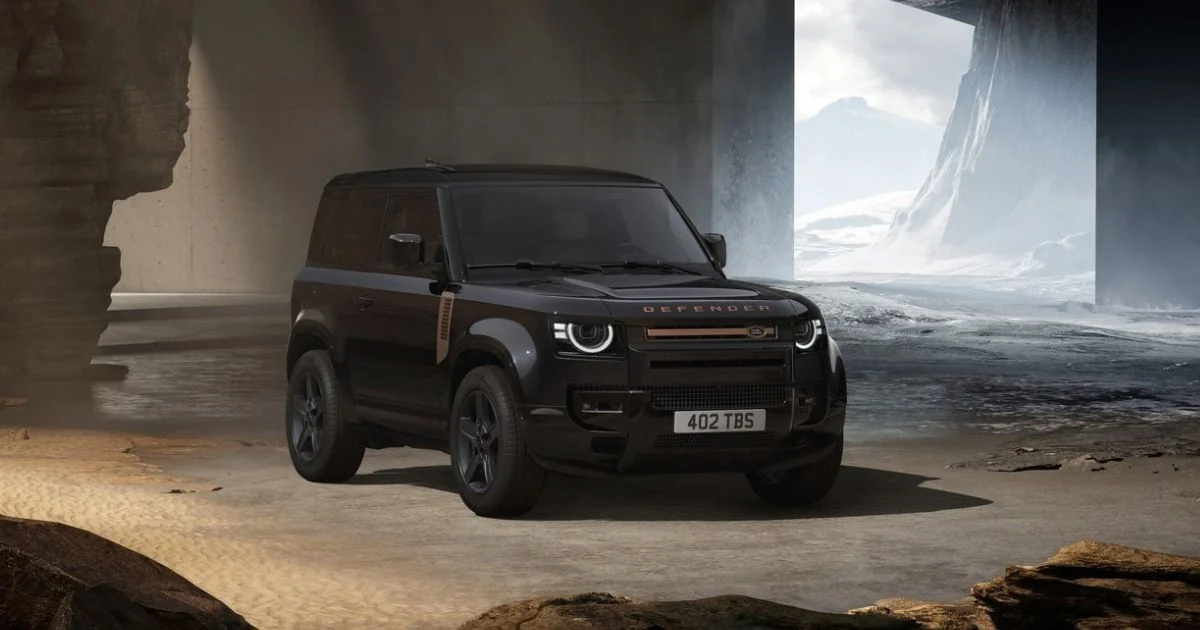
What immediately stands out is the look. The BYD Ti7 features a boxy silhouette, straight character lines, vertical glazing, and a spare wheel mounted on the rear—visual cues that instantly evoke the Defender. BYD itself embraces this rugged styling, describing on its site “a deliberately squared profile that offers a bold and imposing design, valued by SUV buyers, while delivering a contemporary look,” the manufacturer told The Guardian. BBC’s Top Gear even calls it a “Chinese clone of the Defender.” At roughly 5.14 to 5.15 meters in length, nearly 2 meters wide, and with seven seats, the Ti7 sits in the same footprint as a Defender 110, or even a Defender 130, reinforcing the sense of a head‑to‑head showdown between the BYD Ti7 Defender and the British icon.
Underneath that rugged body, the Ti7’s spec sheet is equally aggressive. The Chinese SUV relies on a plug‑in hybrid drivetrain with a 1.5‑liter turbo engine paired with two electric motors, delivering a combined output of about 400 to 600 horsepower depending on the version, a battery of around 35.6 kWh, and up to 127 miles of electric range on WLTP cycles. 0 to 60 mph is claimed in about 4.8 seconds. In the United Kingdom, BYD plans a January launch, with a top‑line version priced at £47,995, roughly $60,000. By contrast, the Land Rover Defender 110 seven‑seater starts at £68,465 (near $85,000) and climbs to around £71,840 (more than $89,000) for the plug‑in hybrid variant—a gap of more than £20,000 (about $25,000). That contrast matters, given that JLR sold 29,500 Defenders to private customers between July and September, up from 25,370 a year earlier. The Defender remains one of the brand’s flagship sellers, a fact the automaker has sought to protect for years: in 2019 JLR even secured a ban on the Chinese‑made Landwind X7 in China for its close resemblance to the Range Rover Evoque, and has since pursued a network of cooperation agreements, including a 2012 joint venture with Chery and licensing of the former Freelander brand. Meanwhile, models like Chery’s Jaecoo, nicknamed the “Temu Range Rover” for their cheaper resemblance, are gaining traction in the UK, with 10,813 registrations in October and a price about £10,000 below a Range Rover. This context helps explain JLR’s current stiffness: beyond the Ti7 case, it’s the value of its iconic silhouettes in the face of the new Chinese SUVs that’s at stake in front of The Hague’s judges.