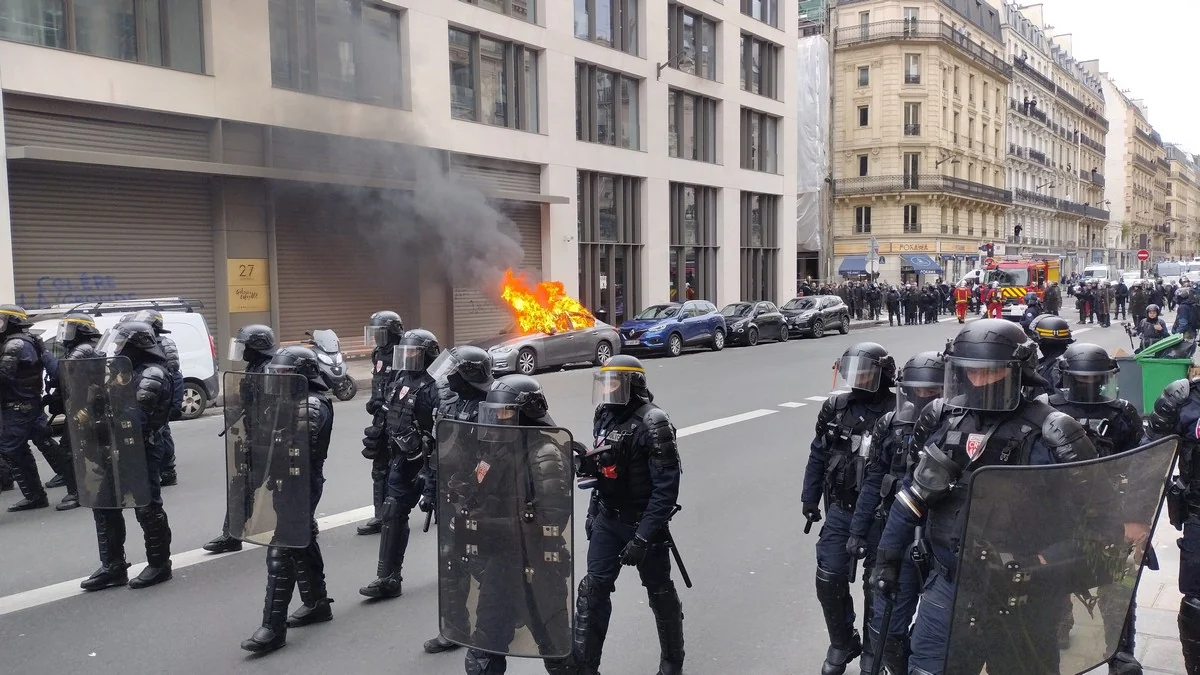
The day of Thursday, November 5, 2026, looks set to be challenging for drivers. On the occasion of a nationwide interprofessional mobilization, numerous protests, gatherings, and blockades are planned across France. From city centers to major highways, as well as access points to train stations and airports, disruptions are expected to be widespread. Here are the sectors to watch and the best precautions to take to minimize travel difficulties.
According to various assessments of the protests, more than 250 events are slated nationwide. The movement, backed by several labor unions and the Yellow Vests, could also involve slow-rolling convoys and checkpoint-style blockades.
City centers and roundabouts among the most exposed areas
Drivers will first need to be wary of city centers, where processions could lead to temporary closures of streets and major avenues. In Paris, Place de la République is notably listed as a gathering site. In the regions, the Réformés area in Marseille, Place Saint-Pierre in Caen, Rue de Séraucourt in Bourges, and the Champ de Foire in Bourg-en-Bresse are also affected.
The outskirts of schools and universities could also experience disruptions, particularly in the early morning with potential blockades.
But city centers will not be the only sensitive areas. Several strategic roundabouts are also the focus of mobilization calls. This is the case in Aubenas, Rosières-en-Ardèche, Brest, Ancenis-Saint-Géréon, Voreppe, and Saint-Raphaël. In Savoie, the Bourg-Saint-Maurice, Moûtiers, and Ugine areas are also to watch. These choke points are sometimes located near highway access ramps or commercial zones, which could trigger significant slowdowns.
What alternate routes for travel on November 5?
In the Île-de-France region, access to Roissy-Charles de Gaulle and Orly airports could be particularly difficult. The A1, A3, A6, and A106 motorways are especially worth monitoring, as are the approaches to the major Paris train stations. For essential trips, it’s wise to plan ahead and, when possible, favor peripheral routes instead of driving through the protest zones.
Out in the countryside, it’s advisable to bypass the city centers and roundabouts named as mobilization sites by taking secondary routes, provided they remain accessible.
A few precautions can also help prevent unwelcome surprises. It’s best to fill up the tank before Thursday, as some service stations may face supply issues, and avoid parking near gathering sites to prevent damage to your vehicle. Finally, checking navigation apps and real-time traffic conditions will allow you to adapt your route. If you encounter a filtering checkpoint or a slow-rolling convoy, you should follow the instructions of law enforcement and never try to force your way through.