The shift toward electric propulsion continues to shake up European auto suppliers. After several rounds of layoffs in recent years, a major German supplier is poised to cut thousands of jobs and close several plants, signaling a cooling vehicle market and growing pressure on production costs.
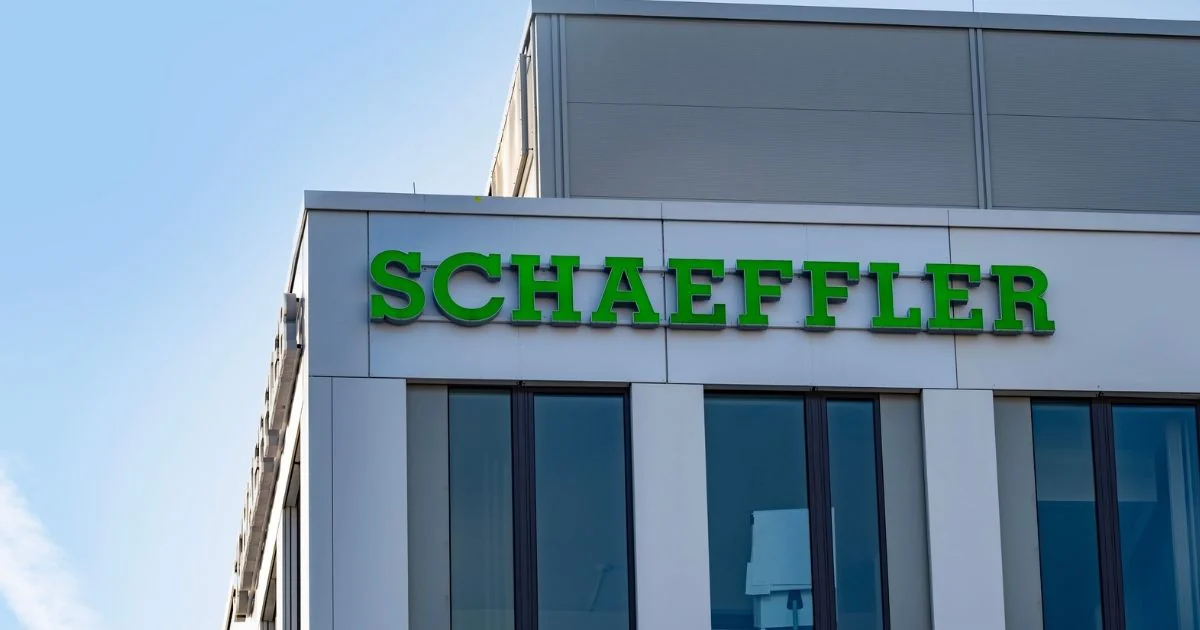
The sites affected sit at the heart of Western European industrial hubs, regions where the internal combustion engine once sustained hundreds of thousands of jobs. In total, 3,460 positions will disappear across several European countries, and five plants will be shuttered under a new cost-cutting program. That is the stance announced by the supplier Schaeffler on November 3, which said it wants to align its capacity with a weaker demand for vehicles with combustion engines and with a slower-than-expected electrification of vehicles. Behind these numbers, the European automotive industry as a whole is facing a large-scale restructuring.
3,460 jobs cut and five Schaeffler plants to close in Europe
According to the group, the plan targets a total of 16 European sites, with headcount reductions at varying degrees. In Germany, about 2,660 jobs are set to disappear by 2028, representing nearly 9% of the local core workforce, which numbers just over 32,000 employees. This hits the group’s industrial heart, concentrating the cuts on activities tied to the traditional combustion engine. Five sites will be closed outright: four factories in Germany and one site in Belgium, leaving entire regions facing the prospect of losing a major employer.
The closures announced affect the sites in Dortmund (about 430 jobs), Morbach (160), Berlin (around 270) and Schwalbach (roughly 190), as well as Herstal, in Belgium, where about a dozen workers are affected. Other plants will see capacity cut but not be shut down entirely at this stage: notably in France, in Haguenau and Toulouse, but also in Slovakia, at Skalica and Kysuce. About 50% of the targeted positions are in production, 30% in research and development, and 20% in support functions, a split that shows the cuts hit both the factory floor and the design offices. Schaeffler is aiming for recurring savings of around €300 million a year starting in 2030. The group also expects restructuring costs of about €480 million, largely booked in 2026. This effort adds to a previous program announced in 2024, which already planned 4,700 job cuts and 1,800 early retirements in Europe.
Rising labor costs, cooling demand: why Schaeffler is tightening the screws
For management, this sweeping layoff plan is driven first and foremost by market dynamics. Demand for vehicles with internal combustion engines is steadily shrinking, while the rollout of electric vehicles is slower than hoped and not yet offsetting the decline in ICE. Vehicle production volumes are down, and competition from Chinese automakers is pressuring prices and margins for European suppliers. In this context, Schaeffler wants to recalibrate its capacity to continue developing and manufacturing its products in a way that remains competitive in Germany and across Europe, while simplifying an organization that executives view as overly complex. Other players in the supply chain are feeling the heat too: customers like Volkswagen, Mercedes-Benz, and Porsche have also launched cost-cutting programs to protect profitability in a shrinking market.
A recurring note in Klaus Rosenfeld’s remarks, Schaeffler’s chief executive, is the level of salaries in Germany. “Our personnel costs in Germany are about 2.5 times higher than in other European countries,” he explained. He told Reuters that this disparity helps justify concentrating the bulk of job cuts and plant closures in Germany. As part of the restructuring, the company’s executive board will cut its own pay by 10% for two years. “This isn’t just a message to the works council and our employee reps; it’s an initiative through which we want to contribute immediately to solving a cost problem that must be addressed,” the CEO said. Even with the scale of the plan, he reaffirmed the goal of maintaining dividend payments and said he was confident in cash generation in the fourth quarter: “We want to continue paying dividends to all our shareholders, even when restructuring measures are necessary.” Rosenfeld did not rule out further job cuts beyond 2028, noting that Schaeffler will need to negotiate and implement this program first before deciding on additional measures, a signal that Asia-driven and European auto-industry restructurings are far from over.