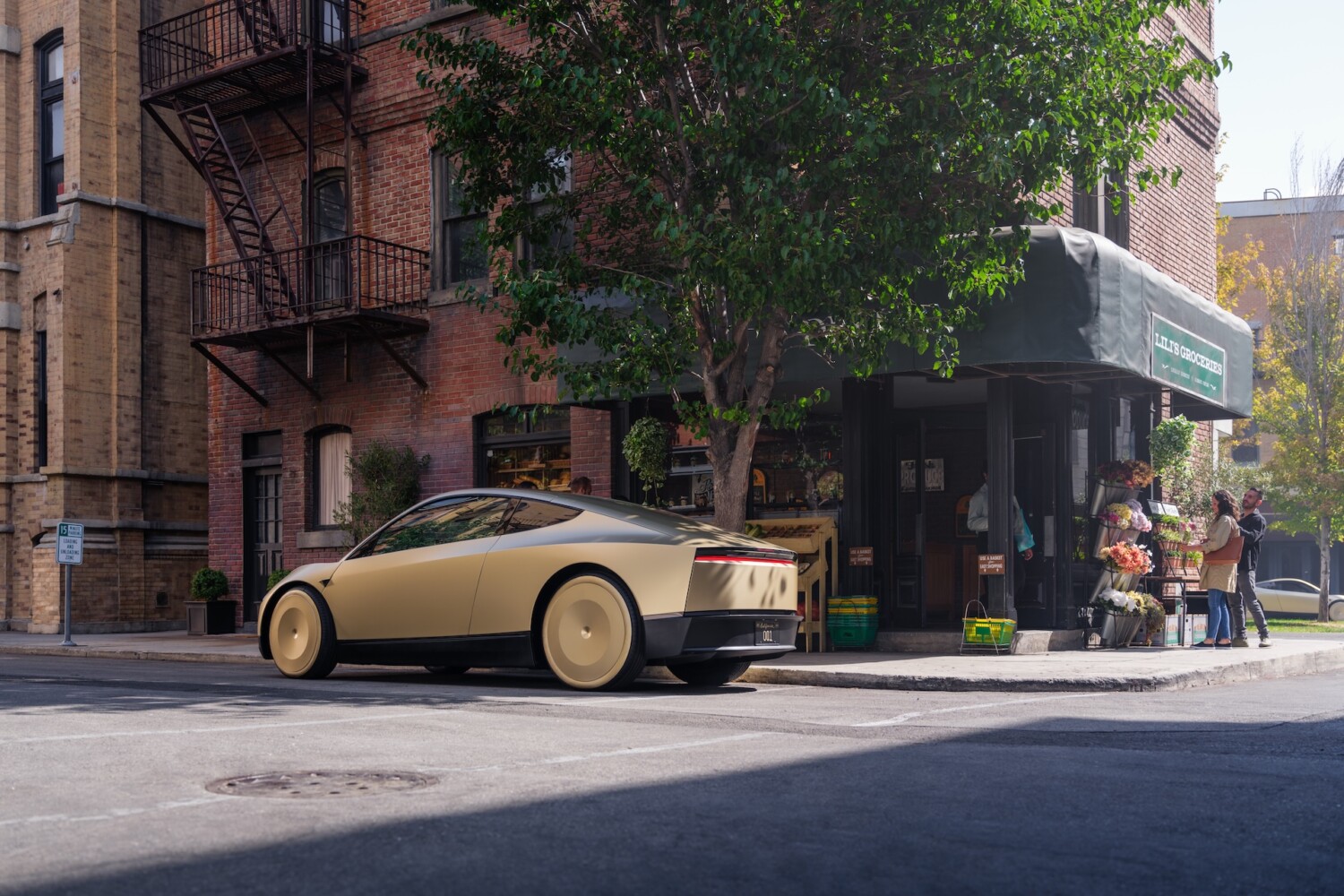
A steering-wheelless, pedal-free taxi that lands in Europe, but only to be watched. This is the very concrete yet still distant promise of the
Tesla Cybercab. The robotaxi will kick off a demonstration tour on the Old Continent. Beginning November 5, this two-seat robotaxi will be exhibited at the Autoshow Zürich. It will mark the starting point of a tour that runs from early November to mid-January. The schedule stacks a series of stops across Central Europe. No city driving, no rides booked via an app. For now, Europe is content to observe from afar. The question remains what this roaming showcase says about the real timetable for autonomous taxi services on our roads.
Tesla Europe made the tour official on November 2, 2026. The automaker posted on X with the slogan: “The Cybercab is back.” In the same post, Tesla promised: “Starting November 5, see how we’re building the future of autonomy.” The attached calendar lists 12 stops between November 5 and January 17. The route runs from Zurich to Vienna, passing through Brussels. In early September, Elon Musk was asked about the Cybercab’s arrival in Europe. He simply replied: “With a little luck, soon in Europe too.” Between these dates, the tour shifted from Asia-Pacific to a full-blown European circuit. It’s fuel for questions from drivers across the continent.
A tightly curated European tour for the Tesla Cybercab
The program published by Tesla includes 12 stops across nine countries, split between auto shows and the brand’s stores. The tour kicks off at Autoshow Zürich, Switzerland, from November 5 to 8. It then continues with stops at the Tesla Stores in Bratislava, Slovakia, and Düsseldorf, Germany, on November 20 and 21. Prague and Hamburg will host the Cybercab on November 27 and 28. Nine stops take place at Tesla Stores. Three other stops occur at major public events such as Auto Zürich, the Brussels Motor Show, and Vienna Drive. Germany has the most stops with four, while most other venues cluster in Central Europe. The prototype had already toured several European showrooms in late 2024, but this time it’s the production version.
For enthusiasts looking to plan a trip, the Cybercab’s European itinerary is already set. It follows a packed schedule.
- Autoshow Zürich (Switzerland): November 5–8
- Tesla Store Bratislava (Slovakia): November 20–21
- Tesla Store Düsseldorf (Germany): November 20–21
- Tesla Store Prague (Czech Republic): November 27–28
- Tesla Store Hamburg (Germany): November 27–28
- Tesla Store Warsaw (Poland): December 4–5
- Tesla Store Berlin (Germany): December 4–6
- Tesla Store Bucharest (Romania): December 11–12
- Tesla Store Munich (Germany): December 11–12
- Tesla Store Budapest (Hungary): December 18–19
- Brussels Motor Show (Belgium): January 8–17
- Vienna Drive (Austria): January 14–17
France, Italy, and Spain are notably absent from this schedule. The Netherlands, Nordic countries, and the United Kingdom also do not feature. France has already seen the car; Tesla had planned a static Cybercab display at the Paris Auto Show in October.
A Cybercab to watch, as we wait for the robotaxi in Europe
Despite its production status, the Tesla Cybercab is coming to Europe strictly for a static display. Tesla’s events page notes that visitors can “get as close as possible to the Cybercab, take photos, and explore its design”. No ride onboard is announced, and no autonomous driving demonstrations in real-world conditions are planned either. Tesla does not mention sales of the Cybercab, nor a launch date for a robotaxi service on the continent. The contrast is stark with Austin, Texas, where the Cybercab has been carrying paying passengers since September 3. By November 2, the Texas automated-vehicle registry counted 573 Cybercabs.
The Cybercab remains, for now, a regulatory oddity on our continent. This two-seat robotaxi has neither a steering wheel nor pedals. It was designed to operate within Tesla’s robotaxi network. In Europe, it has received no road clearance yet. In Australia, Tesla had indicated the car would not operate on public roads. A vehicle without manual controls does not meet local design rules. What European consumers can buy today is limited to Tesla Assisted Driving. That’s the label used for FSD (Supervised) on Tesla’s European sites. Its Dutch type-approval has been recognized by ten EU countries. Belgium, the Czech Republic, and Slovakia are among them, but not Switzerland where the tour begins. A vote by the European technical committee on a possible Europe-wide decision is expected in December. It will come in the middle of the Cybercab’s cross-continental voyage. This tour marks the first concrete step in Europe. It does not prejudge any future approval of the vehicle. Between showroom halls and real robotaxi trips, the road ahead for Tesla in Europe remains long.