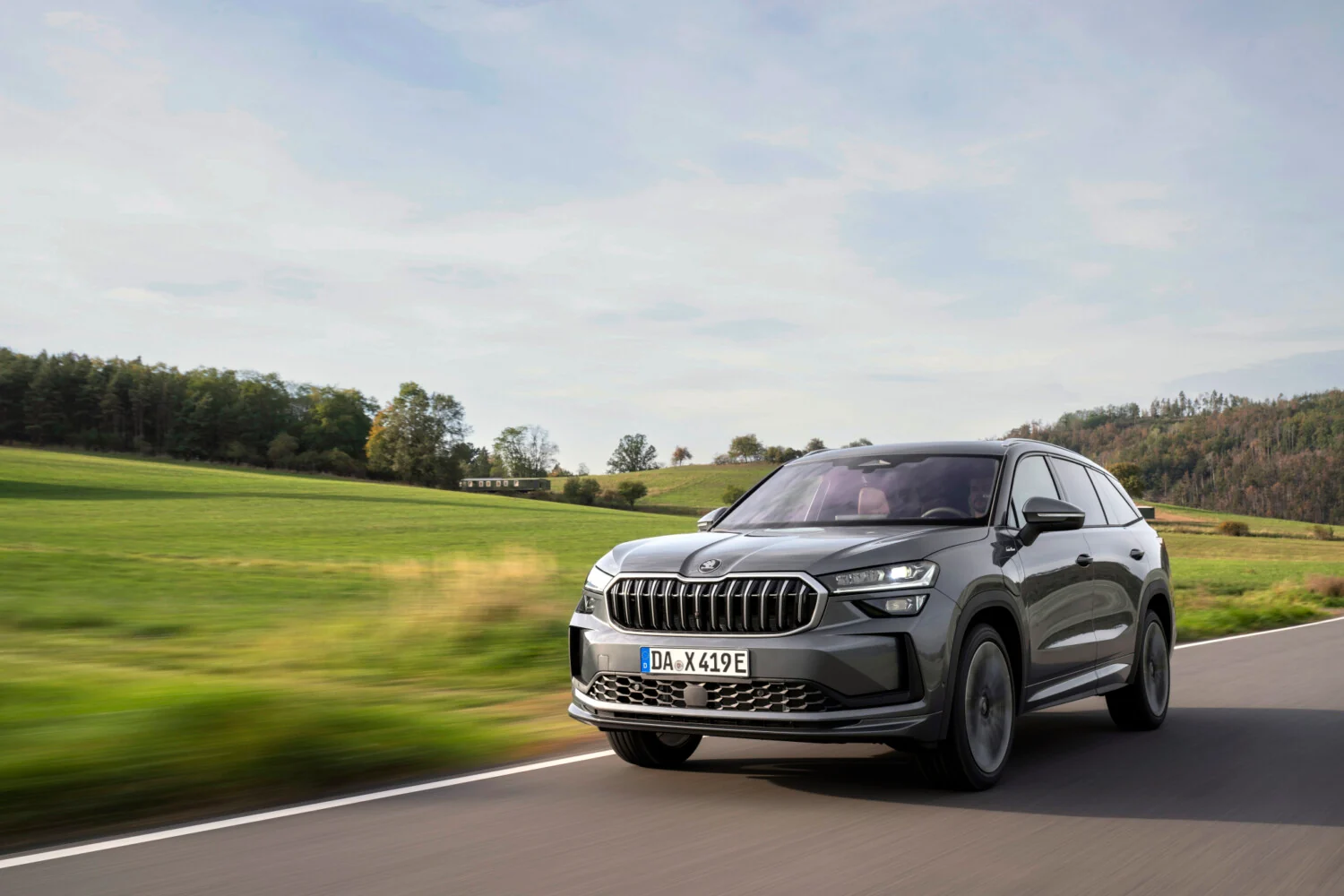
Even as Škoda bets heavily on electrification across Europe with a lineup of four SUVs that cover every market need, the Czech maker hasn’t forgotten how to keep its gasoline and hybrid models relevant. The Škoda Kodiaq gains a new plug-in hybrid powertrain that helps the RS variant in France by dramatically lowering the CO2-based tax imposed by the French government.
From 204 to 272 horsepower
Until now, the family SUV Škoda Kodiaq, which can seat up to seven people, was offered as a plug‑in hybrid in addition to its gasoline and diesel engines, but only in a 204-horsepower version. The Volkswagen Group’s parts bin also includes a 272-horsepower plug‑in hybrid powertrain capable of slipping under the Kodiaq’s hood.
The Škoda brand from Mladá Boleslav announces then the arrival of this more powerful powertrain in the Kodiaq lineup, in addition to the 204‑hp PHEV. Thus, the Škoda Kodiaq follows the opposite path of the Audi Q3, which was launched first at 272 hp, then at 204 hp.
This plug‑in hybrid pairs the familiar four‑cylinder 1.5 TSI gas engine, well known within the group and delivering 177 hp in this application, with an electric motor of 116 hp. The combined output is 272 hp. It uses a 25.7 kWh battery offering more than 100 kilometers of electric range, according to Škoda. Charging can be done at a DC fast charger up to 40 kW.
The Skoda Kodiaq RS version is saved
In the Škoda lineup, the RS badge is important for the brand image, but also for giving families their first taste of sportiness. The Kodiaq RS is offered in France with its 2.0‑liter TSI engine delivering 265 hp, which frankly is no longer well aligned with French tax rules. With CO2 emissions of 184 g/km, it faces a €70,000 malus! This obviously greatly limits its sales in France.
The 272‑hp PHEV powertrain could save the French sales of this Kodiaq RS variant. Even though it gains only 7 hp in total, the absence of the CO2 malus will help its sales. It is indeed only subject to the weight‑based malus due to its 1,944 kg curb weight, which triggers a €2,675 registration tax in France, not counting the cost of the carte grise (vehicle registration).
The CO2 penalty is now far less punishing for the Škoda Kodiaq RS. Moreover, this PHEV powertrain, with a sizable electric range, offers practical versatility for daily trips in all‑electric or near‑all‑electric mode and the ease of a gasoline car for long journeys. It’s worth noting, however, that this PHEV option is not compatible with the Kodiaq’s seven‑seat setup.
Škoda takes advantage of this new powertrain to add a Laurin & Klement edition to the Kodiaq. This well‑equipped trim adds seats with a massage function, but also silver roof rails, front and rear bumpers, as well as body‑color lower panels, and alloy wheels designed specifically for this trim. The Laurin & Klement badges inside and out make this new finish instantly recognizable, presenting a positioning radically different from the RS—luxe and comfort or everyday sportiness. The new 272‑hp powertrain of the Czech SUV offers you a choice.