In Brief
The new Tesla Roadster introduces a never‑before‑seen interface inspired by arcade games and aircraft cockpits, leaning into a retro‑futuristic aesthetic dominated by black and red. The central display packs detailed telemetry, SpaceX booster management, and advanced control of aerodynamics, brakes, and suspension. The claimed performance numbers are striking, with the Roadster Rocket targeting 0–60 mph in 0.59 seconds and a theoretical top speed of roughly 531 km/h (about 330 mph). Production is slated for next year, sustaining strong anticipation for the arrival of this visionary model.
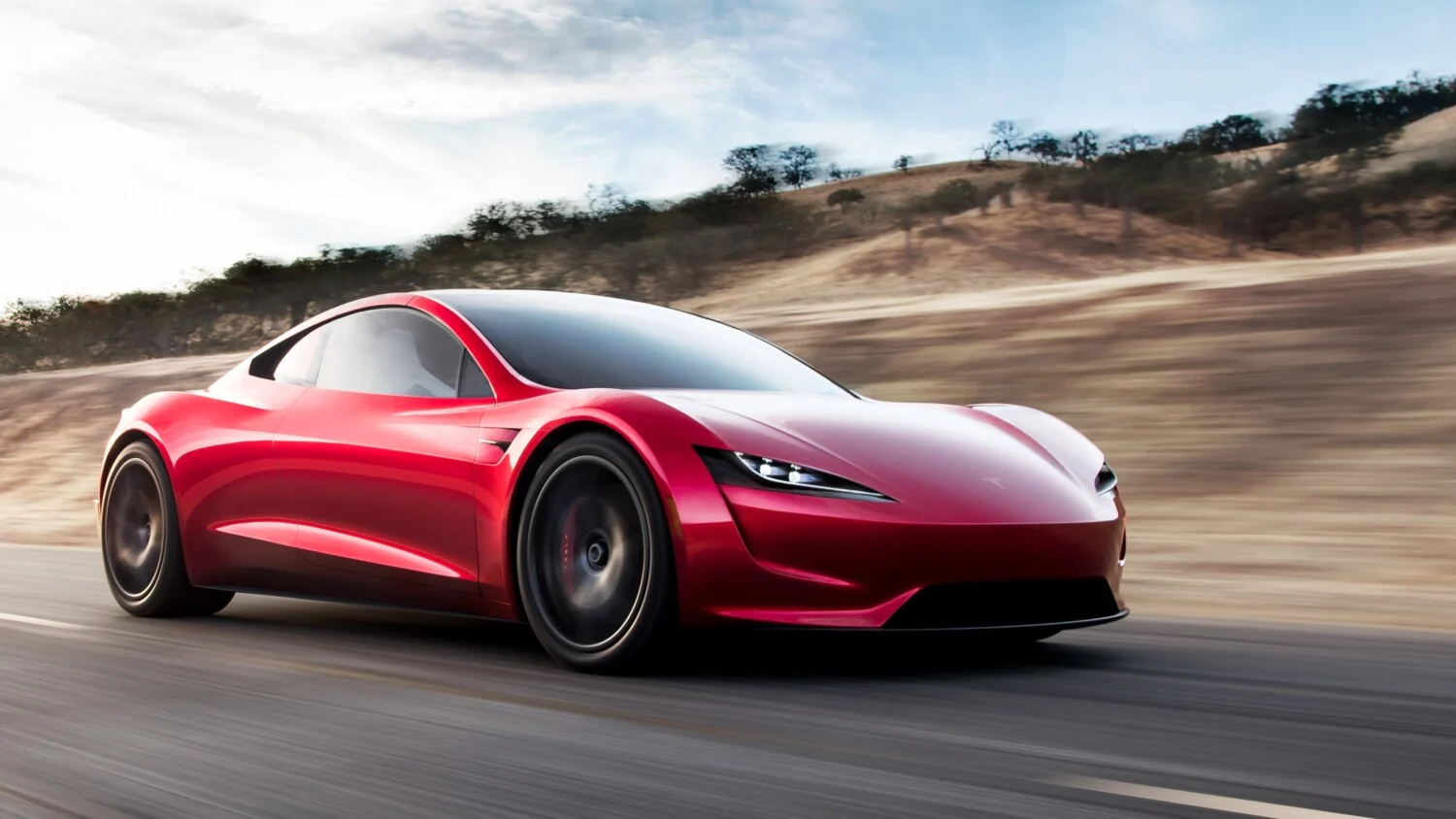
We already knew about the electric coupe capable of “taking off” thanks to boosters. Now we learn Tesla has also outfitted it with a digital cockpit that looks straight out of an arcade cabinet. A black‑and‑red palette, aggressive graphics, telemetry filling the screen: the next generation of the Tesla Roadster is polishing both its digital look and its acceleration figures.
Unveiled at a recent presentation, the new Roadster has shifted its styling and now borrows from the Cybertruck, including on the software side. Behind the wheel, the massive central screen looks unlike any other Tesla: it displays a retro‑futuristic interface built around the driver, with an ultra‑detailed track mode and even booster indicators. It’s enough to feel like slipping into a fighter jet, long before we know when this coupe will actually hit public roads.
An 80s‑style cockpit screen on the Tesla Roadster
First visual jolt: the new user interface swaps the plain white and gray palette of other models for a deep black backdrop saturated with red. The result evokes both 1980s science‑fiction films and classic arcade racing games. The main screen concentrates all driving information, with a track telemetry mode where battery and motor temperatures, the state of aerodynamics, brake balance and downforce are displayed. Lap times are tracked in real time, just like in race‑engineering software.
In this “track” view, Tesla shows a Roadster animation at the center of the interface. The virtual car responds to the settings chosen: you can see the ride height drop in real time, aero balance shift, or the operation of a dedicated grip‑boosting fan. The display also provides access to everyday controls, such as exterior lighting, media functions, or climate control, with a clear emphasis on the graphical presentation of every action.
Telemetry, Active Aerodynamics, and Boosters Shown on Screen
Some of the most spectacular adjustments happen through this screen. The driver can, for example, tweak elements of active aerodynamics, like the “barge boards” behind the rear wings, which help vent high‑pressure air away from the front wheels. They can also open or close the hood vents, lower the suspension, and fine‑tune the trade‑off between drag and downforce, all at the touch of a finger. On the Track Mode display, brake balance and downforce distribution appear clearly, turning the screen into a true race‑car cockpit dashboard.
The interface even includes a dedicated space for the booster system, with a Thruster Mode that shows the boosters’ status on screen. Tesla is planning a version of the coupe equipped with cryogenic gas boosters, capable of delivering an additional thrust for about five seconds. It then takes up to six hours to fully recharge the system. According to Tesla, the Roadster Thrust could thus go from 0 to 60 mph in under a second, while the ultra‑exclusive Roadster Rocket would target 0–60 mph in 0.59 seconds and a theoretical top speed of around 531 km/h (about 330 mph), with the production version already aiming for nearly 344 km/h (about 214 mph). Nearly a decade after the project’s first reveal, the manufacturer says production could start next year, a milestone that will be watched closely by everyone whose imagination has already been sparked by this screen from another era.
Comparison Table
| Version | 0-60 mph | Top speed | Propulsion recharge time |
|---|---|---|---|
| Roadster Thrust | less than 1 second | – | up to 6 hours |
| Roadster Rocket | 0.59 second | 331 mph (theoretical) | – |
| Production Version | – | about 214 mph | – |
Key Takeaways
- The Tesla Roadster features an immersive digital interface inspired by arcade games and airplane cockpits.
- Race telemetry, active aerodynamics management, and boosters are at the heart of the user experience.
- The display enables real‑time adjustment of active aerodynamics, suspension, and brakes.
- Models equipped with cryogenic gas boosters promise unprecedented acceleration, with the Rocket targeting 0-60 mph in 0.59 seconds.
- Theoretical top speed for the Rocket is listed at about 331 mph.
- Production is slated for next year per Tesla’s announcements.
FAQ
What does the new Tesla Roadster interface look like?
The interface adopts a noir, retro‑futuristic black‑and‑red design inspired by arcade games and aircraft cockpits, with a display centered on telemetry and performance management.
What controls can the driver adjust from the screen?
The driver can adjust active aerodynamics, suspension, brakes, and boosters directly from the central touchscreen.
What are the announced performance figures for the Tesla Roadster Rocket?
The Roadster Rocket targets 0–60 mph in 0.59 seconds and a theoretical top speed of roughly 331 mph.
What is special about the Tesla Roadster’s boosters?
Some models will be equipped with cryogenic gas boosters delivering a five‑second thrust boost, with a full recharge taking up to six hours.
When is production expected to begin?
Tesla expects to begin production next year, per the company’s latest announcements.