A higher-capacity battery
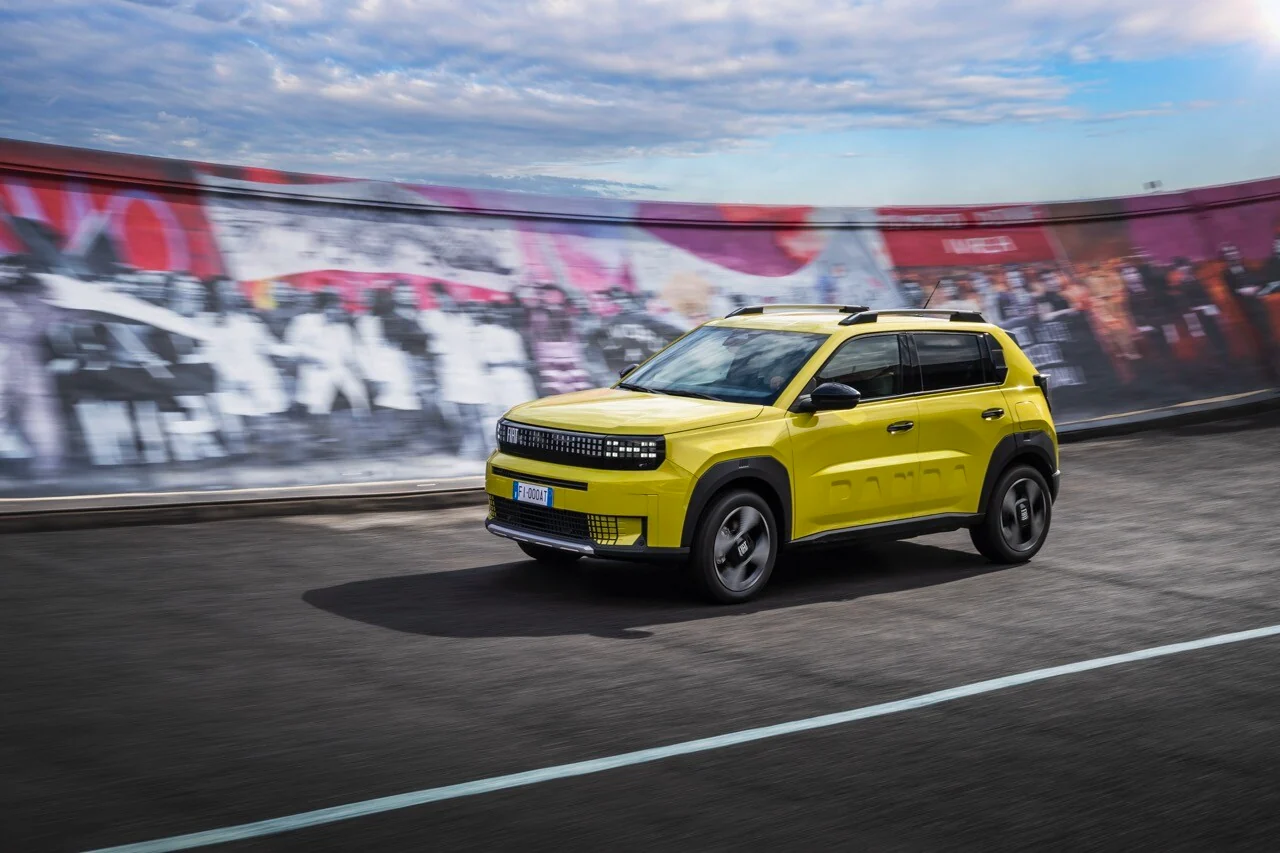
Until now, the Fiat Grande Panda rode on a 44 kWh LFP battery, identical to its Citroën ë-C3 cousin, also on the group’s Smart Car platform. This setup delivers a WLTP range of 327 km (about 203 miles) in combination with a 113-horsepower motor.
But the lineup now gains a larger battery, sourced from the Citroën ë-C3 Aircross. Indeed, Citroën’s urban SUV has a Grande Autonomie version with a 54 kWh battery. By integrating this into the Fiat Grande Panda, the city car becomes capable of claiming up to 400 km WLTP (about 248 miles). That puts it in closer competition with the Volkswagen ID. Polo, which uses a 52 kWh pack and offers 452 km (around 281 miles) of range, and with the Renault 5 E-Tech, which can reach 430 km (roughly 267 miles) of range.
But it stays more affordable
The Fiat Grande Panda equipped with this larger battery starts at €25,800, while the Renault 5 and Volkswagen ID. Polo push past €30,000 with their 52 kWh packs. If the Grande Panda’s range is a step back, and its power remains at 113 horsepower, it will lean on the price edge to win buyers, because it remains one of the most affordable routes to reaching about 400 km (around 248 miles) of electric driving in a city car.
Moreover, the €25,800 sticker price does not include the government bonus; with the Coup de Pouce CEE grant for everyone deducted, the price could start around €22,150 for all buyers, and could dip to €18,500 if your income qualifies for the €7,000 aid intended for modest households.
Charging capability matches that of its rivals, with a peak charging power of 100 kW and a 20–80% charge in roughly 30 minutes. On the equipment front, the car is fairly well equipped, featuring air conditioning, rear parking sensors, and digital instruments as standard, but there is no touchscreen on the base trim. By contrast, Citroën has not announced a similar version for the ë-C3.