In Brief
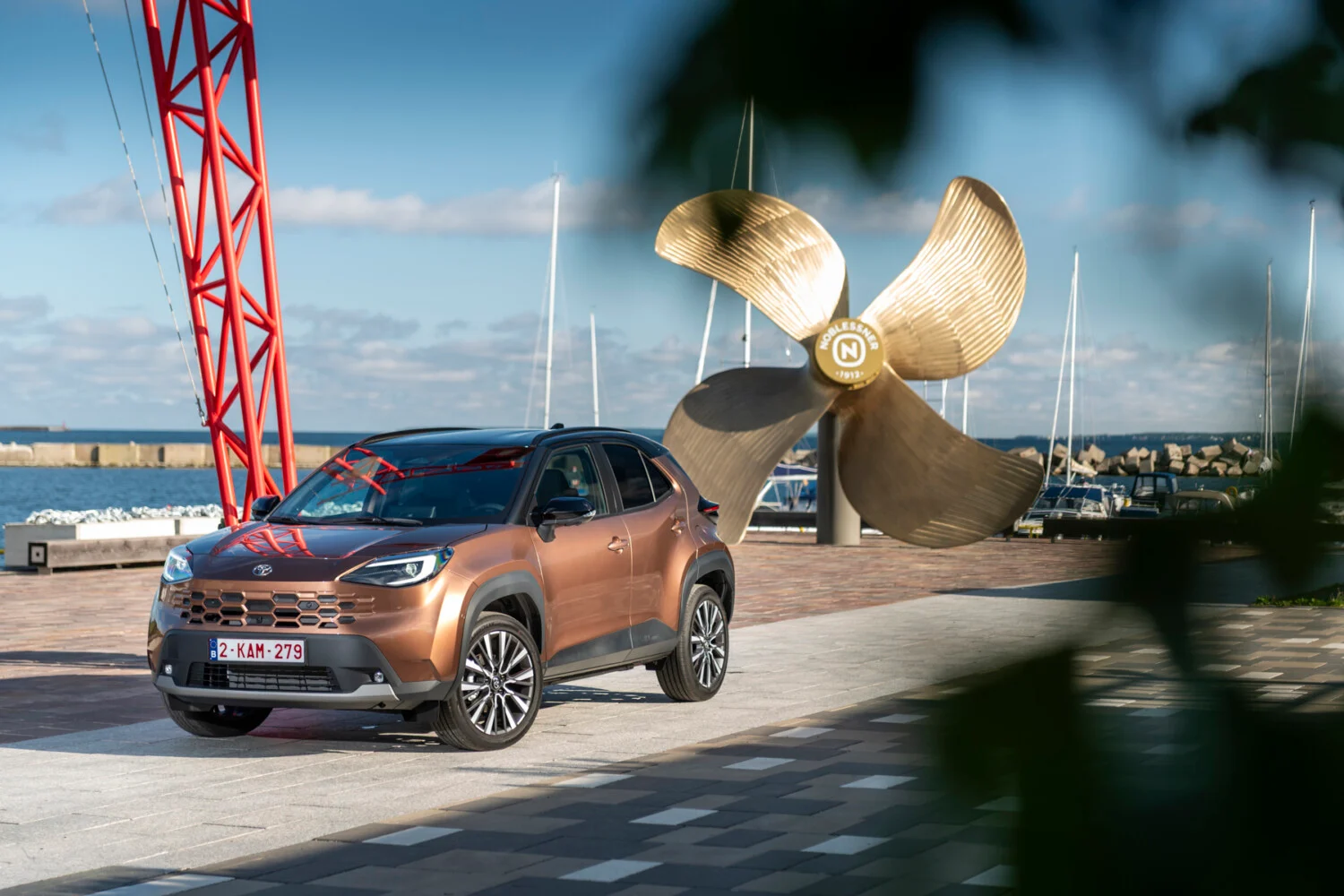
The 2026 Toyota Yaris Cross Hybrid benefits from a second restyling that is largely cosmetic, highlighted by a redesigned front end and upgraded interiors. Its compact size, non-plug-in hybrid system, and reliability remain its main selling points, despite higher price tags. In urban use, it proves frugal and pleasant to drive, but highway use reveals some sound insulation and comfort shortcomings. The 130 hp Trail version focuses on a better seating position, modest fuel use, and still benefits from an extended warranty under certain conditions.
The Yaris Cross is a commercial success. Admittedly, its sales have tapered a bit recently, but it still ticks the boxes to appeal to small families. In France, its compactness and non-plug-in hybridization, well in line with current trends, attract private buyers: it has become the second-best-selling urban SUV, behind the Dacia Duster, and ahead of the Peugeot 2008 and Renault Captur, which are, themselves, more heavily tasked with fleets and rental companies. But in this highly competitive segment, slowdowns aren’t tolerated and Toyota cannot rest on its laurels.
Toyota Yaris Cross Hybride 130 ch 2WD Trail: A Look at Its Second Restyle
The small SUV, introduced in 2022, thus receives a second restyle this year, following a very light 2024 update that saw the arrival of the 130 hp engine and improvements to insulation. The tweaks focus on the refined front end, echoing styling elements seen on the new RAV4. The interior trim also gains more sophistication.
But as far as the engine and chassis are concerned, no changes. Is that enough to stay competitive, given the relatively high prices Toyota still asks while riding on its reputation for robustness and mastery of hybridization? According to the manufacturer, projections are rosy.
The trends in this segment of compact SUVs remain promising, and especially the share of self-charging hybrids continues to rise: it accounts for 60% of sales, versus 18% for petrol and 20% for electric, which is rapidly gaining ground. The Yaris Cross would thus still benefit fully from the technological choices Toyota made almost thirty years ago… Except that nowadays the Japanese brand is no longer alone. The Yaris Cross upholds its strong reputation across three pillars. First, its compactness: at 4.17 m, it remains by far the smallest in the category, with all rivals exceeding 4.30 m.
This makes it particularly practical and easy in the city, where it continues to excel with its smooth continuously variable transmission powertrain. The only gripe, on our Trail version (starting at €35,600 after all) fitted with 18-inch wheels, is that ride comfort is slightly disturbed at low speed.
But the novelty of this 2026 edition is that plusher seats with better support are now standard from the second Design trim level (starting at €32,200), and our finish also features beige inserts. These seats, much more comfortable than the standard upholstery, partly compensate for the rather firm damping observed on the previous version. But rear-seat occupants will still have to make do with just adequate space, a trade-off for the reasonable exterior dimensions.
Toyota Yaris Cross Hybride 130 ch 2WD Trail: Another Strength? Its Fuel Efficiency
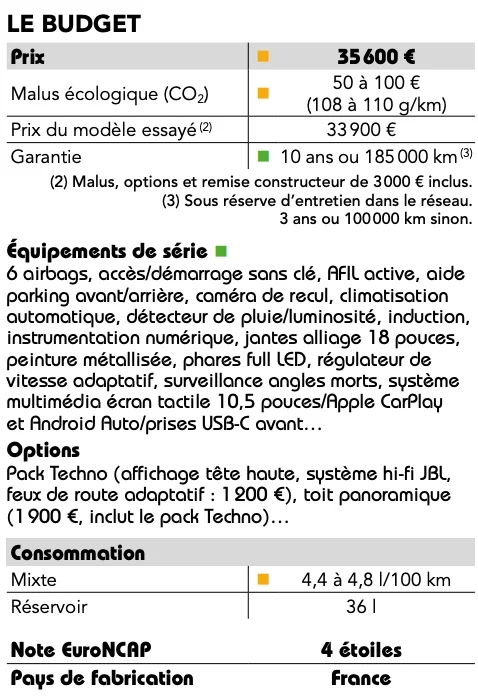
The Yaris Cross’s other strength remains its frugality. The 130 hp engine carries over with no technical changes, so we can reasonably expect the modest fuel economy observed on the 2024 version in our measurement baselines (4.8 L/100 km in the city and 5.8 L/100 km on average) to be replicated in our upcoming checks.
These good urban results are of course due to the hybrid system, which ensures a lot of smoothness in city driving with noticeable electric operation. If you stay gentle with the accelerator, the three-cylinder won’t raise its voice and you’ll glide along quietly. But on the highways, you’ll unfortunately encounter the drawbacks of this CVT transmission: it’s smooth but tends to load the engine and push up noise and consumption (6.7 L/100 km based on highway measurements).
With the wheel in hand, the Yaris Cross, as you’ve guessed, remains a light car (claimed 1,290 kg) with fairly assisted yet precise steering. The chassis’ performance isn’t thrilling, and the Goodyear tires give a better impression than the Falken tires, which are also approved and still available.
For those who tackle mountain roads, all-wheel drive is still offered (€2,000) via an electric motor positioned at the rear that engages as needed. The rear axle becomes multi-link in that case, but this version doesn’t deliver extra dynamic pulse; the transmission mainly provides additional traction when necessary.
Toyota Yaris Cross Hybride 130 ch 2WD Trail: Another Point? Its Reliability
The final point where the Yaris Cross makes a difference is reliability. The hybrid system and its gearbox have boasted an impeccable reputation for decades. To reinforce this, the three-year/100,000 km warranty is even extended to ten years or 185,000 km if serviced within the Toyota network.
Obviously, that’s a roundabout way for the manufacturer to monetize this extended warranty, since the official dealer bill is often higher. But Toyota isn’t the only brand to do this, and the deal is arguably worth it. All of that comes at a cost.
Starting at €29,500 in base Dynamic trim with the 116 hp engine, the Yaris Cross then demands a significant outlay for our 130 hp Trail 2WD version at €35,600. Toyota does offer a €3,000 discount across all versions. That helps soften the price tag a bit.
Toyota Yaris Cross Hybride 130 ch 2WD Trail: The Pros
- Compact size
- Fuel economy
- Urban-smooth operation
Toyota Yaris Cross Hybride 130 ch 2WD Trail: The Cons
- Highways
- Insulation/noise
- High prices
The Auto-Journal’s Verdict: 3.5/5
Few evolutions in the Yaris Cross lineup. This isn’t necessarily a problem for buyers seeking easy city driving, controlled consumption, and proven reliability. On the other hand, it still lacks a spark to venture onto the open-road highways.
Toyota Yaris Cross Hybride 130 ch 2WD Trail: In Measurements
Retrouvez notre premier essai de la Toyota Yaris Cross Hybride 130 ch 2WD Trail dans Auto-Journal n°1217 du 17/09/2026.
Comparison Table
| Feature | Value |
|---|---|
| Length | 4.17 m |
| Weight | 1,290 kg |
| Engine | 130 hp |
| Urban fuel consumption | 4.8 L/100 km |
| Average consumption | 5.8 L/100 km |
| Highway fuel consumption | 6.7 L/100 km |
| Base price (Dynamic 116 hp) | €29,500 |
| 130 hp Trail 2WD price | €35,600 |
| Current rebate | €3,000 |
| Standard warranty | 3 years or 100,000 km |
| Extended warranty (conditions apply) | 10 years or 185,000 km |
| Hybrid market share | 60% |
| Petrol market share | 18% |
| Electric market share | 20% |
Key Takeaways
- The 2026 Toyota Yaris Cross Hybrid mainly offers a styling and interior refresh.
- Its compactness (4.17 m), rare in the market, makes it an excellent city choice.
- The 130 hp hybrid powertrain preserves its strengths in fuel economy: 4.8 L/100 km in the city.
- Prices remain high, but a €3,000 rebate is offered across the lineup.
- Reliability and the Toyota warranty up to 10 years / 185,000 km are strong selling points.
- Highway driving remains a weak point with imperfect insulation and higher consumption.
FAQ
What are the main changes to the Yaris Cross 2026?
The refresh focuses on styling with a redesigned front, plusher interiors, and slightly softer seats from the Design trim. No mechanical changes.
What are the strengths of the Toyota Yaris Cross Hybrid in the city?
Its compact size (4.17 m), maneuverability, and smooth operation in urban driving make it a very city-friendly vehicle.
What is the consumption of the Yaris Cross Hybrid 130 hp?
Measured figures indicate 4.8 L/100 km in the city, 5.8 L/100 km on average, and 6.7 L/100 km on the highway.
What are the prices of the refreshed Yaris Cross Hybrid?
Prices start at €29,500 for the Dynamic 116 hp version and reach €35,600 for the 130 hp Trail 2WD version, with a €3,000 rebate.
What warranty does Toyota offer on the Yaris Cross?
The standard warranty is 3 years or 100,000 km, extended to 10 years or 185,000 km if serviced within the Toyota network.