In Brief
Allianz’s study reveals that distraction caused by touchscreen screens in cars could prove even more dangerous than driving with a blood alcohol content of 0.08%. Indeed, this distraction would be involved in one in three accidents, particularly when using essential functions relegated to the central screens. Tests also show a markedly higher rate of collisions among distracted drivers. To address this issue, Allianz recommends prioritizing physical controls or fixed, intuitive touch interfaces, a stance that most surveyed motorists support.
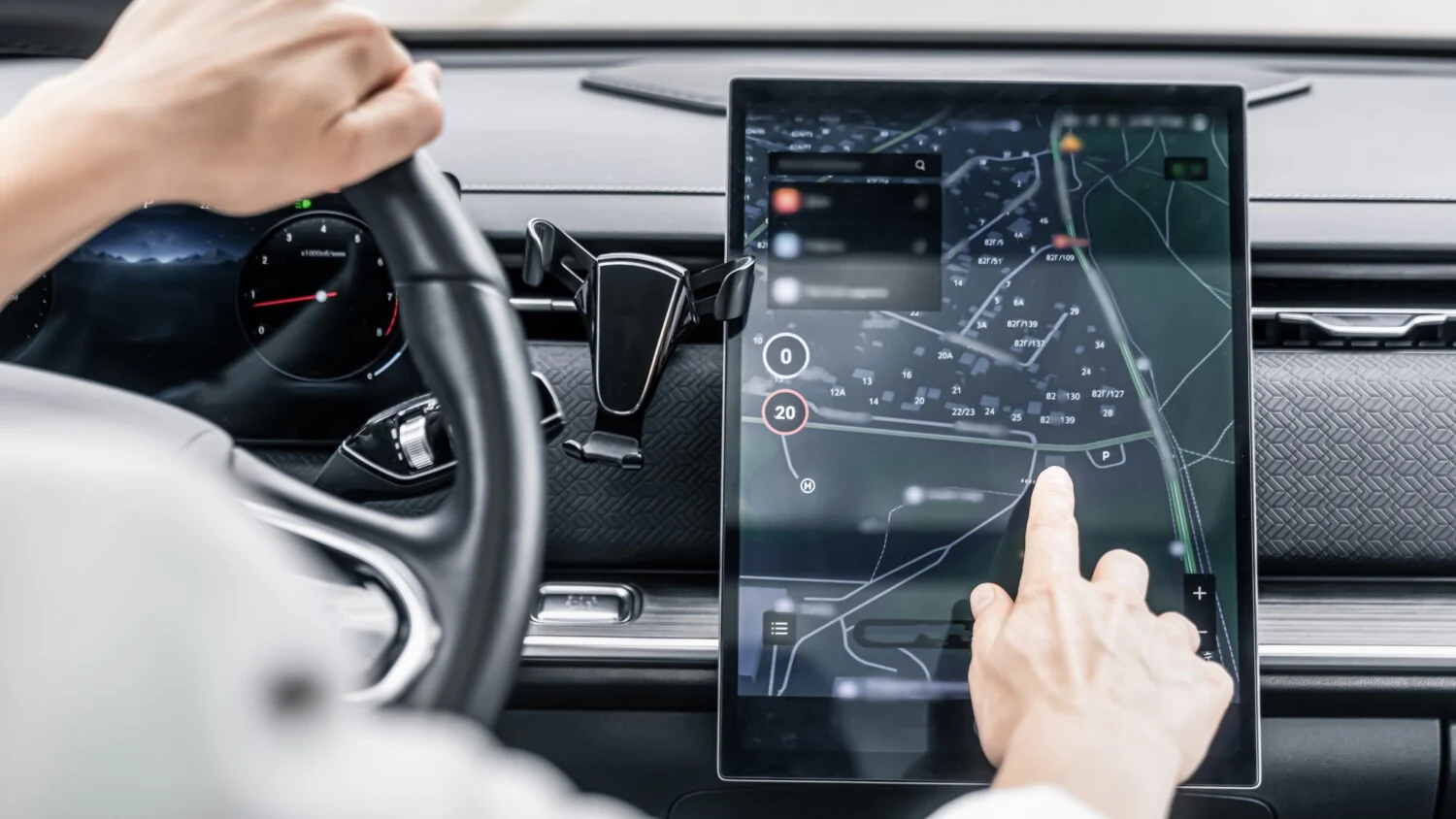
Adjusting the temperature, managing the radio, turning on heated seats, tweaking the volume… These everyday actions behind the wheel can make us take our eyes off the road for precious seconds. More and more functions are being assigned to a central screen rather than physical controls, which can amplify this distraction.
Distraction is responsible for one in three accidents
Today, a new Allianz study demonstrates that, in certain critical situations, distraction can be more dangerous than “driving with a BAC of 0.08%,” and that it would be involved in more than 30% of road crashes, far higher than previous estimates. To measure the effects of this distraction, Allianz’s technical center cross-referenced real gaze-tracking data with a model of driver behavior across several scenarios. In a scenario simulating emergency braking on a highway, the share of collisions rises from 18.2% for an attentive driver to 54.3% for a distracted driver. When a child suddenly appears in the roadway, it climbs from 3.9% to 11.2%. Even more alarming: in 39% of these cases, distracted individuals simply did not react! In these critical moments, distracted drivers perform worse than those with simulated BAC of… 0.08%!
More broadly, Allianz’s AZT technical center analyses show that the role of distraction in crashes is substantially higher than previously thought. While earlier estimates cited about 10% of road crashes, Allianz now estimates that distraction plays a role in at least one in three crashes, either as a direct trigger or as a contributing factor.
Allianz pushes for quick and intuitive access to essential functions
Allianz does not condemn the touchscreen itself, but rather the way its functions are organized. In real-world tests, a better-designed interface reduced up to 25% the time spent looking away from the road for certain operations, roughly three seconds! At 56 mph, that amounts to about 75 meters traveled. The insurer therefore calls for fast, intuitive access to essential functions, via physical controls or fixed touch zones, always accessible, that don’t require navigating a cascade of menus. Among the functions involved: wipers, turn signals, low and high beams, hazard lights, and the heating and defogging of the windows. According to a survey by Allianz, 77% of Swiss drivers interviewed see the increasing digitization of the vehicle as a factor making driving more distracting. The desire for simpler operation is widely shared: two-thirds of respondents (66%) favor classic switches and buttons over nested touch menus. Some automakers, such as Volkswagen, have already answered this call by reintroducing physical controls in their ID. Tiguan. Others, notably Tesla and the majority of Chinese automakers, continue with all-touch layouts for now. For how long?
Comparison Table
| Scenario | Attentive driver | Distracted driver |
|---|---|---|
| Emergency braking on the highway (crash rate) | 18.2% | 54.3% |
| Child stepping into the roadway (crash rate) | 3.9% | 11.2% |
| Complete lack of reaction in critical cases | – | 39% |
| Reduced gaze time with a better interface | – | -25% (about 3 seconds less) |
| Distance traveled at 56 mph during 3 seconds of inattention | – | 75 m |
| Share of distraction in accidents (older estimates) | About 10% | – |
| Share of distraction in accidents (Allianz) | – | more than 30% |
| Swiss drivers’ view that digitization increases distraction | – | 77% |
| Drivers in favor of classic buttons/switches | – | 66% |
Key Takeaways
- Distraction from touchscreen interfaces is implicated in more than 30% of road crashes.
- The Allianz study shows that, in certain scenarios, it’s more dangerous than driving at a BAC of 0.08%.
- Poorly designed interfaces extend distraction time and raise collision risk.
- A majority of drivers prefer physical controls for quicker, more intuitive access to essential functions.
- Some automakers are reverting to physical buttons while others persist with all-touch interfaces.
FAQ
Why do touchscreen screens increase distraction behind the wheel?
Touchscreens often require glancing away from the road to access basic functions, increasing distraction and thus crash risk.
How is touchscreen distraction more dangerous than alcohol?
According to the study, in some scenarios distracted drivers have more crashes than those at a 0.08% BAC, notably during braking or sudden obstacle appearances.
What solutions does Allianz propose to limit this distraction?
Allianz suggests prioritizing physical controls or fixed, always-accessible touch zones for the vehicle’s essential functions.
Are drivers in favor of bringing back physical buttons?
Yes, 66% of respondents prefer classic buttons and switches to nested touch menus.
Which automakers are already taking steps?
Some manufacturers, like Volkswagen, have reintegrated physical controls in their models, unlike Tesla and most Chinese brands.