A big electric SUV at half price after a few years is tempting when you’re scanning the listings. Between the BMW iX, Maserati Grecale Folgore, or Mercedes EQS, the high-end electric segment is flaunting spectacular discounts—especially in the used market. For the used-car buyer, these are bargains. For the first owner, it’s a painful reality: depreciation.
A study conducted in the United Kingdom by valuation specialist Brego puts real numbers to this phenomenon. It shows that this blind spot mainly hits the most prestigious segment. The resale value of luxury electric cars remains lower than that of their gasoline or diesel counterparts. And this holds true even in a briskly active used-EV market.
Des chiffres inquiétants pour la valeur de revente des voitures électriques de luxe
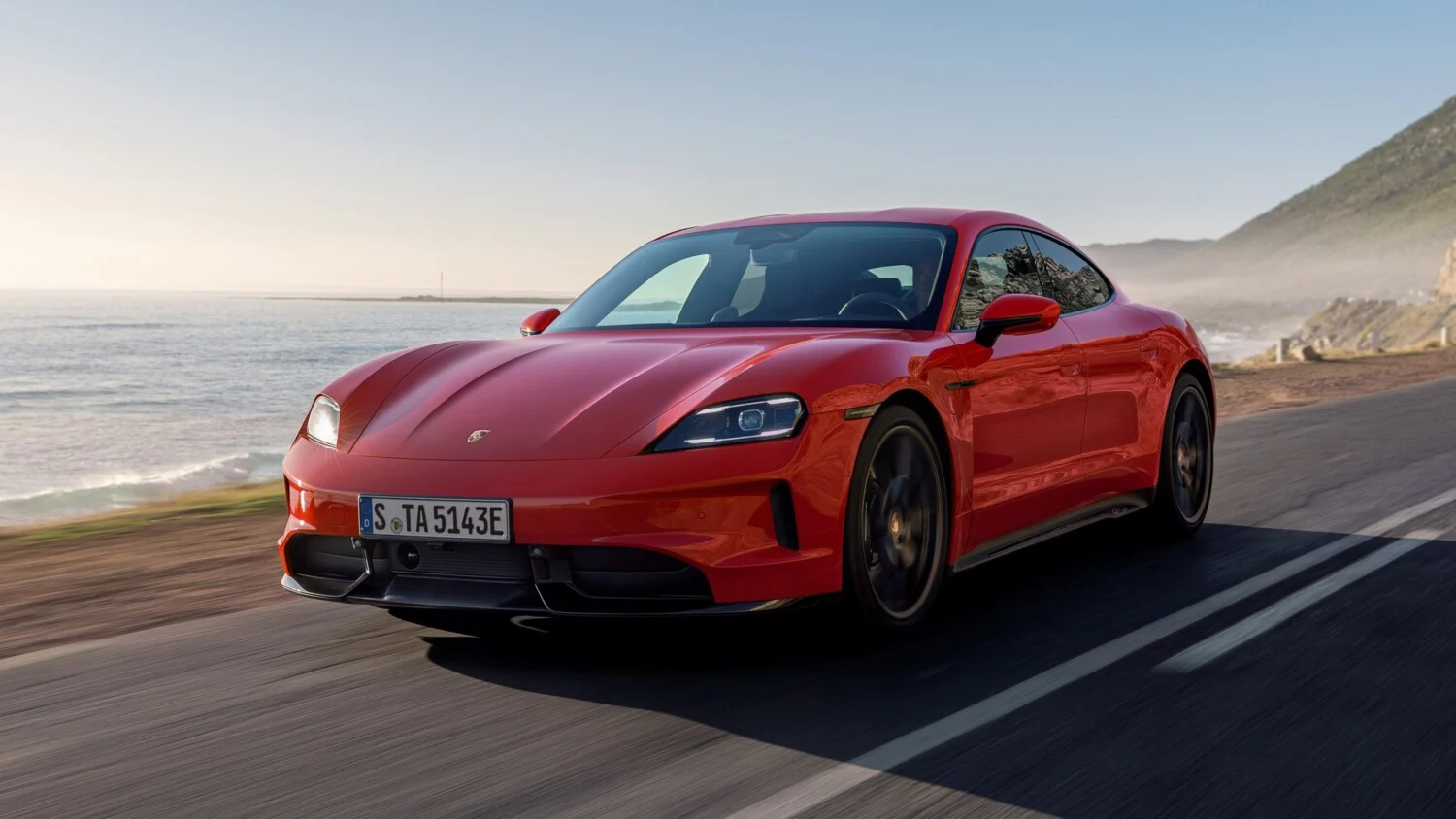
Brego compared the predicted residual values of several well-known duos. Mercedes EQS versus S-Class. Porsche Taycan versus Cayenne. Volvo EX90 versus XC90. Genesis Electrified G80 versus G80. On average in the United Kingdom, the resale-value gap still favors internal-combustion versions. It reaches 1.9 percentage points after one year and 0.7 point after two years. Then 0.9 point after three years and 1.3 points after four. With Mercedes, the gulf is the most pronounced. The study notes a 5.9% advantage for the petrol model at one year and 5.4% at two years. Then 6.3% at three years and 6.4% at four years. Volvo stands out as an exception in this panel. The electric EX90 retains value better than the XC90, whether gasoline or diesel. It shows a premium of 0.8 point after one year, followed by 1.4, 1.6, and 1.9 points of residual-value advantage from two to four years.
For Rupert Pontin, this weakness of electric-luxury resale primarily comes down to how fast battery technology is advancing. He leads analysis and communications at Brego. “In general, the resale percentage is lower for electric luxury cars,” he explained. He spoke to Autocar. “I think the reason is that we are going to start seeing solid-state batteries arrive. Suddenly it won’t be a matter of a fixed 640 km or 720 km of range, but potentially double that. Who would want a large luxury sedan that’s frequently used as a chauffeured vehicle or for private services? After a year, or two, three, or four, it will offer that same range at best. Even if we don’t switch to solid-state batteries, battery technology is advancing continually. I think that’s partly a factor.” These concerns aren’t new. In the 2010s, pioneer models like the Nissan Leaf and Renault Zoe were singled out as potentially losing appeal against newer versions with more advanced batteries. Brego’s data show that used electric vehicles have remained in demand since the onset of the war in Iran. Sales peaked at around 37,000 units per month in March and April 2026, then eased to between 29,000 and 32,000 per month from May through August. They remained well above the 2025 monthly average of 22,790.
Why electric luxury sedans depreciate faster than their gas counterparts
While the Brego study centers on the United Kingdom, it sheds light on the mechanisms shaping the luxury EV segment. Local company-car taxation played a major role. The benefit-in-kind (BIK) rate for electric vehicles fell to 0% in April 2020. It rose to 4% and is slated to reach 9% in 2029/2030. It remains far below the rate for gasoline and diesel models. Drivers who previously rode in mid-range sedans—think BMW 3 Series—could opt for more prestigious models. These cars are now appearing in the used market. Peter Golding, CEO of FleetCheck, describes the changing dilemma. “The dilemma is changing now, because a lot of Chinese imports are cheaper. They target the £30,000 to £40,000 segment. What they will do next is feed the second and third owners with a desirable vehicle. But when you think of, say, a BMW 7 Series, by the time it reaches the third owner, that car is really, really affordable. People worry that it will break down. I think some of the electric cars we work with have fallen into that trap. They’re very complex and very expensive to repair.” These price points of £30,000 to £40,000 correspond to roughly €35,000 to €45,000. They create an attractive entry point for second or third buyers.
For Golding, the key is to consider the life of these cars in the second and then the third hands. “What you need to watch for is how to address the market with the third owners in mind. There are affordable electric vehicles that aren’t necessarily loaded with options that appeal to the secondary market. Companies can be a little more selective in their inventory. They can include models that will hold their resale value better in the long run.” Rupert Pontin agrees with this view. “There needs to be more affordable EVs. Getting people into the door is primarily a cost question”, he said. “But when you’re talking about models like the 7 Series, there is a market for second-, third-, and fourth-hand ones. People want to own the car with all the features. By the time it lands with the second, third, or fourth owner, newer specifications will have evolved—suspension, electric-seat types, massage functions, panoramic roofs. They’re expensive to repair, and that’s where the big problem lies.” On the French market, BMW iX xDrive50s are already seen dropping from about €103,500 new to under €50,000 in recent-used examples. Some exclusive electric SUVs move from around €128,850 to €75,000–€80,000 after roughly 20,000 km. For the used-car buyer, this steep depreciation of luxury EVs opens access to models that were out of reach when new. For the first owner, private or corporate, it remains a drawback to keep in mind.