In Brief
Renault views sustainable development not only as an obligation but as a source of profitability, betting on innovations in battery chemistries (LFP, NMC, lithium-manganese-oxide) and on the recycling of components. Despite progress, several challenges persist: the battery recycling supply chain struggles to take shape due to insufficient volumes, and the use of recycled plastics remains not very economical. Renault is adapting its industrial practices, for example by limiting the number of parts through techniques inspired by gigacasting while preserving reparability. The integration of recycled materials varies by model and market availability.
Sustainability is a responsibility that many companies now shoulder. As a company with more than 500 employees, Renault is legally required to provide annual sustainability data. This obligation of environmental reporting—and all actions that flow from it—can be seen as additional constraints. Renault does not view it that way, however: “It’s good business, a very good one,” smiles Cléa Martinet, Renault’s head of sustainability, when asked whether profitability and environmental requirements make a good match. But to achieve a return on investment, one must make the right bets.
The Right Chemistry for the Right Use
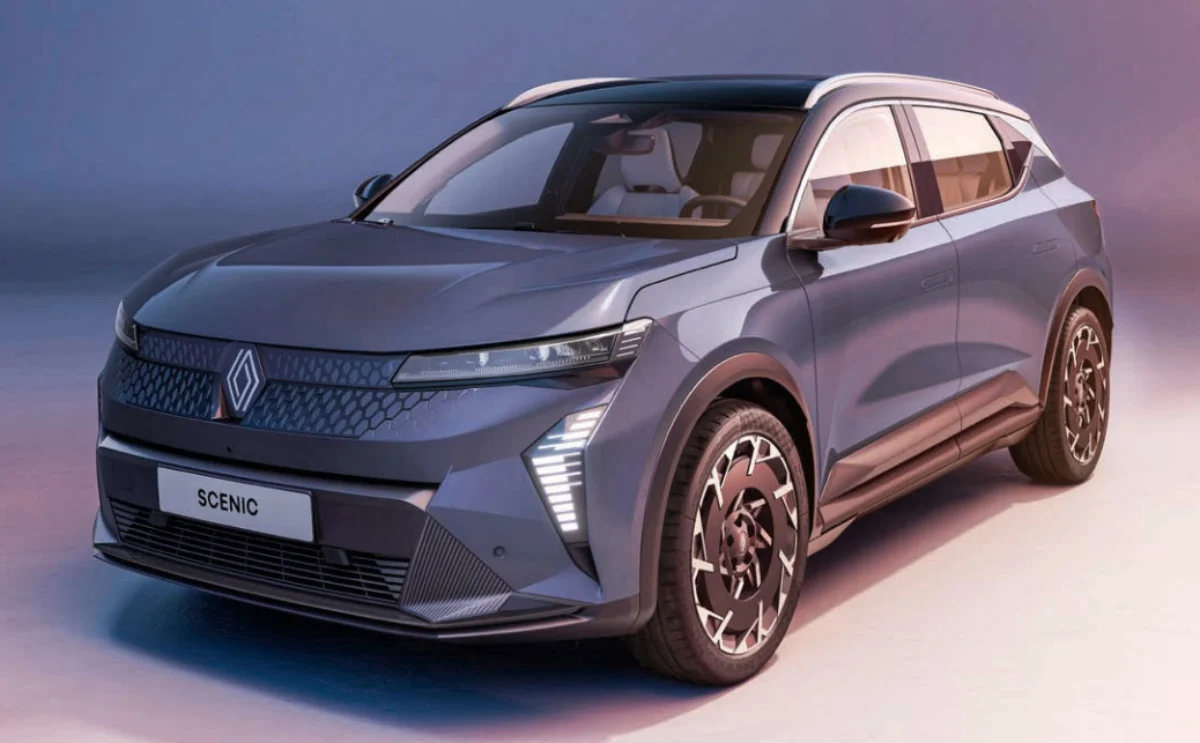
While Tesla (and its partner LG) proved that piling up a lot of cells could yield a reasonably good range, today the focus is on cutting costs, increasing reliability, and controlling weight in batteries. Consequently, Renault has adopted on the very latest Twingo a lithium-iron-phosphate, or LFP, battery, whose main advantage over nickel-manganese-cobalt (NMC) batteries is precisely the absence of nickel and cobalt. These two materials are subject to considerable price volatility. The LFP battery is inherently cheaper than an NMC; it is also less dense, so it carries less energy. By offering an LFP battery on the Twingo and a bold “cell-to-pack” arrangement, Renault claims about a 20% cost savings versus an NMC solution. The LFP battery would thus be ideal for this segment where price matters more than range. Renault also unveiled a Megane E-Tech equipped with an LFP battery priced at €37,500, compared with €39,500 previously asked. This cheaper battery is also more durable than an NMC because it tolerates more charge-discharge cycles. On the other end of the spectrum, Renault aims to offer high-performance cars capable of 750 km WLTP on a single charge. To date, Renault’s range champion is the Scenic E-Tech with an NMC battery, achieving 642 km of mixed range with the latest models, up from 625 km on the first versions. Not yet enough! Renault is therefore pursuing partnerships with battery manufacturers to reach its goal. An agreement was signed with Stratus Materials in October 2025 for a cobalt-free lithium-manganese-oxide battery. The technology would have an energy density at least equal to that of an NMC battery while maintaining lower cost and abuse tolerance similar to LFP, according to Renault’s 2025 Universal Registration Document. The brand also signed an agreement with the Spanish company Basquevolt to develop a solid-state battery, a very promising avenue in terms of energy density.
Several partnerships thus exist, because future projects with Verkor—one of the “battery valley” companies in northern France—are faltering: “Verkor’s competitiveness gaps versus similar European-produced products have widened in recent months and Renault cannot absorb them,” the automaker said in a June 1, 2026 press release. A polite—yet public—way of saying that high-energy batteries promised by the French startup are arriving in drips and drabs, forcing Renault to turn to other suppliers. Another track is reducing the number of parts in the cars, says Christian Stein, Renault’s head of corporate communications, bluntly. Officially for ecological reasons, unofficially to save money, the trend Tesla popularized—gigacasting—has resurfaced at Renault in its own way.
Reducing the Number of Parts
The American automaker molds massive structural metal pieces. A assembly that used to consist of dozens of moving parts can now be a single element. This saves time and money for the builder, while imparting greater rigidity to the vehicle. But the flip side is that when a Tesla is in a crash, you have to hope the repair costs are not tens of thousands of dollars, given how complex or even unreparable the gigacast components are. Renault has decided to proceed with a kind of gigacasting in its own manner, according to Nicolas Champetier, the director of innovation. Many drivetrain parts would remain detachable and could be sold separately. Reparability would thus be taken into account. Objectively assessing all of this is difficult: there is no standardized method today to evaluate a car’s reparability. The only reliable indicator for trying to gauge it is the insurance premium.
Focusing on Recycling
From all sustainability topics, the recycling chapter seems the most fundamental. Batteries first. While techniques for extracting and reusing materials have long been known, they are still underutilized. The battery recycling sector in France is “a joke” at the moment, according to Cléa Martinet. Not that nobody is paying attention, but there is a lack of feedstock: currently there would only be about 3,000 to 3,500 batteries to recycle each year. It is impossible to build a viable industrial chain under these conditions. This will obviously evolve as the number of end-of-life EVs increases. By contrast, the recycling of everything surrounding the battery seems much more advanced. Renault notes that the Clio VI, launched at the start of the year, integrates 33% recycled materials overall. That would be the only Renault model to achieve this. Renault’s Universal Registration Document shows that only 30% of materials in vehicles come from circular economy sources, while the previously targeted 33% has been revised downward “in light of lower-than-anticipated availability of recycled materials on the market,” such as flat steel or recycled aluminum, whose availability is far below demand. The recycled-material share in 100% electric vehicles would thus range between 24% and 26%, according to the automaker. The challenges in recycling focus especially on aluminum and plastics. Philippe Brunet, Renault’s technology director, suggests that vehicles could already feature “30 to 80%” recycled aluminum. Renault signed a partnership with Novelis on this topic in June 2025. Regarding plastics, the hurdle today is economic: while recycling plastics isn’t a big problem, the latest Renault EVs (R4, R5 E-Tech) include “between 17 and 20%,” according to the automaker. But if using recycled plastics were more profitable than new plastics, that rate would likely be much higher.
The Take from L’Auto-Journal
Renault has long pursued an active environmental and recycling policy. The manufacturer has chosen to communicate on the subject today, perhaps to showcase its lead over competitors. It does, however, remain within the broader context affecting the entire auto industry: battery recycling remains slow due to material shortages, while recycling plastics is not profitable.
Read our investigation into Renault’s sustainability development avenues in L’Auto-Journal issue no. 1217 dated 09/17/2026.
Comparative Table
| Model / Material | Battery | WLTP Range (km) | Price (€) | % Recycled Materials |
|---|---|---|---|---|
| Twingo | LFP | Not disclosed | Not disclosed | Not disclosed |
| Megane E-Tech (LFP battery) | LFP | Not disclosed | 37,500 | Not disclosed |
| Megane E-Tech (NMC) | NMC | Not disclosed | 39,500 | Not disclosed |
| Scénic E-Tech (new model) | NMC | 642 | Not disclosed | Not disclosed |
| Scénic E-Tech (old model) | NMC | 625 | Not disclosed | Not disclosed |
| Clio VI | Not disclosed | Not disclosed | Not disclosed | 33% |
| Renault Vehicles (2026) | Not disclosed | Not disclosed | Not disclosed | about 30% (target 33%) |
| 100% Electric Cars | Not disclosed | Not disclosed | Not disclosed | 24–26% |
| Aluminum in Vehicles | – | – | – | 30–80% |
| Plastics in R4, R5 E-Tech | – | – | – | 17–20% |
Key Takeaways
- Renault sees sustainability efforts as compatible with economic profitability.
- The automaker innovates on batteries by diversifying chemistries (LFP, NMC, lithium-manganese-oxide) to optimize costs, range, and durability.
- Recycling remains a challenge, especially for batteries, whose supply chain is still in its infancy due to volumes.
- The share of recycled materials in Renault vehicles sits around 30%, with a downward revision of the target due to material availability.
- Repairability is considered, even as component counts are simplified, through a gigacasting-inspired approach.
- Renault continues pursuing new partnerships to advance across the entire sustainable development value chain.
FAQ
Why does Renault use LFP batteries on some models?
Renault opts for LFP batteries mainly because they are cheaper, more durable, and do not require nickel or cobalt, which reduces exposure to price swings for those materials.
What is the rate of recycled materials in Renault’s lineup?
According to Renault, about 30% of materials come from a circular economy, with an initial target of 33% revised downward due to limited availability of recycled materials.
Is battery recycling operational at Renault?
Currently, the French battery recycling stream is underdeveloped because the annual number of end-of-life batteries to recycle is low (around 3,000 to 3,500).
Does Renault prioritize the reparability of its vehicles?
Renault is pursuing a strategy to reduce the number of parts inspired by gigcasting while ensuring many components remain demountable and serviceable.
Is plastic recycling profitable for Renault?
Renault indicates that recycling plastics is not yet as profitable as using new plastics, which limits the share of recycled plastics in its vehicles.