Formula 1 experienced in Sepang one of the most surreal moments in its entire history. When the start was attempted in the rain, a multitude of cars came to a standstill. The problem was simple: the drivers pressed the accelerator, but the cars did not respond. Now the FIA has explained that it was a software fault.
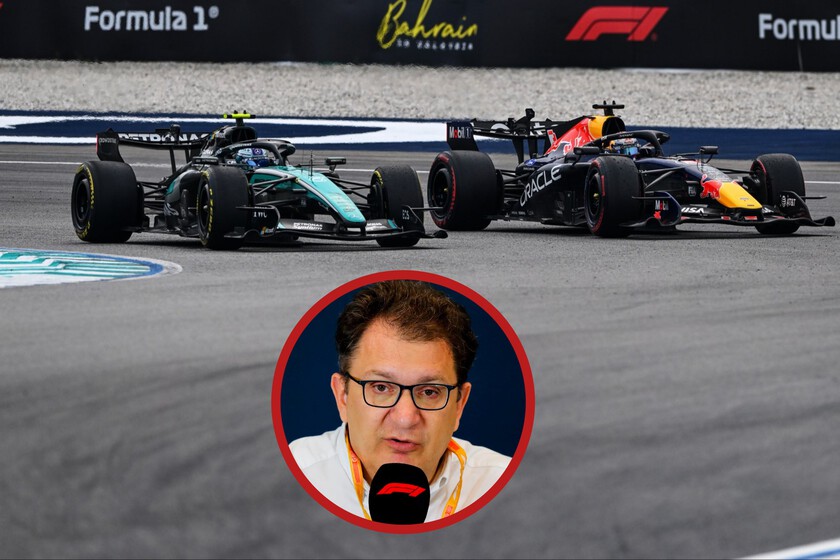
Nicholas Tombazis, the FIA’s chief technical officer, has faced the issue to corroborate that it was the electronics that failed, leaving the single-seaters stranded. Specifically, Tombazis points to a program that had not been tested enough, and for which they had to create an update on the fly.
More than half the grid stopped in the rain
It has taken until the sixteenth race of the season for the new Formula 1 technical regulations to be tested in rain. And the result could not be more dire. Half the grid stopped in Sepang, which forced the start to be aborted and the race delayed by almost an hour and a half. The problem lay in the software.
Tombazis, the FIA’s technical head, explained that “on the formation lap, some cars were moving very slowly, almost stopping completely. There was a kind of accordion effect among the cars, and some stopped almost entirely. And that fault prevented power from being restored and the cars from restarting.”
The first to experience the problem was Max Verstappen, the race leader, and afterwards it affected almost every driver on the grid, one by one. According to Tombazis, “once the problem occurred, our guys realized very quickly what was happening“. However, they had to wait an hour and a half, with the track already nearly dry, before going back out.

The solution was to create an update for the program that would release the software and allow the accelerator to respond. Thus, Tombazis reveals that “there was a need to prepare a software update, which was sent to the teams“, and they had to install it in their cars. All of that took about 20 minutes, the FIA explains.
The FIA justifies itself by saying that “there are different configurations, but they were not tested enough. Normally, the software must undergo much more exhaustive testing. This year we have had very good weather. And that has been the reason it happened so late,” and Tombazis adds that “software errors do not always stem from something being too complicated.”
CASE FILE X OF THE NEW F1 IN THE RAIN! 😱😱😱😱
There are a lot of cars stopped on the track
#BaréinDAZNF1 🇧🇭 https://t.co/TqWmcC7yrB
— DAZN España (@DAZN_ES) October 4, 2026
The underlying problem is that this new regulation has turned Formula 1 into a championship where the cars are virtually computers that drive themselves.
Images | Haas, FIA, Red Bull