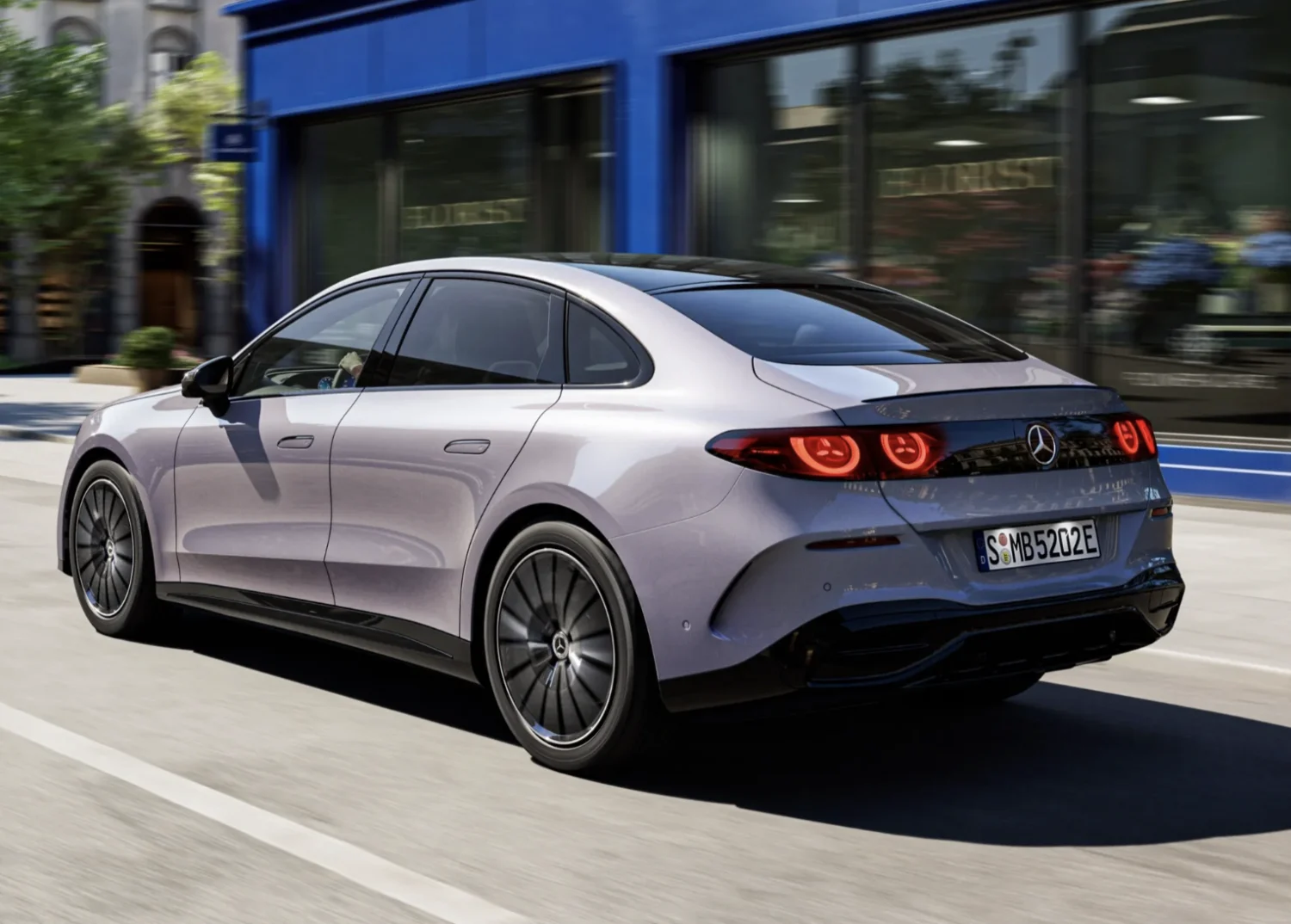
What if, tomorrow, an electric Mercedes could fill up energy almost as fast as a gasoline pump, while boosting safety and range? That scenario just took a small step toward reality with a new agreement signed between the German automaker and Taiwan’s solid-state battery specialist ProLogium.
The two partners will test a next-generation cell called the Gen4 Superfluidized Inorganic Next-Generation Lithium Ceramic Battery in Stuttgart laboratories and at external research institutes. The objective is clear: to see if this solid-state battery could someday sit under the floor of future Mercedes models, with no production decision made yet. And behind that lengthy name lies lithium-ceramic technology touted as highly promising for the star-brand’s EVs.
A Gen4 solid-state battery test agreement between Mercedes and ProLogium
Signed in late September 2026, the agreement gives Mercedes-Benz priority access to ProLogium’s Gen4 cells for a full testing campaign. The automaker will evaluate these cells across electrical, thermal, and safety dimensions, both in its own facilities and at external specialized centers. The aim is to determine whether this technology is fundamentally suitable for future models, not to push for immediate mass production.
That relationship isn’t new. Mercedes-Benz and ProLogium have been collaborating since 2016. In 2022, the German automaker invested “tens of millions of euros” in the Taiwanese company and signed a joint-development agreement for cells. Since then, teams have tested various cell formats—including pouch, prismatic, and even bipolar architectures. Mercedes has become a strategic investor and sits on ProLogium’s board, underscoring the depth of the partnership, even though no specific model, volume, or commercialization timeline has been announced yet.
Gen4 lithium-ceramic aims for higher density and European production
At the heart of this deal is a latest-generation solid-state cell. ProLogium’s Gen4 lithium-ceramic uses an inorganic, non-flammable electrolyte, ceramic separators, and the company’s own active-safety concept. The supplier touts high energy density, very fast charging capability, strong power, and solid cold-weather performance. In its latest update tied to the Mercedes agreement, ProLogium does not reveal precise energy-density or charging-power figures for the cells currently in testing.
Meanwhile, ProLogium has already announced Gen4 targets of up to 400 Wh/kg gravimetric density and the potential to go from 5% to 80% state of charge in 6.4 minutes at the cell level. These values remain targets rather than measured figures for a vehicle pack. Today, the industry benchmark is the previous generation, Gen3.5: a 185.4 Ah cell measured at 381 Wh/kg and 903 Wh/L by TÜV, and this chemistry is already produced at scale in ProLogium’s Taoke Gigafactory in Taiwan, at the GWh level. On paper, Gen4 targets could enable very high theoretical charging powers—exceeding the 350–400 kW of today’s ultra-fast chargers—though real-world results will depend on the complete pack and the supporting infrastructure.
From Taiwan to Dunkirk: a European foothold for Mercedes
For now, most ProLogium cells come from the Taoke Gigafactory in Taiwan, where GWh-scale production has been validated. The plant supplies Type-C samples and cells intended for demonstration vehicles. And here, Mercedes has another card to play: anchoring its solid-state battery supply in Europe, a strategic move for automakers.
ProLogium is indeed building a Gigafactory in Dunkirk, in northern France. The first phase targets an annual capacity of 4 GWh by 2030, with a site engineered to scale up to 44 GWh per year in the longer term. For Mercedes, the Gen4 test agreement also carries a geographic benefit: if the technology proves itself, the automaker could source solid-state cells from a European factory. At the same time, the brand is pursuing other solid-state battery avenues, such as its 2021 partnership with the American company Factorial Energy, and officially aims to have a production-ready vehicle equipped with this technology around 2030. The Gen4 tests add another string to Mercedes’ technology bow as they wait to see which cells will truly find a place in the next generation of Mercedes electric vehicles.