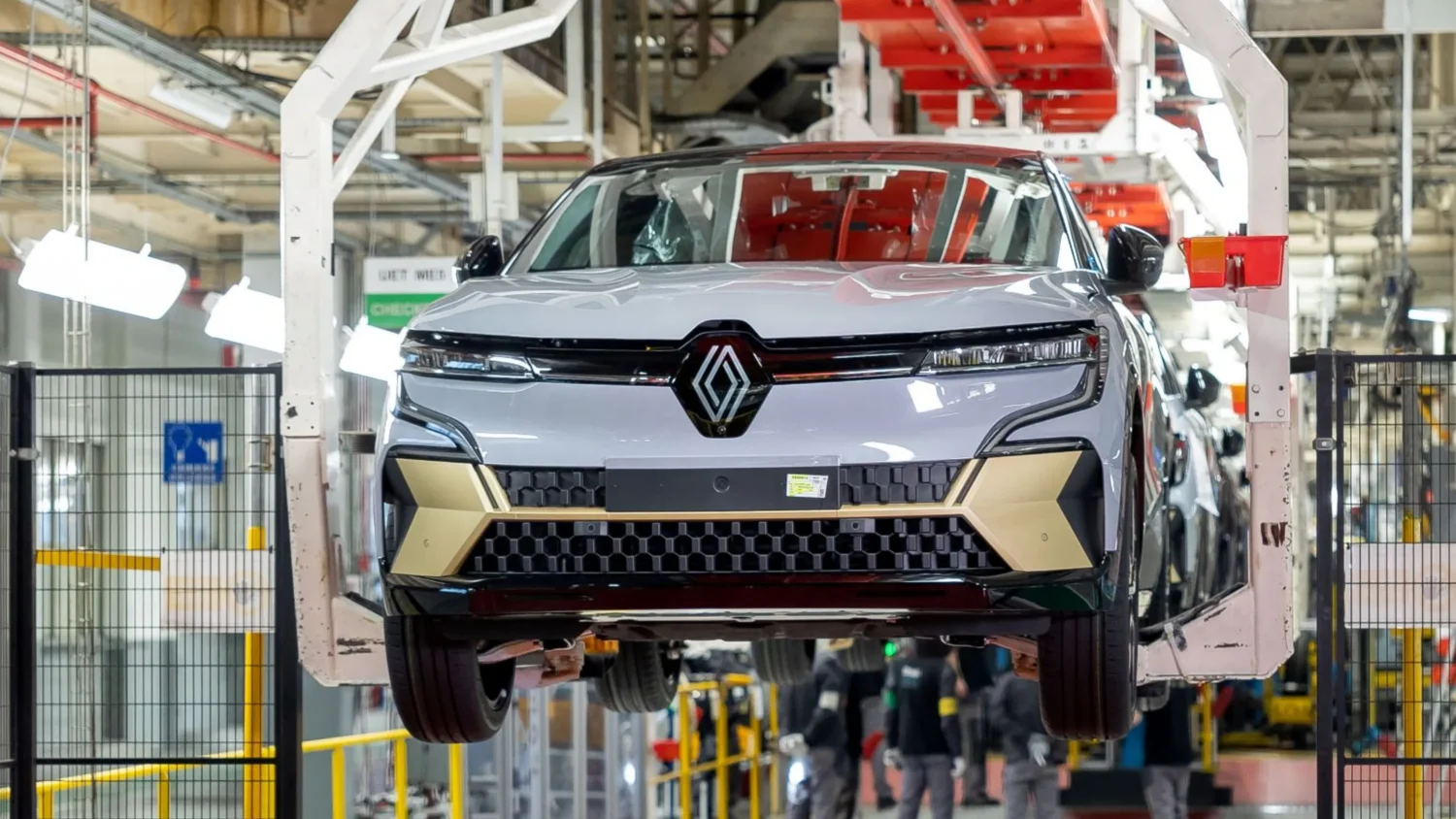
Renault has just announced a massive investment plan totaling 600 million euros in Spain, earmarked especially for its Valladolid and Palencia plants!
Valladolid and Palencia, Renault’s European linchpins
This move is part of the “Future Ready” plan, the group’s global electrification strategy, and targets these two facilities that are central to the company, since Captur and Symbioz (Valladolid) are already produced there, along with Austral, Espace, and Rafale (Palencia). The aim behind this investment is to prepare Spain’s industrial and engineering hubs for a new era—electrification, of course, but also operational excellence and technological innovation, according to the press release. Renault is pursuing several simultaneous objectives: solidify its industrial footprint in Spain, boost the competitiveness of its two plants, accelerate the development of electrified technologies, and support the transformation of all its activities in the country. But why Spain, and why now? First, the recent signing of the 2026-2028 collective bargaining agreement with the unions has established a climate of trust conducive to investment. Then, and this is perhaps the strongest argument, the Spanish plants have demonstrated remarkable competitiveness over the years, driven by the quality of their production processes and the high level of excellence achieved by their teams.
Five new models, including two 100% electric
Christian Stein, head of Renault Spain, has stressed this point: the country represents a strategic hub that goes beyond mere car manufacturing, encompassing an entire ecosystem of suppliers, energy players, and mobility actors. He adds that, in a European automotive sector unsettled by turbulence, this investment signals a strong commitment to the Spanish plants, made possible by the workers’ expertise and the support of local institutions. Concretely, the plan will unfold with the allocation of five new models to the two Spanish factories, including two electric vehicles in the C segment. The Valladolid plant will also host a brand-new line dedicated to battery assembly. The Palencia plant, for its part, will be tasked with manufacturing vehicles built on the RGEV Medium 2.0 platform, the most advanced electric architecture and a preview of Renault’s next generation. This platform promises a WLTP range of up to 750 kilometers (about 466 miles), and up to 1,400 kilometers (roughly 869 miles) for extended-range variants (EREV). Its 800-volt electrical architecture will also enable ultra-fast charging (20% to 80% in around ten minutes). This is the first time in Renault’s 75-year presence in Spain that the Valladolid and Palencia plants will produce electric cars.