Only a few years ago, Chinese automakers were content with margins on the European map. By 2026, they sit squarely at the center of the game. Their sales now account for nearly one in ten new cars sold in Europe. And in this China-born bloc, a new leader has emerged. BYD now leads MG in cumulative sales.
In August, all Chinese brands combined reached 11.7% of the European market, or 97,639 registrations. Over the past year, the European market rose only 4.6%. At the same time, Chinese car sales jumped 111% to 913,703 units. They now represent 9.9% of the market, up from 5.2% a year earlier. In this shift, the five-strong group changed leadership. It includes BYD, Chery, MG (SAIC Motor), Geely and newcomers such as Leapmotor or Xpeng. Their push rests on plug-in hybrids and electrics. And it is BYD’s rise that is reshaping the ranking of Chinese brands in Europe today. All of this is playing out on a continent where many European factories are already grappling with overcapacity.
BYD overtakes MG and rebuilds the Chinese hierarchy in Europe
In the first eight months of the year, Chinese automakers have already moved 913,703 cars in Europe. Within this total, the ranking stands as follows:
- BYD: 232,600 registrations, up 144% year on year.
- MG: 229,638 units, up 20%.
- Chery: 226,534 cars, a surge of 274%.
In other words, the three giants are neck-and-neck. But BYD now occupies the top step on the podium among Chinese brands.
This shift carries a powerful symbolic weight. Since MG returned to Europe in 2011, it had dominated the Chinese camp without contest. That comeback came a few years after the dismantling of its former British plant. BYD has already passed it in May and then in July. It then confirmed its advantage for the year. In August, Chery also sold more than MG. A detail that changes everything in how the European market is perceived. Especially since BYD and Chery are betting on higher-priced models, with a perceived higher quality. MG is mostly targeting budget cars, in the niche where Dacia remains the benchmark in the minds of many drivers.
Plug-in Hybrids, Mass Exports: The Playbook of the New Leader
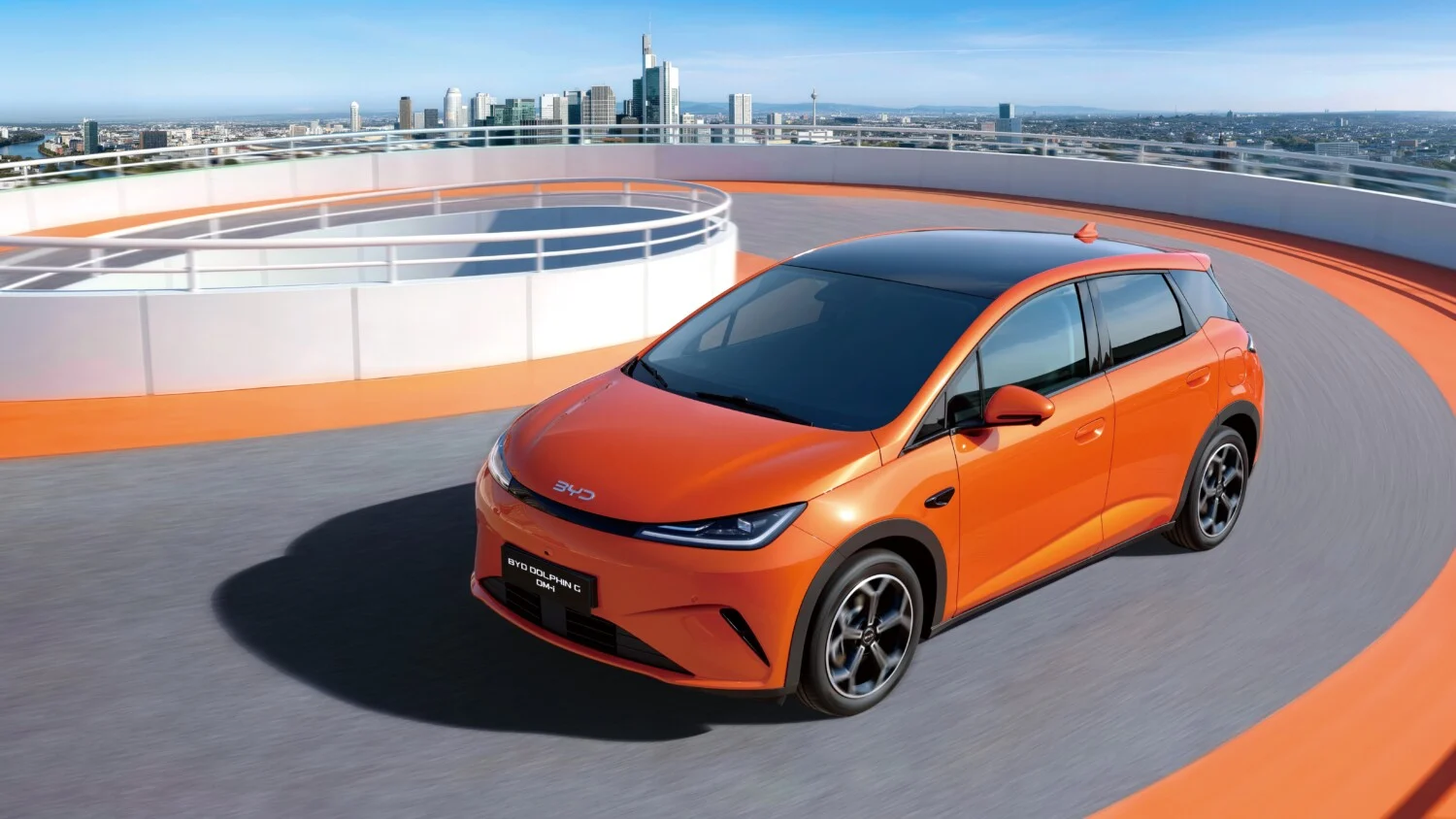
To understand how BYD seized the lead, you simply have to look at a precise segment: plug-in hybrids. The BYD Seal U DM-i remains the best-selling PHEV in Europe. The three most-registered plug-in hybrids on the continent are all manufactured in China. They are the Seal U DM-i, the BYD Atto 2 DM-i, and the JAECOO 7. They outrun models such as the Volkswagen Tiguan, the Ford Kuga, or the Mercedes-Benz GLC. In August, Chinese-built plug-in hybrids accounted for 34% of all PHEVs registered in Europe. The sole Seal U came close to breaking into the top 20 overall across all drivetrains with 7,789 units. It stood ahead of MG ZS’s 6,966 units.
Pure electric vehicles remain a key driver of this offensive. They account for 37% of vehicles exported from China to Europe. And this is despite the weight of additional tariffs that took effect in 2024. All of this sits within a broader industrial game. Chinese plants are running at roughly 50% of capacity on average. Profitability tends to rise once capacity utilization hits around 80%, which pushes groups to push exports hard. In Europe, many sites are also grappling with chronic overcapacity. The question now is which brands will manage to establish a lasting foothold in Europe, and how legacy automakers will respond to this new balance of power, where BYD has gained a lead over MG.