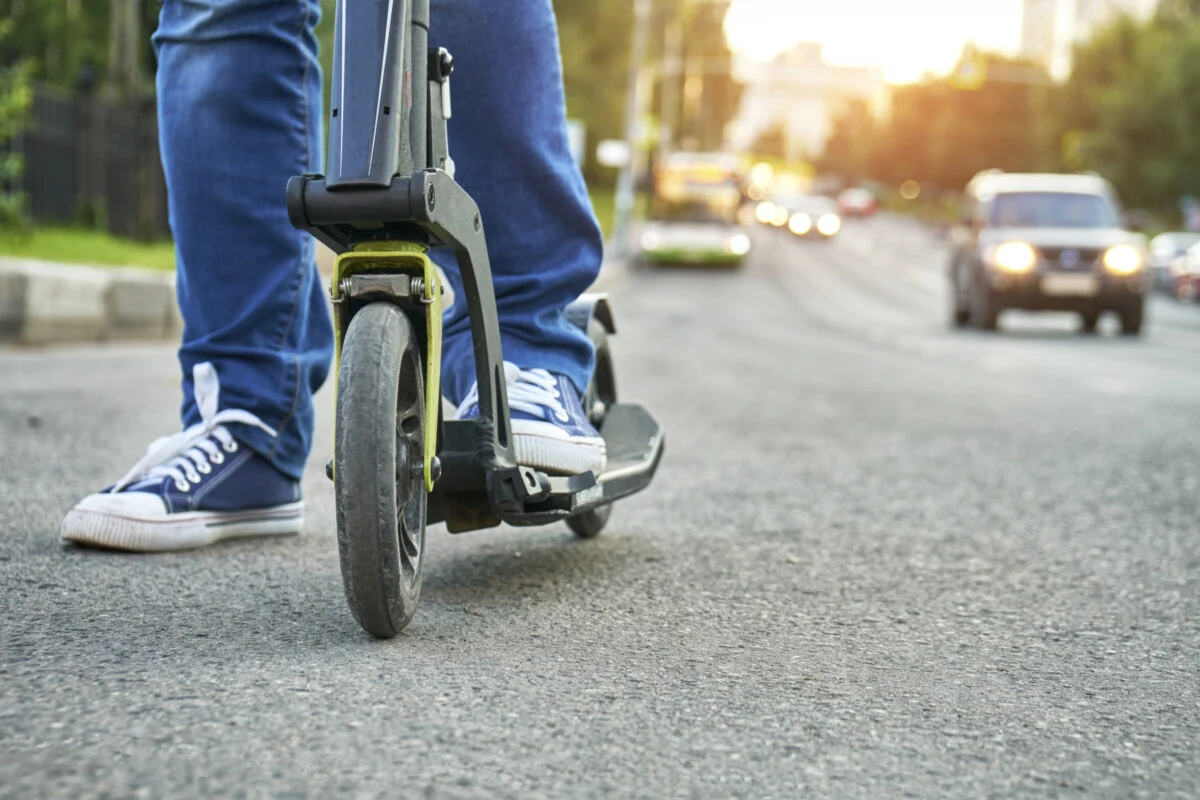
In city streets, you expect to see scooters zipping along beside bicycles. Not a device capable of outpacing cars. Yet that is what law enforcement uncovered during an operation to check out new personal mobility devices, with an electric scooter clocked at speeds more typical of a small motorcycle.
On Thursday, September 17, in Clermont, in the Oise department, the road-safety unit of the prefecture, the gendarmes and the municipal police joined forces to scrutinize scooters on the move. The stated objective: remind the public that the legal limit on public roads is 25 km/h (about 15.5 mph) and to target the riskiest behaviors. At one stop, a de-restricted electric scooter sent speed gauges into overdrive, in a department already marked by a string of serious crashes involving these devices.
Clermont: an unbridled electric scooter clocked at 90 km/h (about 56 mph)
That day, the operation took place in the Clermont metropolitan area. Law enforcement stopped several scooter users to check equipment, the conformity of the devices, and to reiterate the rules. One machine quickly drew attention. The gendarmes decided to place it on a cinemometer, a radar used to precisely measure the speed of two-wheeled vehicles.
The verdict: the scooter could reach 90 km/h (about 56 mph). That’s more than three times the official limit for this type of Motorized Personal Mobility Device (EDPM), set at 25 km/h, and well above the maximum speed typically allowed for cars in city limits, around 50 km/h. The device was not insured. It was towed to the impound lot. “De-restriction markedly increases the risk of crashes and endangers the rider as well as other road users,” warned the Oise gendarmerie, cited by Actu.fr, as the department’s prefect began requiring helmets for all electric-scooter riders just days earlier.
Unbridled electric scooter: what you risk in the Oise
Under French law, an electric scooter used on public roads must be speed-limited by design to 25 km/h. Pushing beyond that takes it outside the legal EDPM framework and practically resembles a non-compliant moped. Merely modifying a device to run faster is illegal. A owner who de-restricts a scooter faces penalties up to one year in prison and a fine of up to 30,000 € (roughly $32,000). Riding a de-restricted scooter carries a fine of about 135 € (roughly $150) with possible impoundment. If the device is capable of exceeding 25 km/h by design, sanctions can climb to 1,500 € (roughly $1,600) and confiscation. In addition, operating without insurance can bring a penalty of up to 750 € (roughly $800).
- De-bricking (de-restricting) your scooter: up to 1 year in prison and a fine of up to 30,000 € (about $32,000).
- Riding a de-restricted scooter: 135 € fine and potential impoundment.
- A scooter capable of more than 25 km/h on public roads: up to 1,500 € in fines and confiscation.
- No civil liability insurance: up to 750 € fine.
In the Oise, this national framework sits atop stricter local rules. The department regularly records incidents involving scooters. A Lagny-le-Sec technical services employee was struck by a car at Le Plessis-Belleville on a Friday, September 18; a man in his forties suffered serious injuries in Bornel after a collision; and two severe crashes followed in late June in Beauvais. Earlier in the summer, another rider, not wearing a helmet, traveling on a de-restricted scooter capable of about 70 km/h, was seriously injured in the department. In response to rising crash numbers, a prefectural order dated June 19, 2026 now requires helmets fastened for all electric-scooter and other EDPM riders on all roads open to traffic, including bike lanes. A scooter that can outrun cars at 90 km/h, uninsured and unprotected, starkly illustrates the safety stakes for road users… including the motorists who share the road with it.