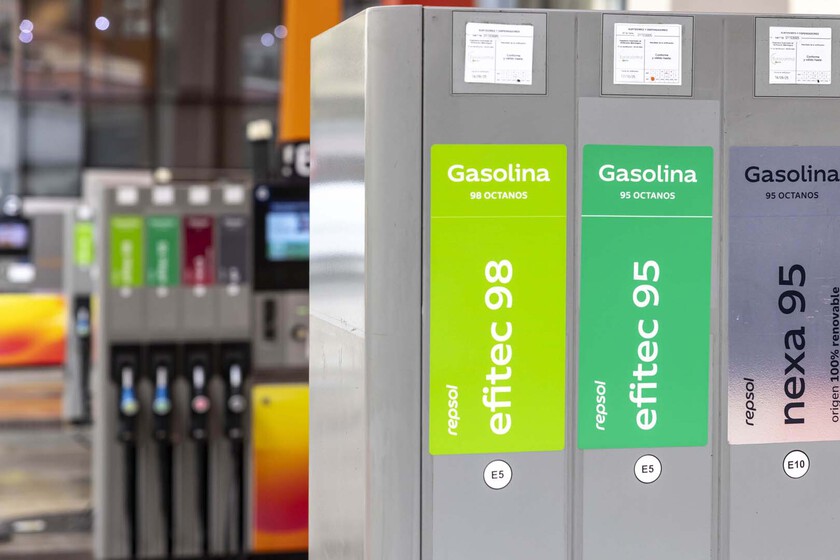
That fuel prices are sky-high is bad for many, because refueling becomes increasingly expensive, but good for a few. It’s clear that someone is profiting from the soaring prices of gasoline and diesel, and we all know who it is: the energy companies.
According to El Salto, the energy firms drive about a third of inflation while posting record profits and margins.
The Majority Lose. A Few Win (Big)
Whether due to the war in Ukraine, the conflict with Iran, or whatever the reason, we have grown accustomed to energy prices rising week after week. It’s not that gasoline and diesel are simply sky-high; electricity and gas are becoming more expensive as well. It is therefore not surprising that inflation in August reached 4.3%.
As reported by El Salto, after consulting the data from the CCOO’s Corporate Margins Observatory, this translates into record profits for Spain’s energy companies and has also accounted for about a third of inflation.

The CCOO study notes that refining crude oil boosts the profitability of the energy sector and inflation. These firms posted a margin of 97,000 million euros in the second quarter of 2026.
“The energy sector is recording a new high in its corporate profitability, driven by the margins in oil refining, which have surged. The margin on sales – gross operating profit over sales – for the energy sector, which includes refining, electricity supply, and fuel trading, reaches a historic 24.5% on a four-quarter moving average, compared with 21.1% a year earlier. This level doubles the profitability seen in 2018-2019 and hovered around 11%,” explains CCOO.
Meanwhile, consumers pay more for energy every day. According to data from Diésel or gasolina, on September 17, 2025, the average price of unleaded 95 gasoline in Spain was €1.491 per liter and diesel €1.414 per liter. A year later, the average price of unleaded 95 gasoline in our country is €1.938 per liter and diesel €1.925 per liter.
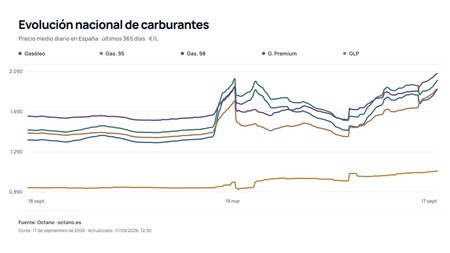
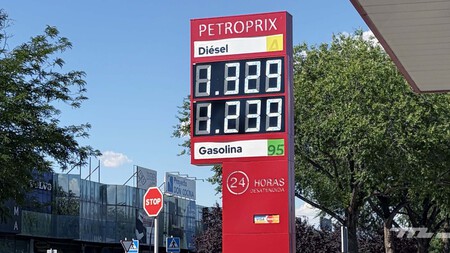
Just look at the Octano.es graphs tracking fuel prices over the past year. Or the image that accompanies this text: by the end of June this year, that is, less than three months ago, unleaded 95 gasoline cost 1.239 euros per liter at a low-cost station in central Spain (Petroprix) and diesel 1.329 euros per liter; today, both gasoline and diesel cost 1.799 euros per liter at that same station.
Someone refueling at that station pays 56 euro-cents more per liter for gasoline and 47 euro-cents more per liter for diesel. That means filling a 50-liter tank costs 28 euros more for gasoline and 23.50 euros more for diesel.
Just in the last week alone, diesel has risen by nearly 8 euro-cents per liter and gasoline by almost 7 euro-cents per liter. We are almost back to the same situation as months ago, when fuel prices were so high that the government implemented extraordinary measures to curb their price, yet the current administration is silent on this issue while energy margins continue to grow (tax revenue also grows: with more expensive fuel, more taxes are collected).
“Companies are earning an operating margin of 97 billion euros in the second quarter of 2026. The value added over sales stands at multi-quarter highs and the profit margin on sales remains near peak levels,” adds CCOO in its study.
And, note, these figures correspond to the second quarter of the year; the third quarter has just begun, and in the early days of September price rises have been almost daily, so the numbers could tilt even more in favor of the energy giants.