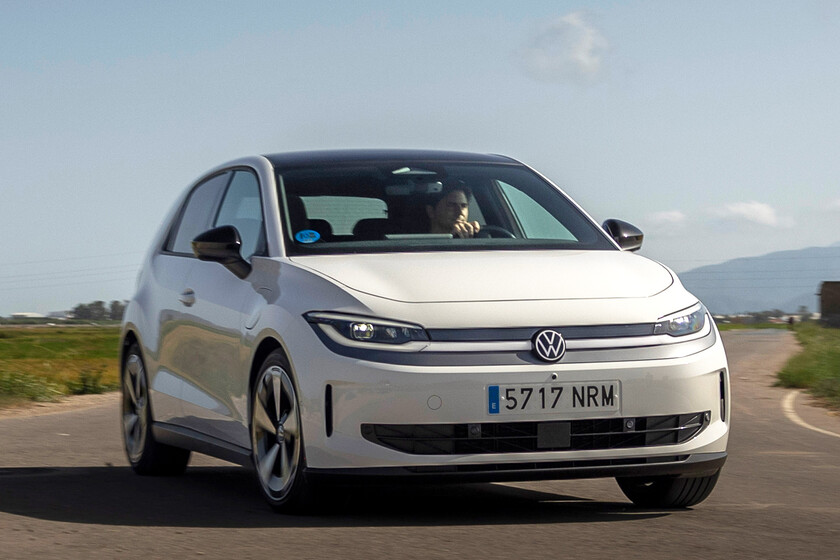
The Volkswagen Polo has just taken a 180-degree turn. It bids farewell to gasoline engines for good and becomes a completely electric model. It is a risky move by Volkswagen, but it also aligns with its goals in Europe for the coming years.
In video
We are looking at the seventh generation of the Polo, which is now named ID. Polo to fit Volkswagen’s electric-vehicle nomenclature and also to distinguish it from the conventional Polo. The arrival of this electric version does not imply an immediate farewell to the gasoline variant; both models will coexist in the market for a few years, but sooner or later the gasoline version will retire for good.

The ID. Polo is one of Volkswagen’s key models in the short term. It aims to become one of its new best-sellers, and it does so with an appealing hook: a price that could drop to €17,900 after all brand discounts and subsidies from the Auto+ Plan, although its MSRP starts at €25,990 and can reach up to €38,920 for the top trim.
We are facing the Polo’s plot twist
The ID. Polo marks the plot twist of the greatest magnitude in the history of this model and, yet, at first glance it remains easy to identify as a Polo… depending on the angle you view it. The front keeps its characteristic horizontal cues and combines them with a new illuminated grille. The rear is where the most radical change occurs: it abandons the square taillights that have distinguished it for decades and now opts for slimmer, rectangular lights.
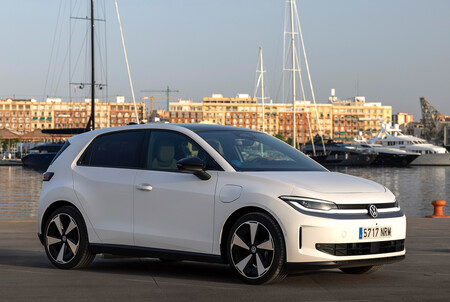
It measures 4.05 meters long, i.e., 2 cm shorter than the gasoline Polo, but its new electric architecture allows better space utilization. The rear seats gain legroom and the trunk is, in short, the biggest beneficiary of this new platform. Its capacity is now 441 liters.
Beyond space, the interior of the ID. Polo marks an evolution in quality and technology. Volkswagen was bold in choosing the dashboard materials: they are not the most expensive, but the use of fabric and different textures greatly enhances the sense of refinement aboard. The displays (10.25″ for the instrument cluster and 13″ for the multimedia system, included as standard) have good resolution, a carefully designed interface, and, most importantly, they no longer replace physical buttons. Volkswagen acknowledged its mistake and brought back physical controls both on the dashboard and on the steering wheel.
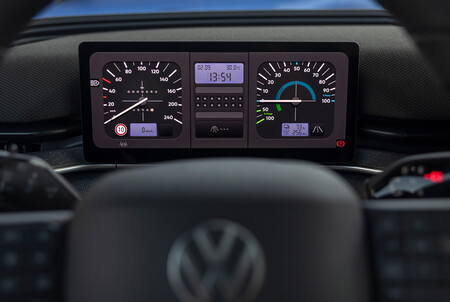
Among the curiosities, the Polo includes a “retro mode” for the screens, where its graphics imitate the instruments and dashboard of the first Golf. It seems like a harmless feature, but it reveals something very important: amid new brands and Chinese models, Volkswagen is playing the tradition card. That is why the ID. Polo is named as such and not ID. 2, as it was originally going to be named. The ID. 3, ID. 4, ID. 7 and company will exit the market to make way for the ID. Golf, the ID. Tiguan, etc.
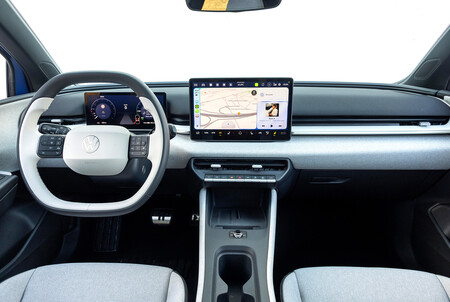
Let’s talk equipment. The ID. Polo lineup in Spain comprises three trims: Match, Life and Style. As standard, it includes LED headlights with high-beam assist, rear Park Pilot, adaptive cruise control, bidirectional charging, and 17″ steel wheels with hubcaps. The higher trims add keyless access, 18″ to 19″ alloy wheels, a rear-view camera, alarm, wireless charger, Matrix LED headlights, heated seats, among others.
Up to 454 km of combined range
The Volkswagen ID. Polo uses the MEB+ platform from the Volkswagen Group, the same one that powers (or will power) other small electric models in the family, such as the CUPRA Raval, the Skoda Epiq, and the Volkswagen ID. Cross. This architecture offers a lot of flexibility in terms of battery sizes and motors. In Spain there are three power levels and two battery options available:
- 116 hp with a 37 kWh LFP battery
- 135 hp with a 37 kWh LFP battery
- 211 hp with a 52 kWh NMC battery
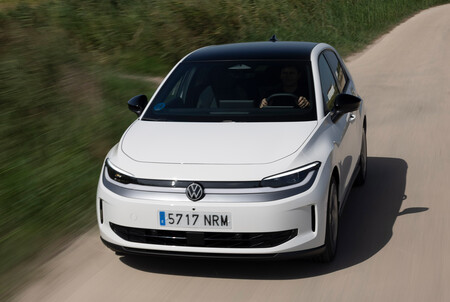
In its most affordable configuration, the ID. Polo promises a range of up to 329 km in combined WLTP. It supports DC charging up to 90 kW, which allows going from 10% to 80% in 23 minutes. With the 52 kWh battery, reaching that same percentage takes 24 minutes, thanks to a charging power of up to 105 kW. Its total range is 454 km in combined WLTP, although in city driving it is certified up to 586 km.
Let’s talk about feel. During its launch we were able to experience the range-topping configuration of 211 hp with a 52 kWh battery. The power feels more than ample, and thanks to the instant torque typical of an electric car, it feels like a nimble vehicle. It is complemented by a slightly firmer suspension than expected. It doesn’t completely ruin city comfort, though some may find it a bit “bouncy” when there are potholes or rough road surfaces.
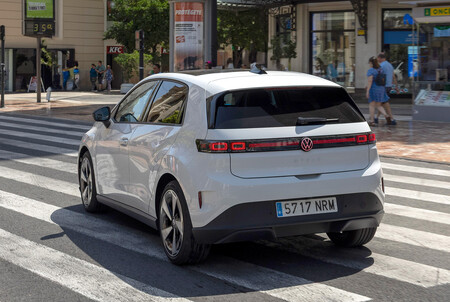
The car is manufactured in Spain and is already on sale
The Volkswagen ID. Polo is produced in Martorell, at the same plant that builds the CUPRA Raval. Its MSRP starts at €25,990, which means it isn’t exactly an affordable subcompact, but brand discounts and the Auto+ Plan subsidies can make it even cheaper than the gasoline version. Volkswagen says it can drop to €17,900.
The electric Polo wasn’t the first model in its segment to arrive, and it now faces a good number of competitors, such as the CUPRA Raval itself, the Renault 5, the Geely E2, the Opel Corsa-e, and the Peugeot e-208.