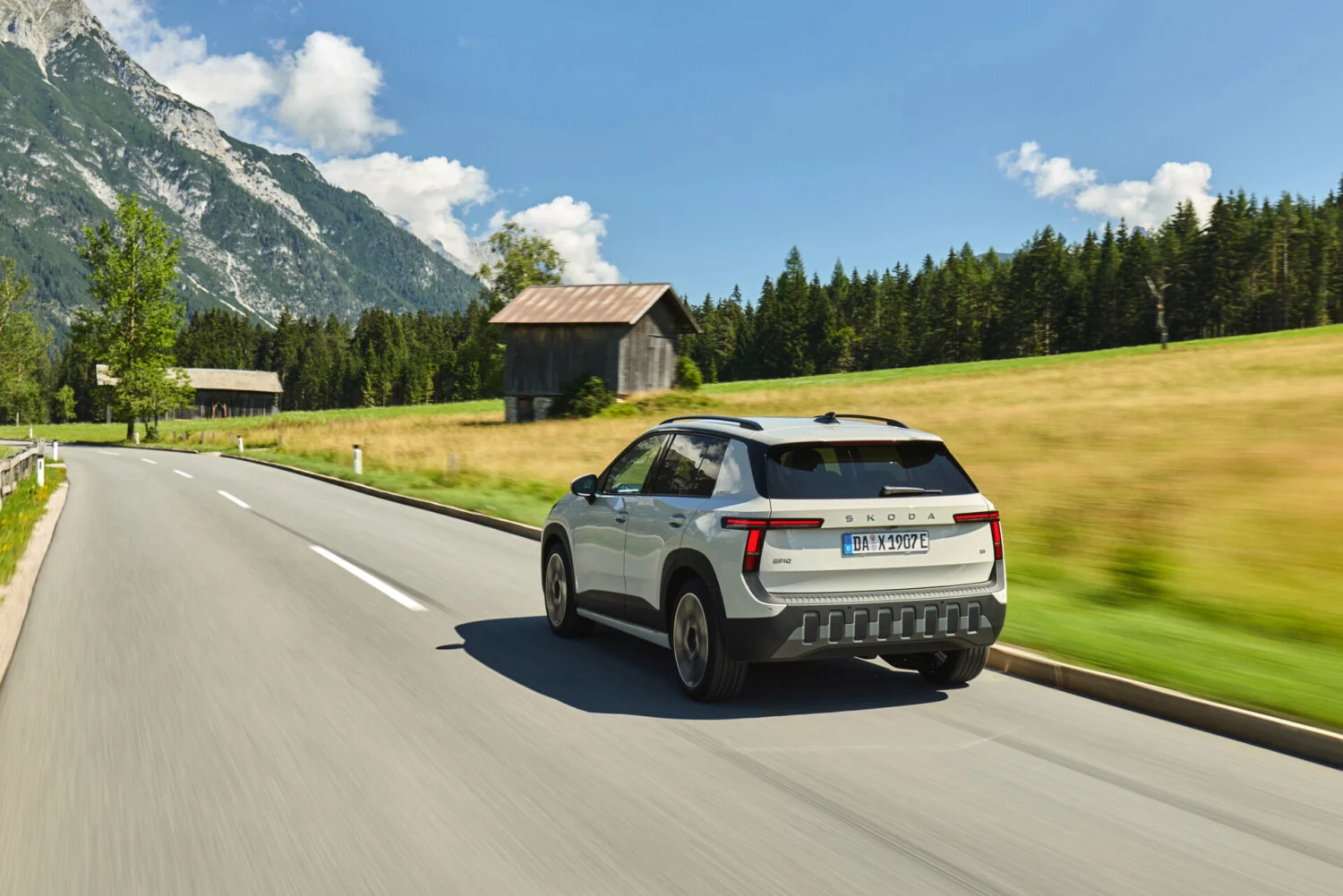
With the Epiq, Skoda aims to establish itself in the affordable electric SUV market. Smaller than the Enyaq and the Elroq, this new model leans into a city-friendly footprint while keeping the Czech brand’s core strengths: space, practicality, and a clear emphasis on everyday usability. After first seeing the model as a prototype earlier this year, we’ve now had the chance to take the wheel of the final production version.
A compact SUV with a modern design
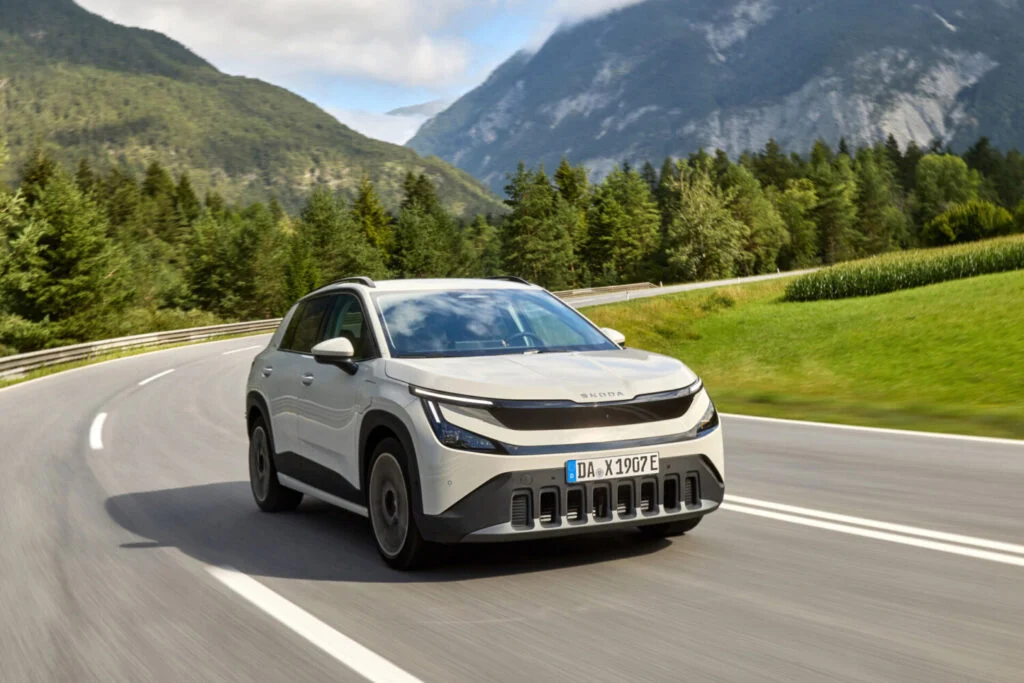
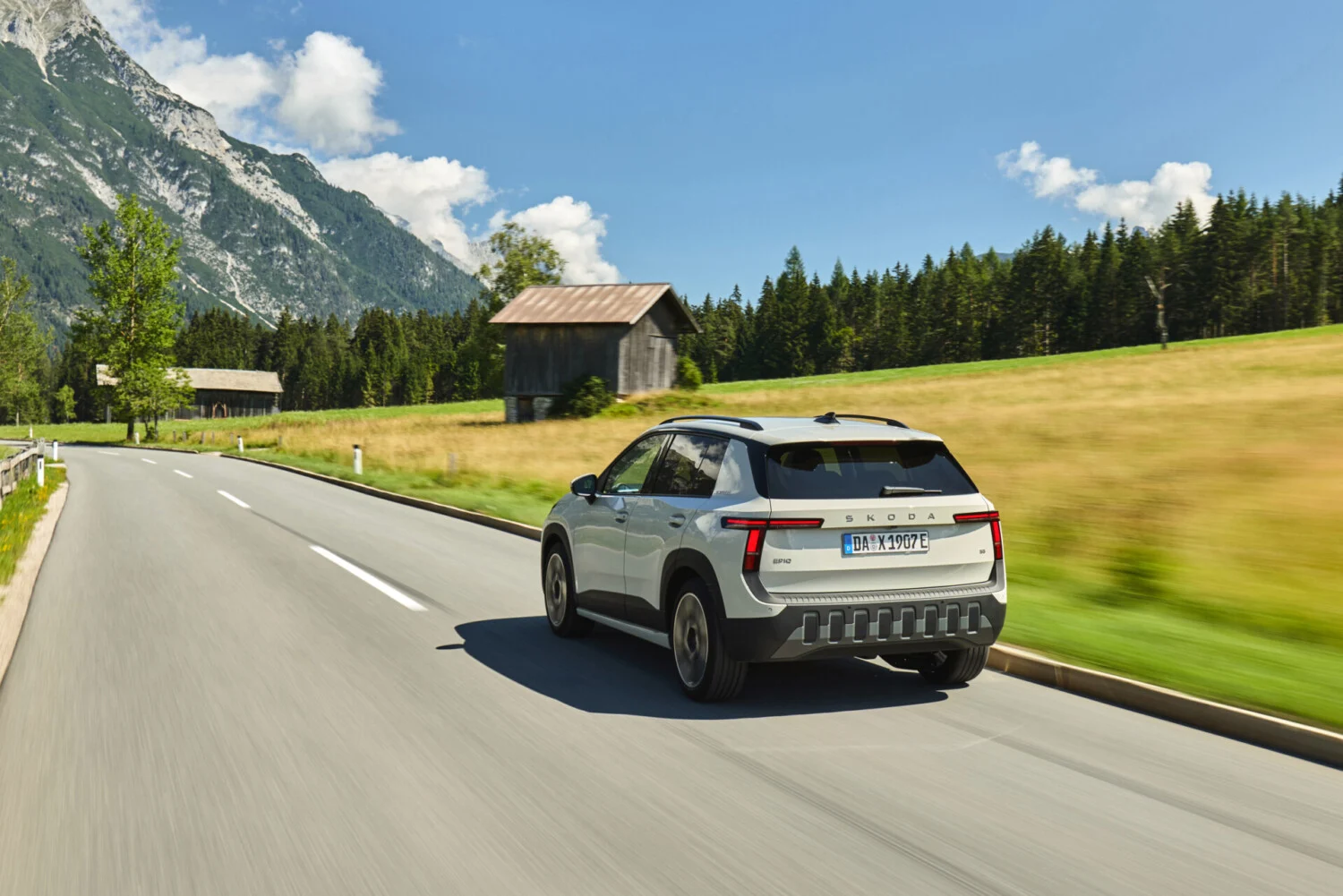
At 4.17 meters in length (about 13.7 feet), the Skoda Epiq competes in a highly contested segment. The Czech maker applies its new visual identity, “Modern Solid,” already introduced on the other electric models in the lineup. The result is rather restrained, but the Epiq carries enough personality to avoid fading into the crowd in traffic.
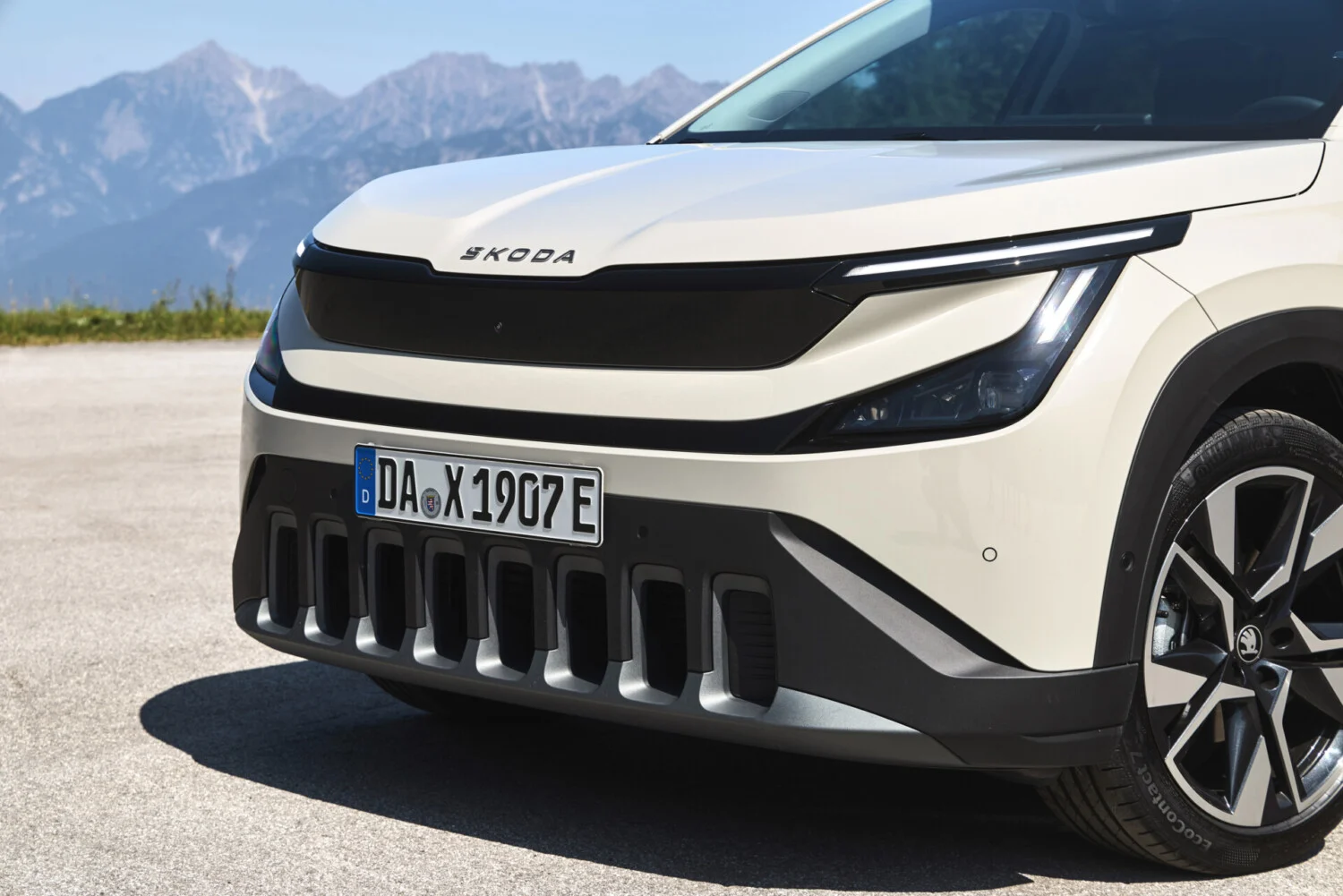
The front end embraces the signature Tech Deck Face, with a black strip connecting the headlights. The lamps adopt a C-shaped motif and the bumper incorporates several openings that contribute to the SUV’s visual identity. Some of these openings house motorized flaps to improve aerodynamics and cooling. The air penetration coefficient stands at 0.275.
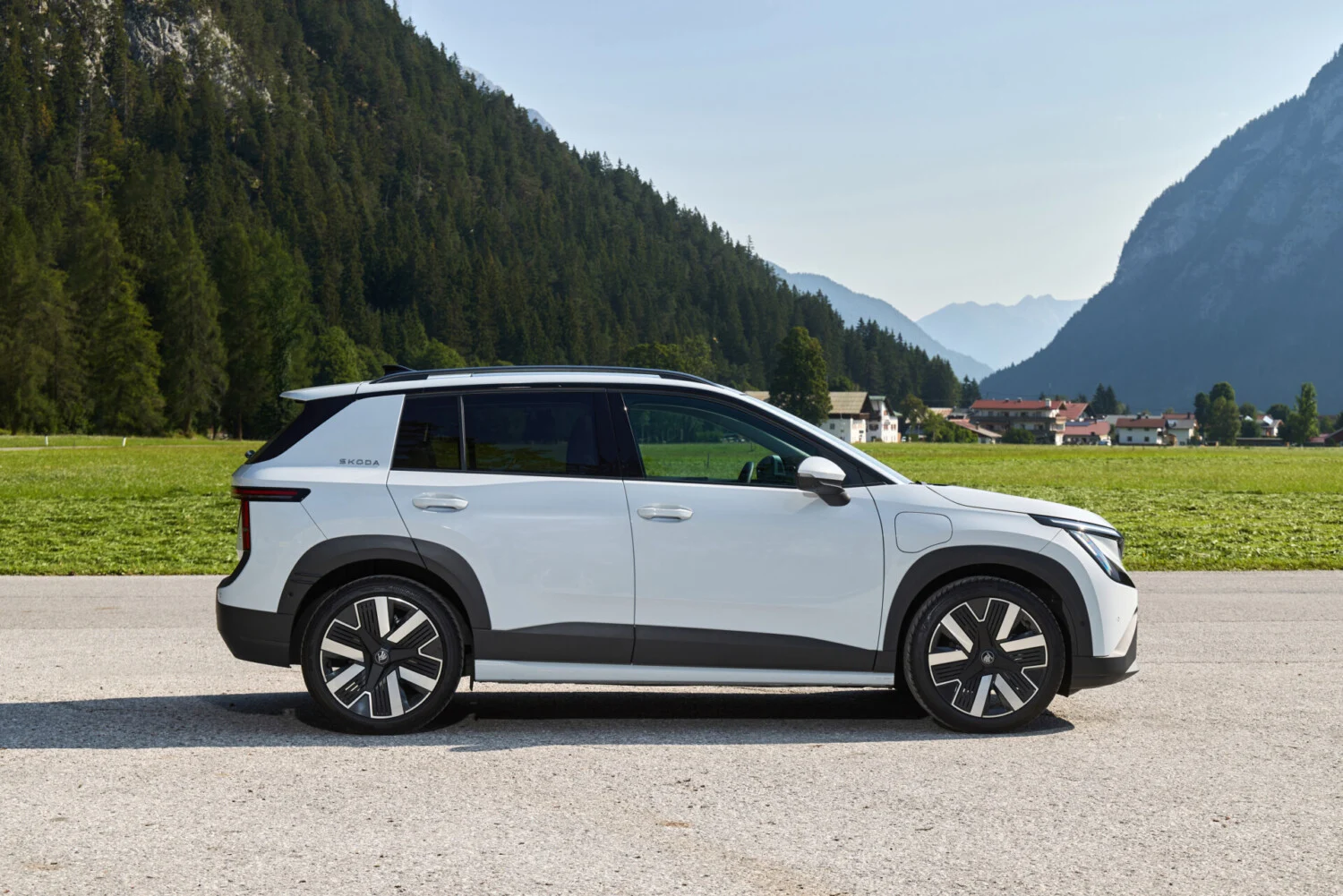
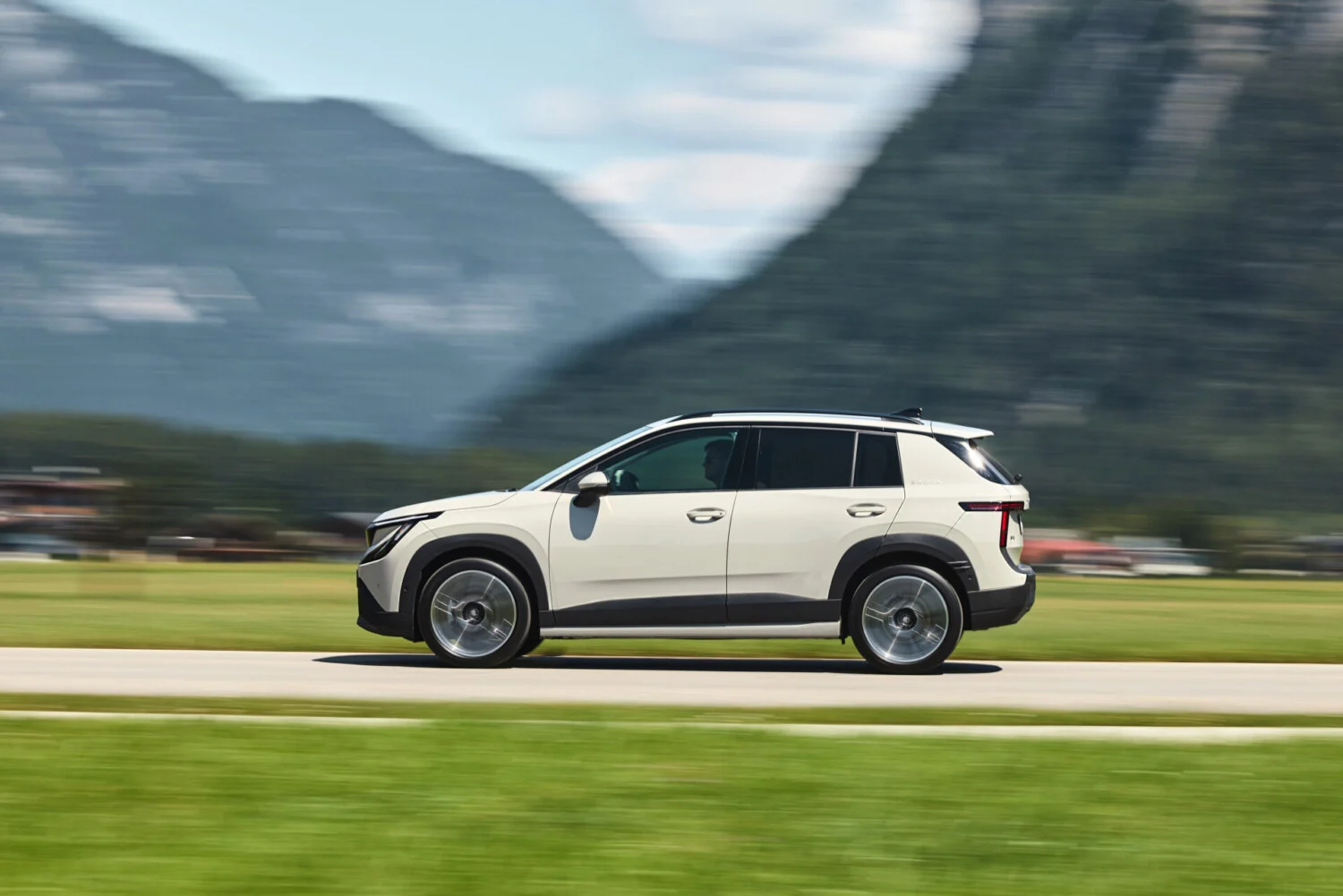
From the side, Skoda has chosen conventional door handles, a cost-saving measure. The wheels feature a distinctive design while the roof rails reinforce the model’s rugged character. Finally, the imposing and angular C-pillar helps give the car a tougher stance.
A surprisingly spacious interior for its small footprint
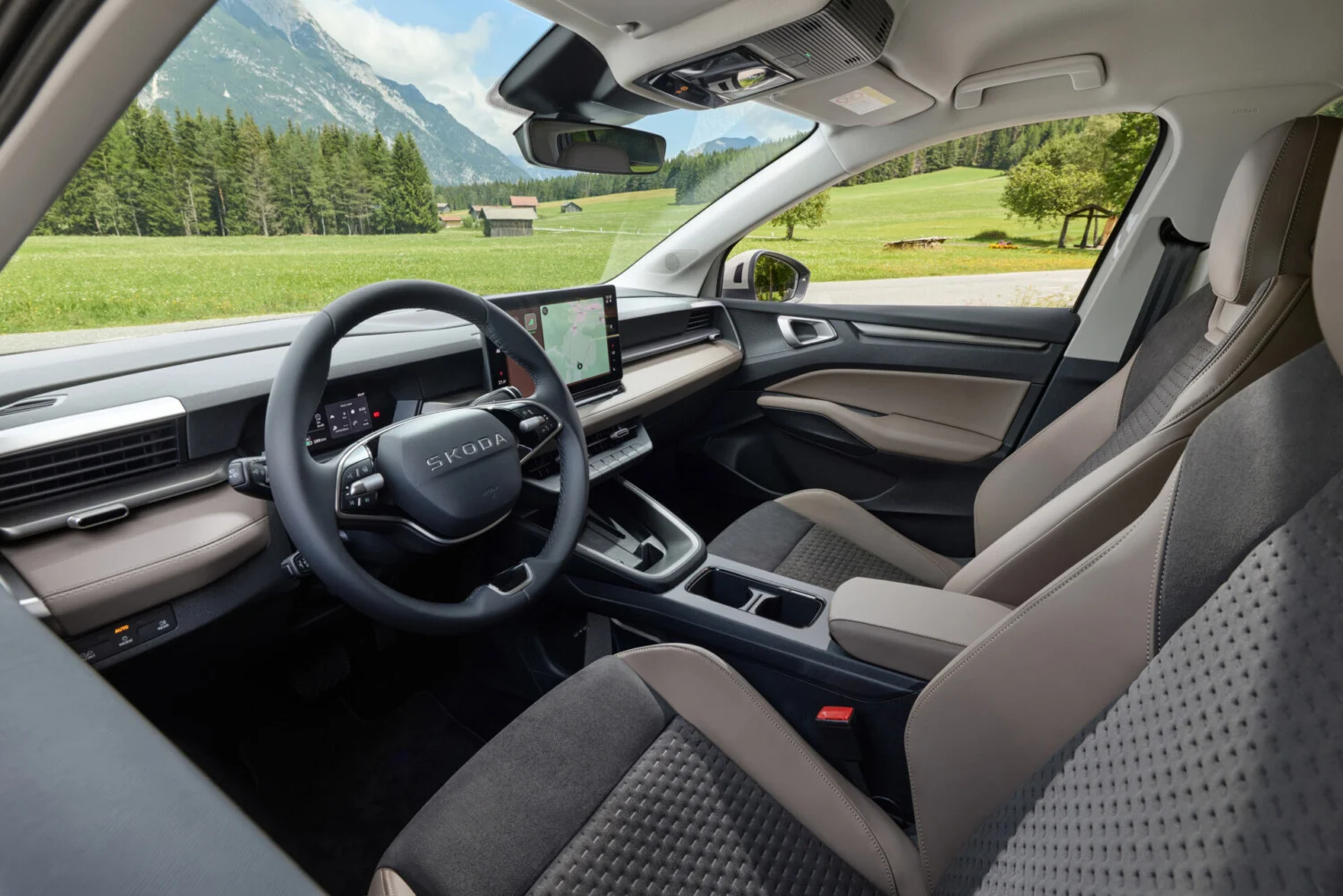
The cabin also follows the cues of Skoda’s latest generation. You’ll find a 13-inch touchscreen paired with a new-generation infotainment system from the VW Group.
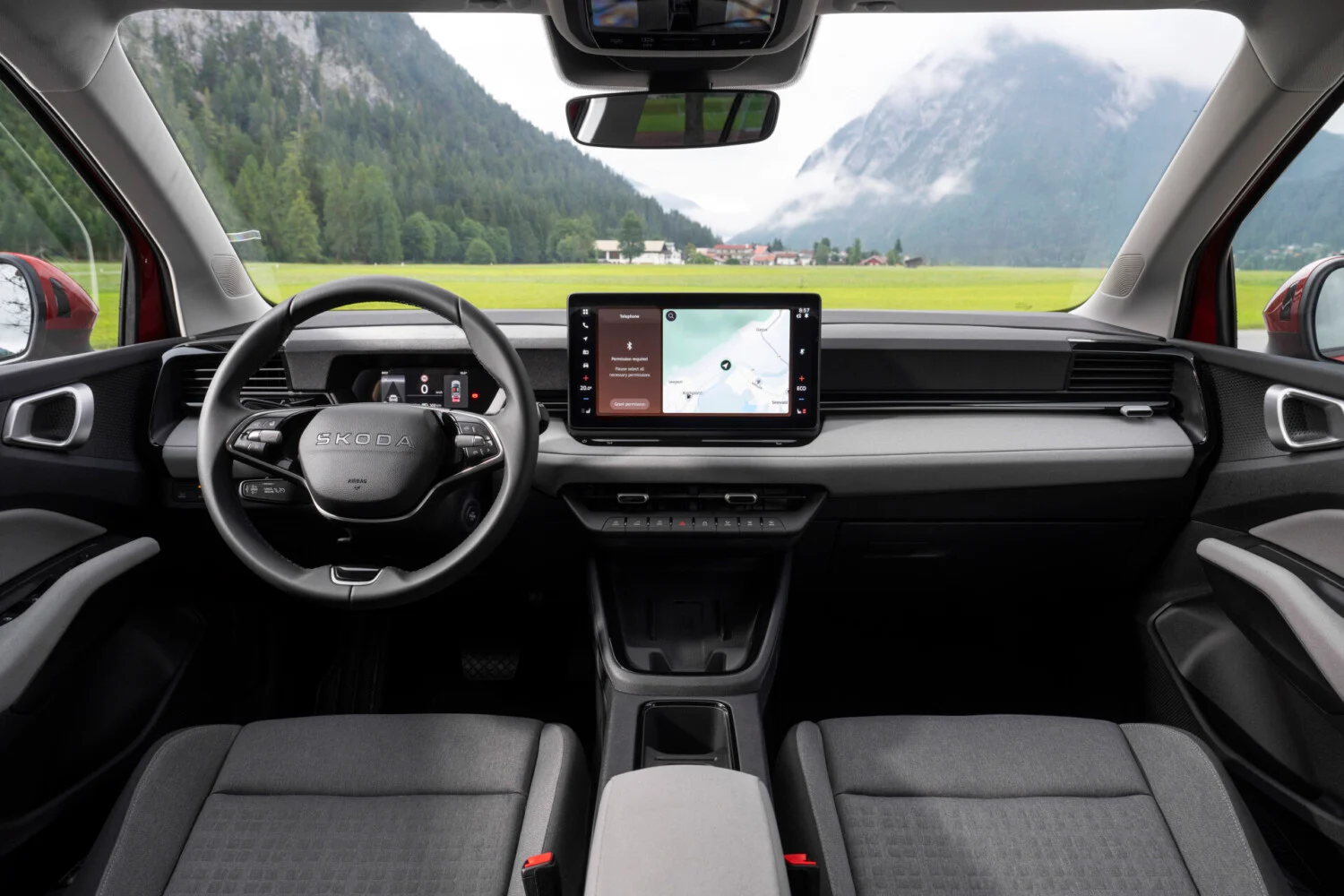
The central console houses a number of storage pockets and a wireless phone charger. Skoda also includes a vertical phone holder with an opening to let the charging cable pass through. A central armrest completes the package. In our test car, the cupholders were taken up by 3D-printed compartments. It’s an intriguing idea from Skoda, but it still needs a bit more refinement to give the impression of a premium finish to that 3D print.
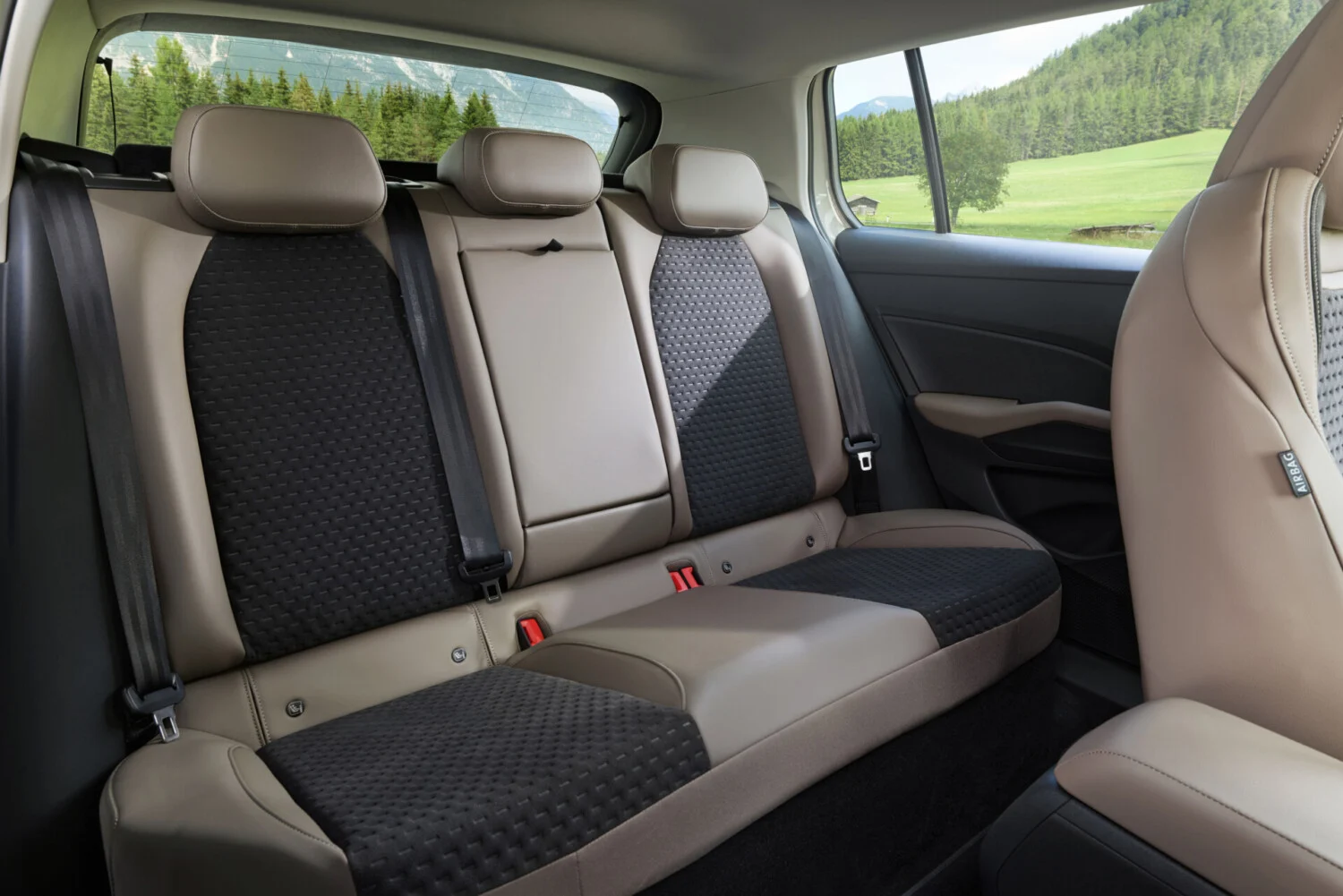
But the real highlight is the space on offer. Despite its compact footprint, the Epiq accommodates adults in the rear seats reasonably well. Legroom is naturally less than in the Elroq, but it remains ample for a vehicle in this class. Headroom is also generous enough to avoid a cramped feel on longer trips.
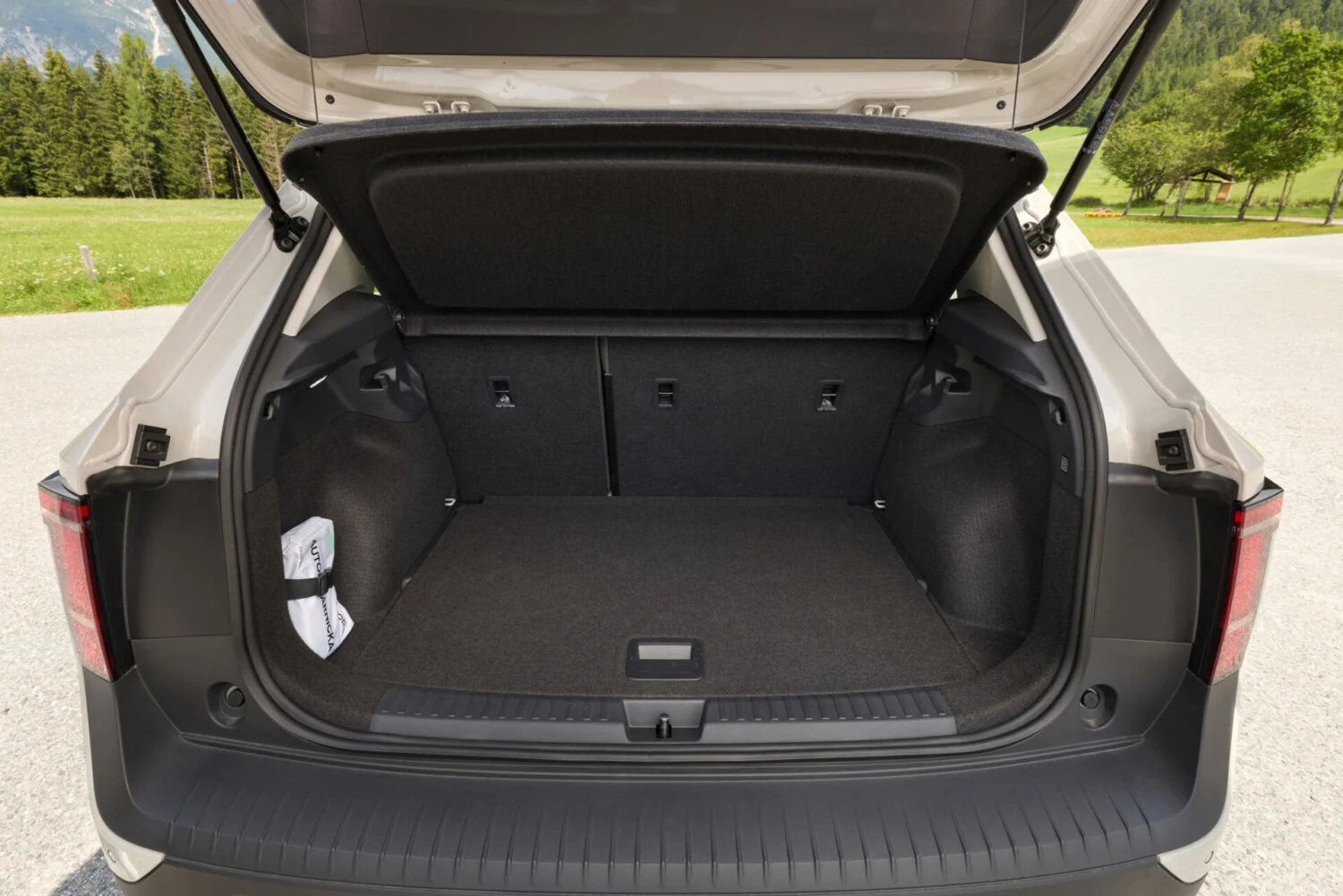
The boot offers a generous 475 liters of space. Its configurable floor can reveal different storage compartments, including a space beneath the floor. This area can house the spare tire kit, the Canton audio subwoofer in higher-end versions, or a few personal items.
Skoda also adds a 25-liter frunk under the front hood. A modest capacity, but it still allows you to store charging cables without encroaching on the main boot. The maker also provides bags that can be strapped to the back of the second row to help carry cables or items that might soil the cargo area.
210 hp but comfort takes precedence
For this test drive, we took the wheel of the Epiq 55, the most powerful version in the lineup, powered by a 210 hp electric motor and 290 Nm of torque. This variant uses a 51.7 kWh net LFP battery and claims around 440 km of WLTP range.
With roughly 1,600 kg on the scale, the Epiq doesn’t lack reserves. The 0 to 100 km/h time stands at 7.4 seconds, a level of performance that would have been considered sporty in a compact a few years ago.
That said, it’s not a car aimed at sporty handling. Skoda clearly prioritized comfort. On our drive through the flawless roads of Bavaria and Austria, it’s hard to judge the suspension’s tuning, but during the prototype’s first test, we found some rough stretches and especially cobblestones where the suspension absorbed the irregularities well. The car’s relatively light weight helps the manufacturer avoid an overly stiff setup while still delivering a controlled demeanor. In Tyrol, taking advantage of long bends and less restrictive speed limits than in France, we noted an exceptionally confident handling for the Epiq.
The brake pedal also convinced us. It’s more direct and less spongey than on the Enyaq and Elroq that ride on the MEB platform. The driver can also enjoy a One-Pedal mode, particularly useful in urban driving, but it can be turned off if it doesn’t suit the driving style.
Several levels of energy recuperation are available, delivering deceleration between 1.5 and 2.2 m/s². There is, however, no steering-wheel paddle to switch recovery levels quickly. The turning radius of 10.15 meters is another advantage when maneuvering in tight streets, especially for a front-wheel-drive setup.
Three drive modes are offered: Eco, Normal, and Sport. They can be selected directly from the center console. During our test, Eco mode proved perfectly suited to a gentle driving style.
As for consumption, it’s hard to pin down a precise daily figure since our route spanned downhill from the Tyrol to Munich. However, on a more urban route, during the prototype test, we recorded around 16 kWh/100 km at a brisk pace. The Epiq should easily keep its consumption below 15 kWh/100 km in typical use.
Three variants to cover different needs
The Epiq lineup isn’t limited to the 55 variant. Two additional versions are offered to fit different expectations in terms of power, range, and price.
The Epiq 30 develops 115 horsepower and uses a 37 kWh net NMC battery. Its range is announced around 310 km, and its rapid charging capability is limited to a maximum of 50 kW.
The Epiq 45 produces 135 hp with the same battery. Its charging power climbs to 90 kW, enabling a 10 to 80 percent recharge in around 28 minutes.
At the top of the range, the Epiq 55 with 210 hp uses the net 52 kWh LFP battery. With roughly 430 km WLTP range and a maximum charging rate of 133 kW, it’s the most versatile option for drivers who intend to use their car beyond pure urban commutes.
In short, it’s an encouraging first assessment for the Epiq. Given its road manners, range, styling, and interior space, it’s easy to see why Skoda has already taken more than 35,000 orders across Europe for its compact SUV cousin to the Volkswagen ID. Polo, which also rides on the MEB+ platform. And the price remains very accessible, starting at €26,470 in France and eligible for the European eco bonus thanks to production in Spain. The Skoda Epiq’s eco incentive can reduce the final bill to under €25,000 for the buyer, making it hard to beat in the compact-SUV segment.
The Epiq 55 version, with the large battery and 210 horsepower, starts in City trim at €32,070 in France, before the eco bonus, i.e. under €30,000 for all.