In Brief
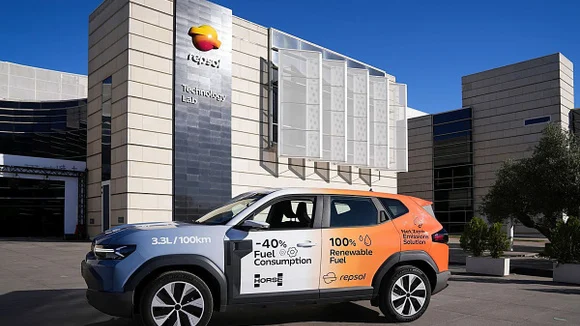
The Dacia Duster used as a lab, equipped with the Horse H12 hybrid engine and fueled by Nexa 95, a renewable gasoline, demonstrated fuel consumption below 3.3 l/100 km on a route in Spain. This tech pairing aims to dramatically reduce CO2 emissions from conventional internal combustion engines by boosting engine efficiency and using a fuel that contains no fossil petroleum. Nevertheless, this concept remains a demonstrator to date, with no announced production version, and fuel availability is very limited. The project opens the door to a potential evolution of thermal propulsion, pending regulatory changes and broader industrial deployment.
From a distance, this particular Dacia Duster looks identical to other models on the road. Yet beneath its bodywork, it serves as a mobile laboratory for a simple idea: what if, instead of scrapping internal combustion engines, we could cut CO2 emissions by making them more efficient and by changing the fuel they run on?
That is precisely the challenge tackled by Horse Powertrain and Repsol. The former designed a highly economical gasoline-hybrid engine, the Horse H12 Concept. The latter proposes a new fuel, the Nexa 95, a fully renewable gasoline made from organic residues. Together, they have already tested this duo in a Dacia Duster consuming 3.3 l/100 km on a route from Valladolid to Móstoles, Spain. This prototype, not yet slated for mass production, raises a pertinent question: could this engine-fuel pairing point the way forward for internal combustion engines?
From afar, this Dacia Duster in question looks like any other road car. However, under its skin, it doubles as a mobile laboratory for a straightforward idea: rather than abandoning internal combustion engines, what if CO2 emissions could be slashed by making them more efficient and by switching to a fuel that contains no fossil petroleum?
That is exactly the challenge taken on by Horse Powertrain and Repsol. The former has crafted a highly efficient gasoline hybrid—Horse H12 Concept. The latter offers a new fuel, Nexa 95, a fully renewable gasoline produced from organic residues. Together, they have already tested this duo in a Dacia Duster consuming 3.3 l/100 km between Valladolid and Móstoles, Spain. This prototype, not yet intended for series production, raises a compelling question: could this engine-fuel pairing represent a new direction for internal combustion engines?
A Dacia Duster Showing 3.3 L/100 km to Demonstrate the Thermal Potential
At the heart of this “laboratory Duster” is a three-cylinder gasoline engine derived from the well-known HR12 block of the Renault–Nissan alliance. Rebranded as H12, this engine has undergone major modifications: a compression ratio of 17:1, a next-generation exhaust-gas recirculation system, an optimized turbocharger, high-energy ignition, and specialty lubricants to reduce mechanical losses. The engine drives a hybrid powertrain with enhanced energy management. The claimed result is a maximum thermal efficiency of 44.2%, whereas the best current gasoline engines sit around 40–41%, and fuel economy below 3.3 L/100 km in the WLTP cycle—roughly a 40% reduction versus the average of new gasoline cars registered in Europe in 2023.
Yet this engine isn’t merely a lab project. Two prototypes have been validated on test benches, and a real-world test by driving from Valladolid to Móstoles in a Dacia Duster allowed the team to evaluate performance in everyday conditions. Behind this project stands a genuine industrial venture: Horse Powertrain, a joint venture formed in 2024 by Renault and the Chinese automaker Geely, with Aramco holding a 10% stake. Based in London, with an R&D center in Valladolid and factories in Spain (Valladolid and Seville), the company aims to produce around five million engines per year. For now, no automaker has officially announced integrating the H12 into a production lineup. So this Duster demonstrator remains a technology showcase rather than a model ready for dealership shelves.
Nexa 95 Renewable Gasoline and the Horse H12: An Alternative for Combustion after 2035?
The second key element of this 3.3 L/100 km Duster lies at the fuel pump. The Nexa 95, developed by Repsol, is a fully renewable gasoline, with no fossil petroleum whatsoever. It is produced from organic waste from industrial activities—such as used oils, animal fats, or agricultural by-products—processed into a fuel with an octane rating of 95. A crucial point for drivers: Nexa 95 is marketed as being fully compatible with all current gasoline engines, requiring no modifications. Repsol began industrial production in October 2025 at its Tarragona plant in Spain, with a second unit planned for Puertollano in 2026, while a synthetic-fuels project is underway in Bilbao. For now, its distribution is very limited: this renewable gasoline is available only at about thirty service stations in Spain, whereas Repsol’s renewable diesel is already sold at more than 1,500 outlets in Spain and Portugal. When paired with the H12 engine, this fuel could cut emissions by roughly 1.77 tonnes of CO₂ per year for a mid-size vehicle traveling 12,500 km, though this figure depends on several factors, including fuel availability, which remains limited in everyday use.
Beyond this demonstration, the challenge extends far past a single Dacia Duster prototype. Today, roughly 97% of cars in Europe still run on internal combustion engines. Tighter CO2 regulations in Europe could recognize renewable fuels as a legitimate emissions-reduction strategy after 2035, which would dramatically alter the outlook for solutions like the H12–Nexa 95 pairing. Repsol emphasizes “an immediate solution” to reduce emissions without waiting for a wholesale fleet renewal, while Horse’s message is clear, as stated by Jesús Francés, director of strategy and advanced engineering at Horse Technologies: “CO2 is the enemy, not the technology. This powertrain shows that efficient engines and renewable fuels cut emissions now, not in 20 years.” Yet a major unknown remains: without widespread deployment of this type of fuel and without a clear decision by automakers on industrializing engines like the H12, this 3.3 L/100 km Duster will largely remain proof that internal combustion can still evolve rather than a reality you can buy at the corner gas station.
Comparison Table
| Features | Dacia Duster lab (Horse H12 + Nexa 95) | New gasoline cars (2023, Europe) |
|---|---|---|
| Consumption (l/100 km) | < 3.3 | ~5.5 |
| Maximum thermal efficiency (%) | 44.2 | 40–41 |
| Fuel economy vs average | -40 % | – |
| Estimated CO₂ reduction (12,500 km/year) | 1.77 tonnes/year | – |
| Engine | 3-cyl gasoline hybrid H12 | – |
| Fuel | Nexa 95 (renewable) | Conventional gasoline |
Key Takeaways
- The lab Dacia Duster achieves fuel consumption below 3.3 L/100 km thanks to the Horse H12 hybrid engine and Nexa 95 renewable fuel.
- The H12 reaches a record thermal efficiency of 44.2% versus the market average of 40–41% for gasoline engines.
- Nexa 95 is produced from organic residues and works with all current gasoline engines without modifications.
- Together, the H12 and Nexa 95 could reduce CO₂ by about 1.77 tonnes per year for a 12,500 km annual distance.
- There are no plans to commercialize this engine-fuel duo at this stage; it remains a technology showcase.
- Nexa 95 availability is still very limited, with about thirty stations in Spain.
- the future of such solutions depends on regulatory recognition and potential large-scale industrial deployment.
FAQ
What is the Horse H12 engine in the Dacia Duster?
The Horse H12 is a three-cylinder gasoline hybrid derived from the HR12 block, heavily optimized to deliver greater efficiency and a maximum thermal efficiency of 44.2%.
What makes Nexa 95 innovative?
Nexa 95 is a 100% renewable gasoline produced from organic residues, with no fossil fuels, and compatible with all existing gasoline engines.
How much does the Dacia Duster laboratory with the Horse H12 consume?
Tests show the vehicle achieving consumption below 3.3 L/100 km in the WLTP cycle.
Where can Nexa 95 be found today?
Nexa 95 is available at about thirty service stations in Spain; its distribution remains very limited for now.
Will this Dacia Duster be produced in series?
As of now, no automaker has officially announced incorporating the H12 into a production model, so this Duster remains a technology demonstrator.