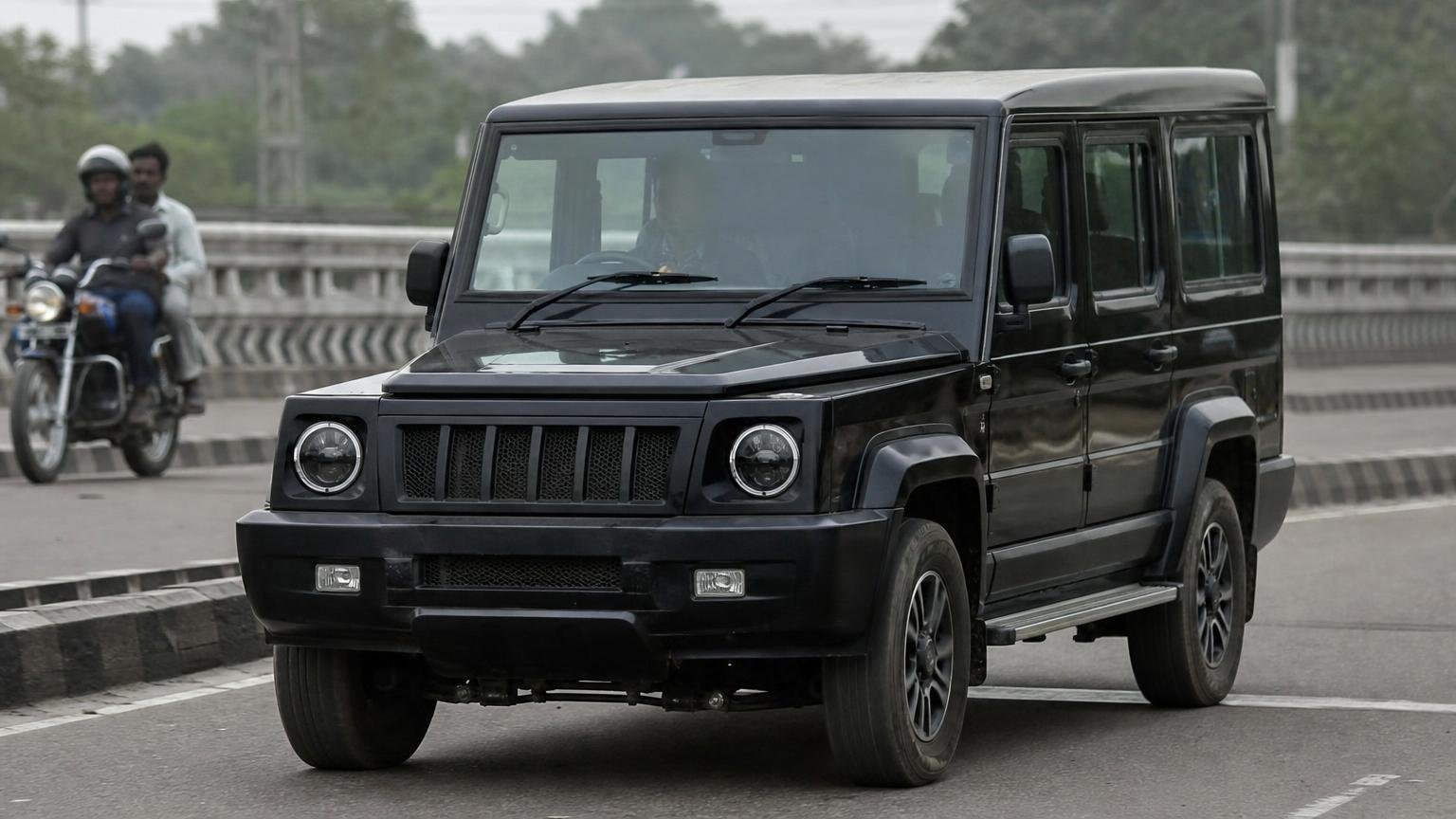
It’s the kind of boxy silhouette that makes strangers stare at stoplights. Flat glass, upright fenders, a rear-mounted spare, and door hinges that look like they could hold up a bridge. Then you hear the price and do a double take. The secret to this wallet-friendly 4×4 isn’t a missing option package or a too-good-to-be-true lease. The twist is simple: where it’s built.
The look that launched a thousand glances
From ten paces, this rig has the same square-shouldered charisma that made luxe SUVs a celebrity uniform. The stance is tall, the lines are ruler-straight, and the details are industrial in a way that feels purposeful rather than precious. You can almost hear the click of metal latches and the thud of a heavy, sealing door.
“It’s the kind of truck that makes kids point and adults smile,” said one off-road fan we met at a trailhead. “It just has that presence.”
And yet under the show-stopping silhouette, the ethos is refreshingly honest: simple, rugged engineering aimed at getting you through country roads, not red-carpet valets.
The name: a cult favorite from far away
Meet the Force Gurkha, a homegrown Indian 4×4 with an attitude that predates hashtags. It’s built by Force Motors, a company better known for workhorses than headline grabs. In its home market, the Gurkha is priced to move—often less than what people spend on a decent used compact—yet it throws down genuinely serious off-road hardware.
“Think of it as a hammer you can daily, not a diamond you’re afraid to scratch,” as one owner put it. That’s the charm: utilitarian bones, old-school spirit, and sheetmetal that reads as instantly, defiantly classic.
Why it costs so little
Here’s the boring-but-brilliant math. Localized manufacturing keeps labor costs in check. Supplier networks are nearby, not an ocean away. The design leans on proven, durable components rather than cutting-edge complexity that explodes the bill of materials.
The drivetrain is simple, with a manual gearbox and true low-range gearing, tuned for torque and longevity over blistering numbers. Cabin materials are rugged, the tech is minimal, and the comfort story is more “field gear” than first-class suite. All of which trims cost without cutting the core.
The part they don’t put on the brochure
Here comes the catch. You probably can’t just stroll into a North American or Western European dealership and drive one home. This 4×4 isn’t homologated for those markets’ safety and emissions standards, and importing a brand-new one is a bureaucratic maze. Right-hand-drive focus doesn’t help left-lane countries either.
There’s also the matter of expectations. Panel gaps that don’t chase perfection, ride quality tuned for ruts more than runways, and a cabin that prizes hose-it-out durability over quilted-leather indulgence. If your benchmark is ultra-luxe SUVs with massage seats and 27 speakers, you’ll call it spartan. If your benchmark is a farm track after the monsoon, you’ll call it brilliant.
Real off-road credentials
This thing isn’t playing dress-up. It’s built on a stout, body-on-frame chassis with serious approach and departure angles. Factory diff locks, a snorkel that’s more than a styling prop, and metal underbody bits that can meet rocks without filing an insurance claim.
“The first time I dropped it into low, it felt like a tractor that went to the gym,” another driver told us. “Not fast. Just unstoppable.”
- What matters most: a ladder frame, true 4×4 with low range, locking differentials, generous clearance, and simple-repair mechanicals
So who should want one?
If you crave luxury, there are badges for that. If you want a charmingly overbuilt tool that looks like a million bucks and costs like a sensible purchase, this is your vibe. Overlanders who prioritize reliability over rasterized touchscreens will get it. Rural fleets and adventure tour operators already do.
It’s the SUV for people who’d rather spend money on tires, fuel, and maps than on a backlit ambient-light palette. A vehicle that feels happiest with mud on its sills and a dog asleep in the cargo bay.
Why the look-alike effect works
Design is a language, and the squared-off, no-nonsense grammar of boxy SUVs signals capability at a glance. Flat sides mean bigger glass, easier repairs, and undeniable visual heft. Round lamps and exposed hardware read as honest, not old. You don’t need perforated Nappa to feel special when the sheetmetal already tells a story.
Call it the democratization of presence. What used to be a six-figure aesthetic can now roll out of a very different factory, aimed at very different roads, without sacrificing the attitude that makes people look twice.
The bigger trade
You trade plush for practical, polish for purpose, dealer cappuccino for a thermos of your own brew. In return, you get a machine that treats styling as armor, not jewelry, and price as a promise, not a punchline.
“It’s proof you don’t need money to buy confidence—you need the right set of values,” one enthusiast said, leaning on a fender still warm from a long, dusty drive.
If your heart beats for mountains more than malls, the 4×4 built far from the spotlight might be the one that finally feels right. And if you ever do see it idling next to something with a six-figure window sticker, don’t be surprised when the cheaper truck gets the bigger grin.