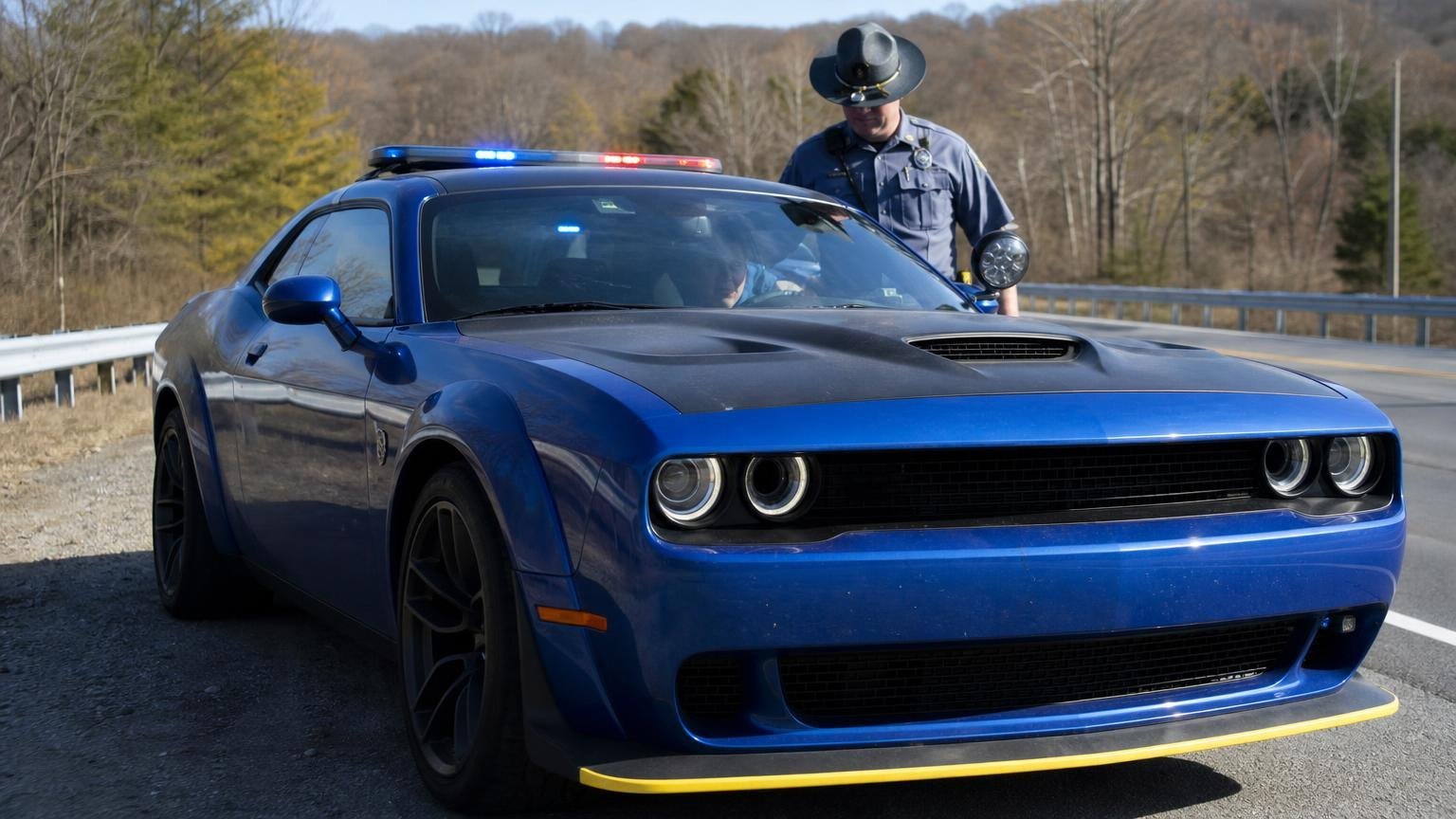
Blue lights now flash from a machine that once prowled midnight meetups, its supercharger whining under a new oath. A seized Dodge Hellcat has been reborn with a badge, turning illicit speed into public service. The image is arresting: widebody fenders, push bar, and a subdued two-tone wrap where once there were vanity plates and decals. For troopers, it’s a rolling warning shot; for drivers, a reminder that consequences can be very, very quick.
From seized evidence to sworn duty
What began as a late-night bust ended as a courtroom forfeiture, the kind that lets agencies convert criminal assets into tools for safety. “We didn’t buy this car,” a state police spokesperson said. “People breaking the law paid for it.” After meticulous inspections and chain-of-custody paperwork, the coupe traded impound dust for patrol detailing.
Fleets don’t adopt ex-street machines lightly. Mechanics tore into fluids, mounts, and electronics, checking for tune files and hidden tricks. They installed a cage, radios, radar, and a low-profile lightbar to tame the silhouette without dulling its purpose. The result looks both cinematic and serious—a showpiece that can actually show up where speed becomes danger.
What makes a Hellcat different from a cruiser
Under the hood lives a supercharged 6.2‑liter V8, delivering well north of 700 horsepower—enough to compress time between on-ramp and reckoning. Massive Brembo brakes, sticky performance tires, and heavy-duty cooling keep the cat from wilting under hard use. The factory transmission is built for brutal torque, snapping off shifts that make sirens sound almost slow.
Troopers didn’t stop at cosmetics. They added pursuit-rated pads, heat-resistant lines, and beefier fluids to handle stop‑and‑go abuse. The cabin remains practical—evidence camera, encrypted comms, and a smarter mount for the rifle rack so it won’t rattle over expansion joints. Even parked, the car suggests authority; rolling, it projects something closer to inevitability.
Policy meets horsepower
Don’t expect this to chase every lane‑changer with a loud exhaust. “Speed alone doesn’t make a safe pursuit,” the fleet captain explained. Agencies follow strict rules: no escalation without clear need, air support preferred, and bail‑outs when risks outweigh rewards. The car is a scalpel, not a sledgehammer.
Still, the psychology is powerful. See the wide stance, hear the supercharger whistle, and the message lands: run, and you’re just curating the state’s next asset. “If you flee in a rocket,” one trooper quipped, “don’t be surprised when a faster rocket shows up with paperwork.”
Not just speed: training and restraint
A machine like this demands discipline. Drivers complete advanced pursuit courses, learning weight transfer, threshold braking, and how to manage power that can overwhelm cold asphalt. They drill night pursuits, wet corners, and the split-second choice to disengage when conditions turn hostile.
Modern tactics matter as much as muscle. Coordinated radio grids, drone overwatch, and data from automated readers make raw velocity only part of the equation. “Winning” is apprehension without injuries or collateral damage, which often means patience, planning, and letting helicopters do the running.
Public reaction and a message to street racers
Crowds gather when the hood pops, phones up, questions flying. Some applaud the deterrent; others debate costs, optics, and the romance of American horsepower. The department leans into community events, parking the coupe between a D.A.R.E. tent and a seat‑belt demo. “We want kids to admire the right side of the story,” an outreach sergeant said.
- Outreach draws curious drivers, but the real audience is the crowd tempted by midnight runs, where a six‑second clip can cost years of freedom.
The quickest badge on the highway?
A few agencies have fielded fast oddities—occasional Corvettes, Camaros, or heavily tuned Chargers—but this car sits at the sharp end of U.S. performance enforcement. It’s not cheap to fuel, nor subtle about its carbon footprint, yet for targeted missions—interstate interdiction, stunt‑takeover response, or high‑visibility patrol—it’s hard to ignore.
Elsewhere, departments are testing efficient EVs for patrol duty, where instant torque and low running costs make quiet sense on city beats. But on wide-open highways with triple-digit recklessness, few platforms match the Hellcat’s blend of stamina, cooling, and top‑end authority. Think of it as a specialized instrument, like a marine unit or an aviation wing: expensive, but decisive when the niche appears.
Turning a problem into a platform
There’s poetry in flipping a street racer’s pride into a civic asset. The badge on the fender reframes every decibel of supercharger whine into a promise: if you turn the road into a stage, the final act won’t be yours to direct. “We’re not glorifying speed,” the captain emphasized. “We’re neutralizing it with training, policy, and a very loud reminder.”
In the end, the car is less a flex and more a mirror—reflecting choices back at the people who make them. You can chase clout and risk cuffs, or you can admire the machine at a sanctioned show, ask questions, and leave with your license—and your pride—still intact. Either way, the cat is out there now, purring at idle, ready to roar when the stakes get real.