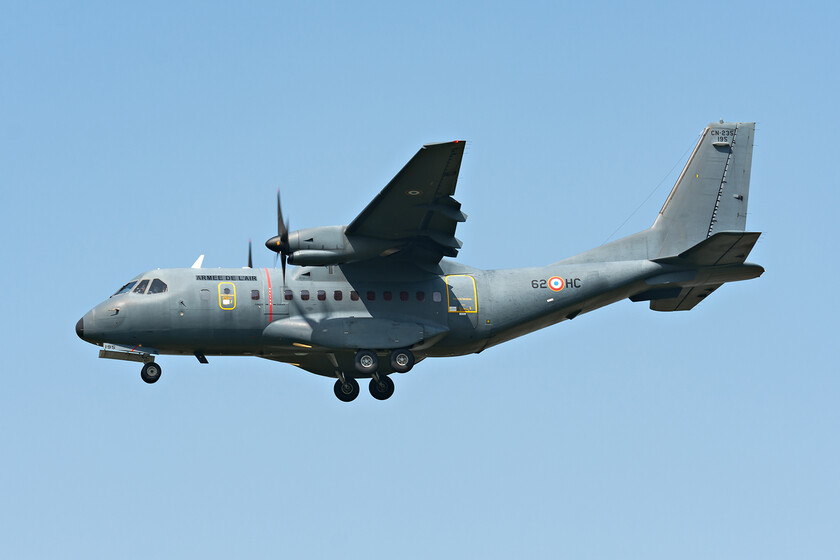
The stars of air forces are usually fighters like Typhoon, Rafale, or F-35, but these and the rest of the troops are nothing without logistics aircraft, such as the CASA CN-235. This small aircraft of Spanish design and manufacture, capable of crossing the Atlantic or landing on a road if necessary, remains a key element in the defense of many countries, from Ireland to the United States through Colombia or South Korea, except in Spain.
Towards the late 1980s, Spain was seeking its place in the global military aviation industry. Construcciones Aeronáuticas SA (CASA) then partnered in January 1980 with Indonesian IPTN to design a twin-engine turboprop tactical transport with a rear ramp, suitable for both military and civilian missions. The CN-235 prototype took off in November 1983. More than 40 years later, the aircraft continues to fly in the French armed forces where it is used with particularly intensive frequency.
CN-235, the steadfast Spanish aircraft France adores
Two episodes in August illustrate the longevity of this platform and the heavy use it endures. On August 17, one of the three CN-235s based in French Guiana embarked on a flight to the 105 air base at Évreux-Fauville, in Normandy, for its routine inspections. Ten days later, another CN-235, from squadron 3/62 Ventoux, landed on National Route 44, near Såtenäs, in Sweden, during a NATO exercise.
The Guiana-France flight deserves a close look. It covered 12,660 kilometers in 30 hours of flight, with stops in Fort-de-France, Nassau, New York, San Pedro and Miquelon, Nuuk and then Belfast, before the final landing in Évreux. The usual itinerary runs south, via Brazil and then Africa to Cape Verde. This time, the eleven-strong crew took the northern route, feasible only in summer, crossing Greenland in poor weather before reaching Normandy.

A journey that demonstrates the aircraft’s ability to operate from rough infrastructures and to bridge long distances through successive hops, a capability decisive for maintaining overseas territories scattered around the globe.
On the other hand, the exercise organized on August 26 and 27 with Denmark, the United States and the Franco-German BATS squadron aimed to train crews to use road segments as makeshift runways.
It is a capability exercise that has again become central in the face of the dispersion of air assets required by lessons from the conflict in Ukraine and the Russian threat. The Swedish Air Force saw in it a means to boost interoperability among allies, in a country that has recently joined NATO.
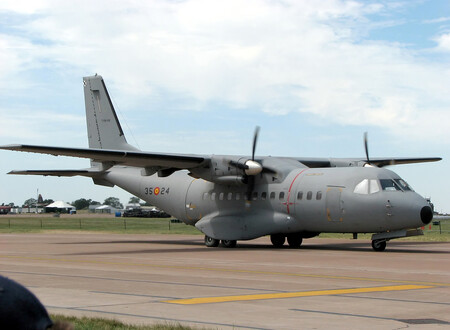
These missions are not anecdotal when considering the French fleet. Paris still lines up 27 CN-235s, of which 19 are CN-235/200 and eight CN-235/300, and ten of them are permanently deployed overseas: three in French Guiana, one in Djibouti, two in Réunion, two in Tahiti and two in New Caledonia.
In Polynesia, where the aircraft celebrated its thirtieth year of service in April, the 82 Maine transport squadron carried out no fewer than 34 medical evacuations in 2025, while also taking part in managing the crisis in New Caledonia.
With a capacity of 45 passengers or six tons of cargo, and a configuration possible for twelve stretchers, the CN-235 remains tailor-made for those island theaters where distances complicate any conventional air logistics.
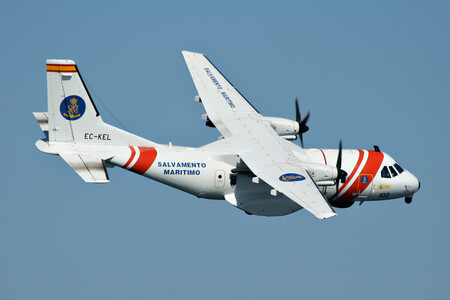
The irony is that Spain, the cradle of the aircraft industry, is abandoning it while France continues to rely on it. Madrid, in late 2025, ordered eighteen C295s from Airbus to progressively replace its CN-235 and C212, intended for training and transport missions.
The first deliveries will begin in 2026 and will be spread out until 2028, before a second phase devoted to the C212 between 2030 and 2032. The Spanish CN-235, which entered service in 1988, still equips the Matacán training group and the Air Force’s cartography center.
The history of the program goes beyond the Spanish case. The integration of CASA into EADS and then into Airbus turned the CN-235 into the direct predecessor of the C295, today designed and manufactured in Spain with a higher payload capacity. On the Indonesian side, the collaboration with IPTN led to local production taken over by PT Dirgantara Indonesia, still an Airbus partner.
The manufacturer boasts more than 280 CN-235s delivered worldwide, used for transport, maritime surveillance, or counter-narcotics. This diffusion helps explain why, more than four decades after its first flight, the Spanish aircraft continues to fly on every continent, even where its country of origin has already begun its retirement.
Images | Gerard van der Schaaf, Adrian Pingstone, Contando Estrelas, Armée de l’Air et de l’Espace