
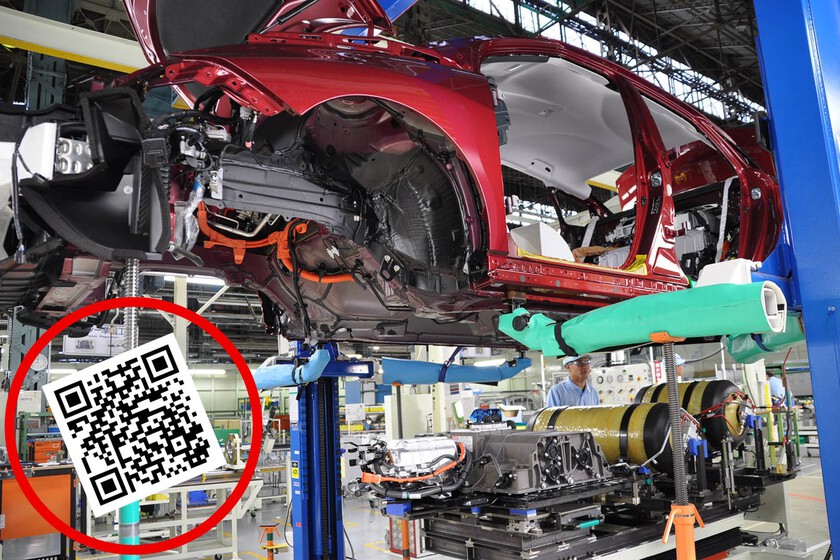
It is common for consumer electronics to be faster in their innovations than the automotive manufacturers. It is a heavy industry that requires slower reaction times. However, there are exceptions, such as the QR code or Quick Response.
Today we see these codes everywhere, in advertising, on social media, and on the label of all kinds of products. But QR codes were invented for industrial production, not for marketing and guiding us to a website or an app. The QR codes were invented by Denso, owned by Toyota, in the early 1990s.
Table of Contents (2)
- Toyota: Being Toyota
- The QR code inspired by the Go board
Toyota: Being Toyota

A QR code is basically a more sophisticated version of a barcode. A classic barcode can store up to about 20 alphanumeric characters horizontally. The problem is that it cannot accommodate kanji or kana used in Japan. The information simply does not fit.
Kanji are the logographic characters used in the Japanese writing system, i.e., the traditional characters, while kana are the two syllabaries of the Japanese language (for terms or names of foreign origin that do not have representations in kanji). And in a language read vertically and with three scripts (kanji, kana, and romaji, i.e., the Latin alphabet), the classic barcode fell far short.
The QR code was invented by a Denso engineer, Masahiro Hara, twenty-five years ago. According to Hara’s explanation on nippon.com, Denso used barcodes to track car parts that were being shipped, especially to Toyota, but the system was inefficient. “There were more than ten barcodes in a box,” recounts Hara.
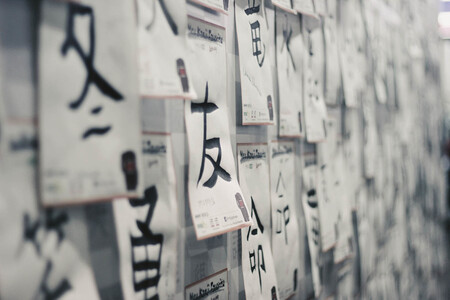
Kanji Characters (Photo: Felipe Pelaquim)
“Employees grew tired of having to scan the same box multiple times, and this led us to seek a code capable of transmitting a large amount of information with a single scanner pass.” From the need to better track automobile parts arose the QR code.
QR codes can contain a large volume of information, from a simple URL to an extensive payload comprising up to 7,000 alphanumeric characters, including kanji and kana. In addition, they can be scanned face-down, for instance, since the QR includes three finder patterns, and they can be read even if damaged or dirty, thanks to an error-correction feature.
The QR Code Inspired by the Go Board
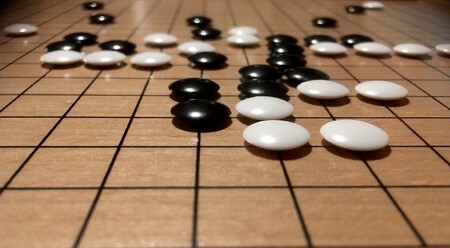
For Hara, the inspiration came while playing go. At mealtimes, Hara used to play go, and one day, while organizing the white and black stones again, it struck him that this would be a very direct way to present information. “It was a Eureka moment,” he recalls.
While Hara is widely recognized as the inventor for his inspiration, it was Denso’s development team that was responsible for creating the codes we know today. “Having an idea is one thing,” says Hara, “but you also need a system that can support its use.” Denso lacked the resources to develop the technology by itself, and instead decided to release the patents to encourage other companies to adopt QR codes.
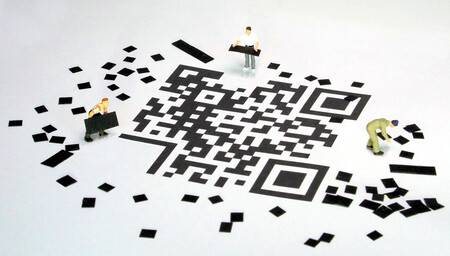
And it worked. Soon, other companies began using QR codes. The one that gave it its first major push was Toyota. In the Japanese giant, there is an obsession with not wasting time or resources. This has led to what the industry calls “just-in-time,” a practice that all manufacturers have embraced.
It is a system where the factory holds no spare parts stock, or components at most only for 24 hours in some exact cases. It is a process that requires close coordination with suppliers and stock management, as well as a high level of precision in knowing where the necessary parts are, how much is available, which model they are for, how long they will take to arrive, etc.
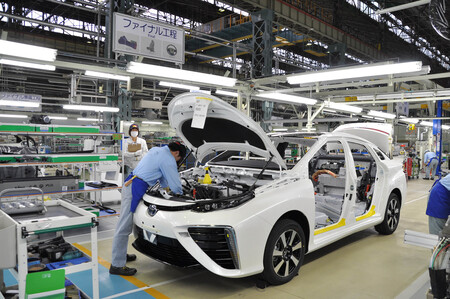
In Toyota’s case, stock is reduced to its absolute minimum. Even more so. The book The Machine That Changed the World notes that the authors sent a questionnaire to Toyota’s management asking, among other things, how many days of stock they kept on hand. One executive humbly asked whether there had been a translation error. “Surely, they meant how many minutes of inventory,” the executive explained.
The QR code is not the only barcode capable of storing a lot of information, but it is the one most widely used worldwide. Its ability to self-correct reading errors and its three finder patterns make it highly versatile, but at the same time it was Denso’s decision to share the patents with the world so that it could be adopted on a massive scale that enabled its success.