
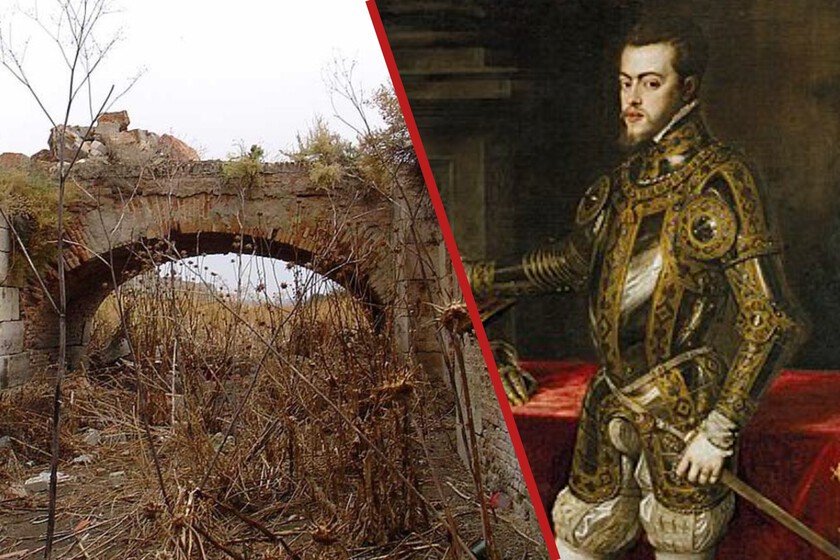
Madrid is only a few kilometers from the sea, but there was a time when the Spanish capital was surprisingly close to having its own port. The idea was born in the early 16th century and was propelled by King Philip II, convinced that a vast network of navigable canals could connect the court with the Atlantic.
His revolutionary plan sought something that seemed as impossible in the 16th century as it does today: to allow goods arriving from America to reach the doors of Madrid by sailing up the Tagus, the Jarama and the Manzanares. The project was never completed, though it left a trace that can still be discovered in different parts of the Community today.
The dream of Philip II to bring ships to Madrid
By the end of the 16th century, land transport was very slow, expensive and dangerous. Goods that landed at the ports in southern Iberia had to travel hundreds of kilometers along roads in poor condition and exposed to banditry before reaching the court. Philip II, who had seen in Flanders the advantages of canals and locks, believed he had the solution: turning rivers into large channels of communication.

In the nineteenth century, the railway buried the canal forever
Portugal formed then part of the Iberian Monarchy, which made it possible to imagine a direct connection between Lisbon and the kingdom’s capital. To make it a reality, he turned to the Italian military engineer Juan Bautista Antonelli, who in 1581 received the assignment to study how to make the Tagus navigable from Lisbon to Aranjuez. From there, the route would continue along the Jarama and the Manzanares to Madrid. The project contemplated nearly 600 km of navigation in total, and it would have to overcome an approximate rise of 650 m, a colossal engineering feat for the era.
Antonelli managed to condition some stretches of the Tagus and, according to the Real Academia de la Historia, in 1588 a test was conducted with several barges that travelled between Toledo and Lisbon in barely fifteen days. That seemed to demonstrate that the plan had possibilities, but reality ended up imposing itself on the king’s dream.
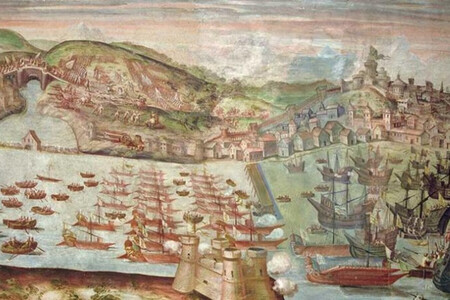
The counter-armada in Lisbon
The deaths of Antonelli first and Philip II a few years later left the project without its main drivers… Added to that were the enormous economic difficulties arising from funding the “Invincible Armada” and, later, Portugal’s independence, which ended the strategic interest in that river route.
The canal that did manage to be built and whose remains can still be visited
Although it never fully materialized, Philip II’s idea survived for centuries. Different engineers and monarchs revived the project with their own variants until, during the reign of Charles III, work began on the Real Canal del Manzanares, a navigable infrastructure that connected the Puente de Toledo with the Jarama river and that came to include quays, locks and other facilities intended for the transport of goods.
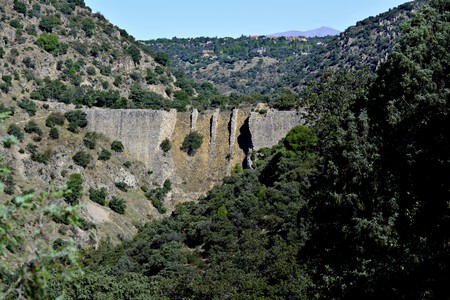
Gasco Dam
The floods, the high maintenance costs and the rapid development of the railway ultimately doomed the canal. Yet, part of that infrastructure still exists: it is still possible to locate remains of the Real Canal del Manzanares, some locks and other elements of the original work, in addition to vestiges of later projects such as the Gasco dam, erected for another great plan that aimed to connect Madrid and Seville through a vast navigable route.
It may sound like pure fantasy from another era, but for more than two centuries Spain dedicated resources, engineers and grand efforts to a goal as unusual as turning Madrid into a city with access to the Atlantic. And you can still travel part of the trace of that idea that sought to permanently change the map of Spanish communications.
Images | Unsplash, Flickr, Prado Museum, CAM