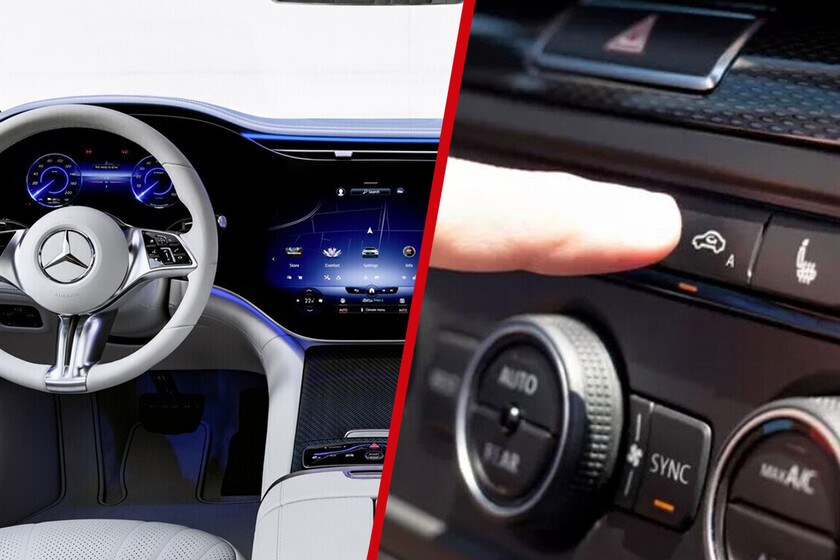
The automotive industry has spent a decade trying to cram as much technology as possible into a car. Screens that sweep across the entire dashboard, fingerprint-based entry, infrared cameras that monitor the driver’s face for signs of sleepiness.
Each manufacturer wants to brag about being the most advanced. But a substantial portion of buyers is starting to do exactly the opposite, according to The Wall Street Journal.
It’s not just the screens, it’s also the constant surveillance
As technology progresses at an increasingly rapid pace, we are now experiencing something of a pullback. Wired headphones are making a comeback as favorites compared to Bluetooth. The physical format for entertainment (vinyl, CD, or simply music on a USB) has not died, on the contrary. In that sense, Sony’s decision to abandon it entirely on the PS5 hasn’t pleased gamers. And this is something that is starting to be seen also in cars.
Brett Doyle, a computer technician from St. Louis, keeps a spreadsheet with every piece of technology he never wants to see in a car, from electronic door handles to adaptive cruise control.

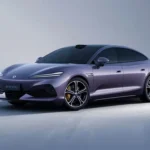
Li Auto.
He and his two teenage sons take care of the maintenance of the four family cars, all bought in the 2010s, precisely to remain analog for as long as possible. His complaint isn’t ideological but practical. He prefers turning a physical knob for the air conditioning rather than learning a new menu every time he gets a new car.
Karen Kefauver is a social media consultant in Santa Cruz and is considering buying a used car for the first time in her life. The trigger was a viral video in which a woman of similar height to hers watched as her car decided to brake on its own because the driver monitoring system interpreted that she had dozed off by bending down for a moment. Kefauver does not consider herself an enemy of technology, but she resists her car monitoring her pulse and her face.
Dealers notice it, though they don’t share it. Chris Lemley, president of the Sentry Auto Group outside Boston, admits to receiving constant complaints about blind-spot warnings or rear cameras. Still, he doesn’t believe the industry is going to roll back. For him, a car without cutting-edge technology in 2026 simply isn’t a commercial option, and most of his customers still want more screens, not fewer.
Quien busque huir de esa deriva tiene muy pocas opciones. The analytics firm Edmunds included last year the Chevrolet Trax in its list of cars recommended for those resistant to technology in the US, precisely because of its scarcity of driving-assistance features.
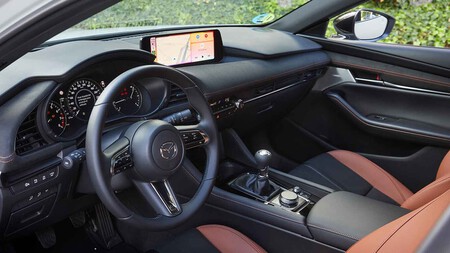
The Mazda 3 and CX-30 also appear on such lists thanks to their physical buttons and rotary control for the multimedia system (a feature that until recently was the norm in BMW, Audi or Mercedes), in addition to preserving the rarity of a manual transmission. And for Mazda 3, not for long yet, as the brand is only selling stock and is not accepting new orders.
But the rule seems to be, more and more screens, even if they provide the same information and functions. Only a few brands, like Volkswagen, are returning to buttons due to customer complaints. China, which has inundated us with cars full of screens, has now decided to ban them, giving another argument in favor of these “anti-technology” advocates.
The Nissan CEO, Ivan Espinosa, himself acknowledges that the industry’s approach is a bit absurd. Manufacturers concentrate the most sophisticated technology in the most expensive models, when the typical entry-level buyer—usually younger—demands it most. In his view, the profile that rejects these aids tends to coincide with older buyers.
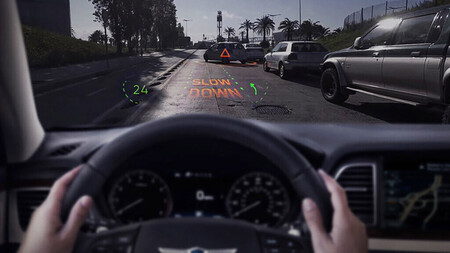
Ron Burda partially refutes that theory. He is 85, has just bought a Toyota RAV4, and hates driving-assistance technology, but not for generational reasons. His argument is that a driver does not need help staying in the lane or avoiding a crash, and we have spent a hundred years learning to drive without it.
The digital speedometer on his RAV4 was so hard to read that a dealership technician spent half an hour configuring an analog-looking readout. Meanwhile, he has solved the rest of the inconveniences in his own way, with pieces of tape stuck on the screen to locate the “most important buttons” without having to look at them.
Burda has even written to Toyota’s headquarters in the United States proposing a model specifically for expert drivers, without warnings or digital screens. In his calculation, it would be cheaper to manufacture and, in turn, would force drivers to improve their driving technique. In any case, his idea would be unviable in Europe, where mandatory driving aids are increasingly numerous, although their operation in not a few cars leaves much to be desired, such as the speed-limit assistant.
Images | Mercedes, Li Auto, Mazda