
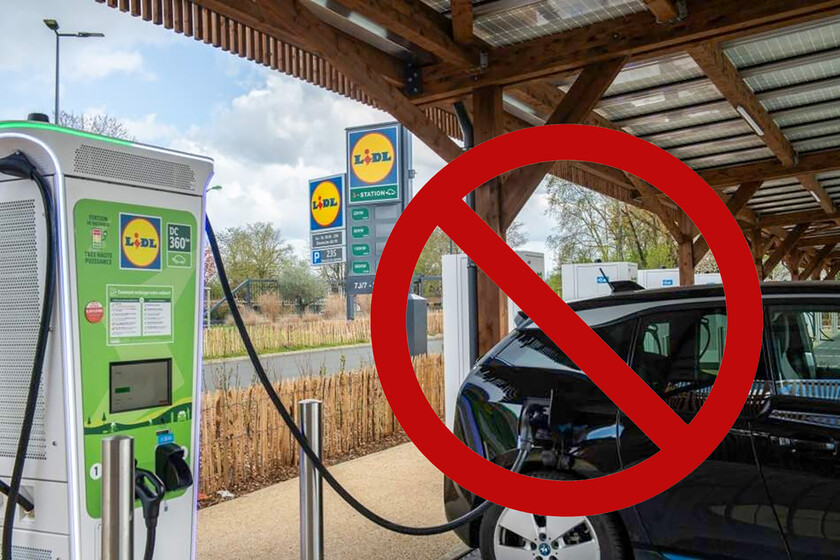
In 2025, Lidl announced something affecting its French market: “All of the company’s new vehicles will be exclusively electric, and plug-in hybrids and gasoline-powered vehicles will be eliminated entirely. The objective is clear: a 100% electric fleet by the end of 2027.”
Things are not going as planned, because for now in Germany employees will no longer be able to choose electric cars: the Schwarz Group has temporarily withdrawn them from its corporate vehicle catalog. The reason? Depreciation.
A Lidl finds buying electric cars for its employees not cost-effective
The company cites market volatility and changes in the regulatory framework as the reasons for this decision, but what they mean is that electric vehicles depreciate too quickly. And unlike many other firms, the Schwarz Group does not lease its company cars — the majority are BMWs — but purchases them outright and then sells them on the used-car market.
The group has stated that the lower residual values of many electric vehicles, compared with internal-combustion engine vehicles, directly affect the fleet’s economic viability: “Due to the volatility of the local car market and the evolution of the regulatory framework, we have decided not to include fully electric vehicles in our new orders for the time being,” a group spokesperson said.
And that despite the fact that in Germany taxes on internal-combustion vehicles are four times higher than those on electric vehicles, it still isn’t financially viable for the group to purchase electric vehicles. Schwarz currently counts nearly 7,600 electric or hybrid vehicles within its global fleet of 38,000 units, according to data provided by the company to Fleet People.

No parece que en Francia vaya a ocurrir lo mismo a medio plazo, porque la Ley de Orientación a la Movilidad establece cuotas para los vehículos eléctricos en las flotas de las empresas, así como tampoco se aplicará esta medida en Bélgica o Luxemburgo.
To understand why electric vehicles depreciate so quickly, we must look at three key factors:
- The relentless pace of technological evolution that makes an electric car resemble a mobile device.
- The price war.
- The uncertainty about battery lifespan among buyers in the used-market.
It is true that electric cars depreciate more in the first year (even right after leaving the showroom, a new car has already lost around 20% of its value), but it is also worth noting that a used electric car has a lower total cost of ownership than a gasoline, a hybrid, or a plug-in hybrid on the used market.

Looking for your next electric car and feeling overwhelmed by so many options? It’s normal.
More than 45,000 readers have already tried it. And you?
Advice offered by the brand