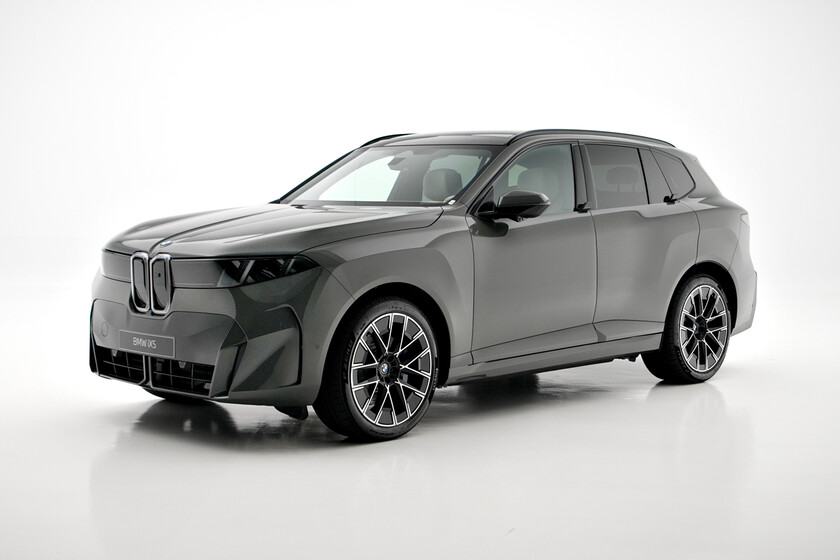
The BMW X5 has historically been one of BMW’s most popular SUVs and the brand’s most important model. With it, the SUV craze began for the German marque, which now ranges from the compact X1 to the massive X7. For this new generation, the X5 becomes electric as well and transforms into BMW iX5.
BMW X5 2027, in video
Not only will it be electric, but for the first time a SUV will be available powered by five different energy types. There will be battery-electric versions, plug-in hybrids, gasoline and diesel. And later there will even be a hydrogen fuel cell version, the BMW iX5 Hydrogen. For now, we know the BMW iX5, the battery-electric version.
BMW iX5: Europe’s largest battery
The BMW iX5 is entirely new, but shares technical architecture and design cues with the latest offerings from the Neue Klasse, such as the BMW iX3. BMW has introduced the iX5 60 xDrive, the first fully electric version of the X5.
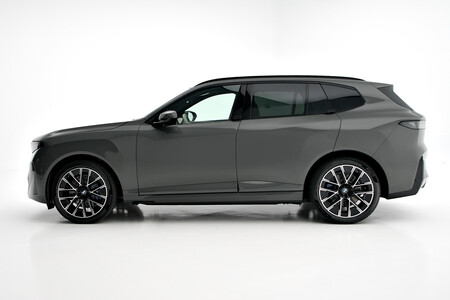
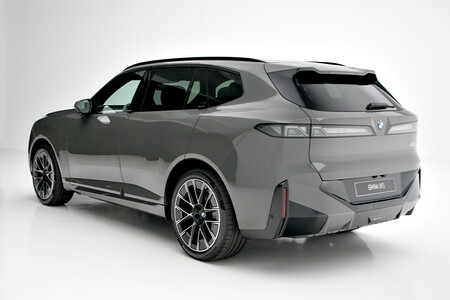
The visual appearance is that of an iX3 with extra weight or steroids, but two elements set it apart. Its daytime running lights feature an X-shaped light signature and the absence of door handles. In reality, they are present and are the small shark-fin fins we’ve already seen on the Ford Mustang Mach-E.

Technically, it’s hard not to talk about the most striking feature, and also one of the most relevant in an electric car: the battery. In the iX5, the lithium‑ion battery has a net capacity of 141 kWh. It is simply the largest battery-equipped car on the European market, thus surpassing the Mercedes EQS and its 122 kWh battery.
This battery introduces a new Gen6 cylindrical cell of 120 mm height, compared to 95 mm in the previous generation, which, according to BMW, enables higher energy density without increasing the footprint of the pack on the car’s floor.
When it comes to recharging such a battery, the charging power must be matched or charging can become an endlessly long process. On alternating current (AC) it supports up to 22 kW (three-phase), which equates to a 0 to 100% charge in 6 hours and 24 minutes. On direct current (DC) the peak power reaches up to 460 kW.
In that scenario, it takes only 23 minutes to go from 10% to 80% charge. BMW claims that ten minutes of charging can recover up to 350 km of range. The iX5 also features bidirectional charging, which with such a battery could power a typical home for 8 to 12 days without blinking.
And what about the range? With that capacity, one might expect better figures. The WLTP-certified range is between 645 km and 845 km. On the highway, real-world range will be closer to around 600 km rather than the 845 km seen in urban conditions. This aligns with the certified average consumption which sits between 20.1 and 23.9 kWh/100 km.
Initially, the iX5 will be available only in the 60 xDrive version, the top of the line. On the rear axle it features a 329 hp synchronous motor and a 240 hp asynchronous motor. The total system power is 425 kW (578 hp) and 805 Nm of torque, enough to accelerate from 0 to 100 km/h in 4.6 seconds and reach 210 km/h, electronically limited.
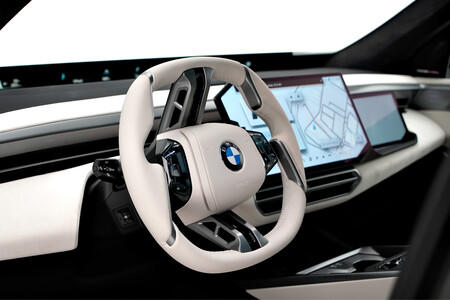
Dimensions and weight. The iX5 60 xDrive measures 4,994 mm in length, 2,000 mm in width—yes, two meters wide—and 1,748 mm in height, with a wheelbase of 3,035 mm. It sits 3 mm lower than the gasoline versions. The curb weight (EU standard, including a 75 kg driver) is 2,900 kg. Almost three tons of BMW, there you have it.
It is the heaviest in the lineup due to the battery, but the weight distribution approaches 50:50, according to BMW, thanks to the placement of the energy pack on the floor. The towing capacity with brakes reaches 2,700 kg. The trunk offers between 655 and 1,850 liters, the same as the combustion models, since the battery does not invade the cabin or cargo area.
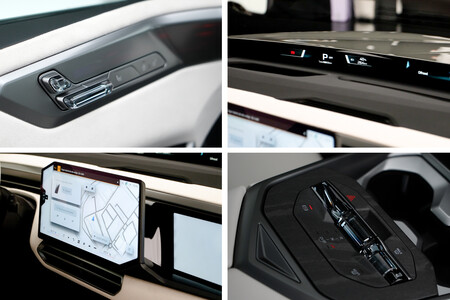
The arrival of the iX5 60 xDrive also marks the start of what BMW calls a multi-energy strategy for the X5, which in this product cycle will cover gasoline mild-hybrid, diesel mild-hybrid, plug-in and pure electric, with a hydrogen version (iX5 Hydrogen) announced for a later phase.
The initial X5 lineup will consist of the following models:
- BMW X5 40 xDrive: 6-cylinder gasoline mild hybrid, 400 hp.
- BMW X5 40d xDrive: 6-cylinder diesel mild hybrid, 313 hp.
- BMW X5 50e xDrive: 6-cylinder gasoline PHEV, 489 hp.
- BMW X5 M60e xDrive: 6-cylinder gasoline PHEV, 612 hp.
- BMW iX5 60 xDrive: electric, 578 hp
The BMW iX5 will be manufactured at the Spartanburg plant (South Carolina), where the X5 has been produced since its first generation. Production will start in August 2026, while orders will open on October 8 and the first units will reach dealerships at the beginning of 2027.
Find your ideal electric car
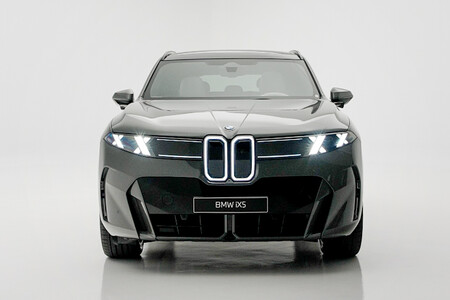
If you have considered buying an electric car, this will interest you. We have created the Personalized Electric Car Recommender, where in addition to seeing models that fit your needs you will also have answers to the questions that are most likely to worry you, such as price, range, or nearby charging points.

¿Buscas tu próximo coche eléctrico y estás sobrepasado con tanta opción? Es normal.
Más de 45.000 lectores ya lo han probado. ¿Y tú?
Advice offered by the brand